
How One Family Achieved Energy Independence with Solar Battery Storage
Share:
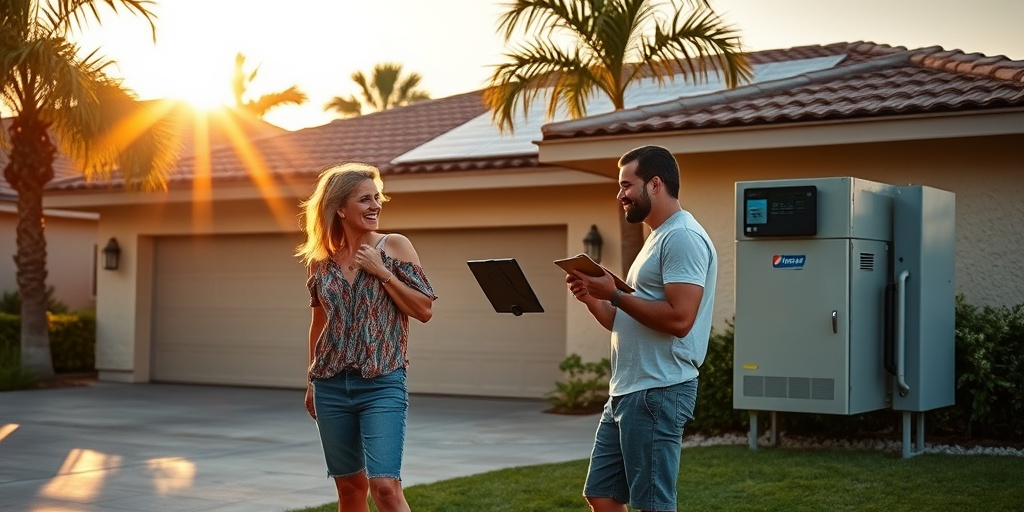
In today’s rapidly changing world, energy independence is not just a dream—it’s a necessity for many families, especially in Florida. Did you know that Florida ranks third in the nation for solar power capacity? That’s approximately 3.9 GW of solar energy being produced, enough to power 600,000 homes (Energy.gov). Moreover, with the average utility rates in Florida increasing by 5.5% annually, many homeowners are exploring sustainable solutions to cut electric bills and own their power (Florida Public Service Commission). This case study, titled How One Family Achieved Energy Independence with Solar Battery Storage, reveals the inspiring journey of the Johnson family, who transformed their energy expenses and embraced a sustainable lifestyle by installing solar battery storage. As we approach the year 2025, it’s imperative for homeowners to consider the potential financial and environmental benefits of solar energy. Rising energy costs, increased incentives, and concerns about grid stability make now the perfect time to go solar. This article will take you through five detailed sections: a case study of the Johnson family’s journey, a practical checklist for going solar, myth-busting common misconceptions about solar energy, a focused look at Florida’s unique solar landscape, and an in-depth technical overview of solar systems. Join us on this enlightening ride into energy independence.
Case Study: The Johnson Family’s Journey to Energy Independence
The Johnson family, residents of sunny Sarasota, Florida, always envisioned a future where their home flourished with energy independence. With utility bills soaring upwards of $300 per month during the summer due to demanding air conditioning usage, they knew it was time for a change. By researching various energy options, they stumbled upon solar battery storage as the perfect solution to their energy dilemma.
The family began their solar journey in 2023 after attending a local seminar hosted by floridaelectricandsolar.com. This seminar, led by experts in the field, provided an in-depth look at solar power technology, including the advantages of integrating battery storage with solar panels. The Johnsons learned that solar battery storage systems would allow them to harness energy during the day when the sun shone bright, and store excess energy to use at night or during cloudy days—effectively reducing dependence on the grid.
Initially skeptical, the Johnsons plotted out their projected savings with solar. They discovered that the initial installation cost of around $20,000 could be offset significantly by Florida’s net metering laws, which allowed them to sell surplus energy back to the grid (SEIA.org). Additionally, Federal tax incentives offered significant savings: they would receive 26% back in credits under the solar investment tax credit (ITC), reducing their overall investment to $14,800. This reduction made the prospect of solar energy not only feasible but deeply appealing.
After completing their solar installation in December 2023, the Johnsons reported a remarkable drop in their monthly energy costs. They went from a monthly utility bill of approximately $300 to less than $50. By utilizing their solar battery, the family could pull from stored energy during peak hours, when utility rates peaked, thus maximizing their savings and achieving a significant degree of energy independence. As of 2025, they have even considered adding electric vehicle (EV) charging capabilities powered by their solar system, further solidifying their energy self-sufficiency.
Furthermore, the Johnsons’ story exemplifies the growing trend towards energy independence among Florida homeowners. In 2022 alone, solar installations in Florida grew by over 72%, with homeowners eager to take control of their energy expenses. As shown by their experience, solar battery storage can serve as a critical lifeline for families looking to combat rising utility costs while also contributing to a greener planet.
As we examine the steps the Johnsons took to navigate their journey of achieving energy independence through solar battery storage, you too can explore practical strategies that accelerate your path toward solar adoption. Let’s break down actionable steps you can take to follow in their footsteps.
Essential Steps Towards Solar Battery Storage
Step 1: Assess Your Energy Needs – Start by understanding your current energy consumption. Review your past utility bills to determine your average energy needs. This data will guide you in understanding how much solar power and battery storage you will require.
Step 2: Calculate Your Solar Savings – Utilize online calculators to estimate your savings potential with solar. Speak with solar consultants who can analyze your energy consumption, roof size, and sun exposure to give you tailored insights regarding your potential savings.
Step 3: Research Local Installers – Look for reputable solar companies in Florida, like floridaelectricandsolar.com. Get multiple quotes, check references, and read online reviews to ensure you choose an installer with strong community ties and proven success.
Step 4: Understand Incentives – Familiarize yourself with current federal, state, and local incentives for solar installations. The solar investment tax credit is just one avenue you can benefit from, but many local utilities offer rebates or additional incentives that may apply, depending on your location.
Step 5: Prepare for the Installation Process – Work closely with your chosen solar company to ensure your home is ready. This may involve minor renovations or ensuring your roof is prepared to support solar panels. The installation process typically only takes one to three days.
After diligently following these steps, you’ll be well on your way to replicating the Johnson family’s success in achieving energy independence through solar battery storage.
Myth-Busting: Common Misconceptions About Solar Energy
The transition to solar energy can often be hindered by misconceptions that keep homeowners from fully realizing the benefits of this technology. Let’s address some common myths surrounding solar energy.
Myth #1: Solar Power is Too Expensive – Many potential solar users still believe that entering into solar is prohibitively expensive. However, with the variety of financing options available, including loans, leases, and power purchase agreements (PPAs), the entry costs can be significantly minimized. Furthermore, the tax incentives available often bridge the investment gap.
Myth #2: Solar Energy is Unreliable – A common assumption is that solar panels can’t generate power when it’s cloudy or dark. In reality, solar panels work even on overcast days, albeit at reduced efficiency. More importantly, with battery storage, surplus energy can be saved for later use, ensuring reliability even during inclement weather.
Myth #3: Solar Systems Are Bad for the Environment – While manufacturing solar panels does have its environmental implications, the energy produced by these panels significantly offsets their initial carbon footprint long-term. In fact, over a lifetime, a residential solar system can reduce carbon emissions equivalent to planting over 100 trees (NREL.gov).
Myth #4: Solar Panels Take Up Too Much Space – Contrary to popular belief, modern solar panels are designed to be efficient and can often fit comfortably on most rooftops. Furthermore, smaller homes can still harness solar power through community solar programs, which allow them to benefit from solar energy without installing panels on their properties directly.
Myth #5: Solar Panels Require a Lot of Maintenance – The truth is, solar systems are quite low-maintenance. A simple cleaning a couple of times a year and a routine inspection are typically all they need to operate optimally without incurring significant upkeep costs.
Addressing and dispelling these myths can empower Florida homeowners to embrace solar energy and maximize their savings potential as they consider investing in photovoltaic systems and battery storage solutions.
Focusing on Florida’s Solar Landscape
As one of the leading states in solar energy production, Florida provides a unique landscape for homeowners considering solar investments. The combination of ample sunlight, favorable policies, and strong public interest creates an ideal environment for embracing renewable energy solutions.
Florida’s 2021 Solar Energy Implementation Plan set ambitious targets, encouraging a large-scale solar transition. As a result, nearly 44% of Florida’s electricity could be generated through renewables by 2040 (Florida Solar Energy Advisory Council). In recent years, many utilities across Florida have also implemented programs encouraging residential solar installations through rebates and incentives, making it more financially accessible for homeowners.
Moreover, Florida residents benefit from the state’s net metering policy, which allows homeowners with solar systems to receive credit for the surplus electricity they produce and feed back into the grid. This financial perk can be immensely beneficial, especially during high-energy-demand periods when utility rates spike.
Additionally, with over 60 solar manufacturers and suppliers now operating in Florida, resources for homeowners looking to transition to solar have never been more abundant (SolarReviews.com). This strong local presence allows for better support and education for prospective solar users, laying the foundation for a more widespread adoption of solar energy.
On the policy side, Florida ranks third in the nation for the total number of residential solar installations. With renewable portfolio standards and aggressive legislation to increase solar accessibility, the state is paving the way for solar energy to become a staple in residential energy portfolios.
With data-driven incentives and strong community support, living sustainably through solar energy is more achievable than ever for Florida homeowners. Harnessing solar not only benefits individual households but contributes to a greener, cleaner environment for future generations.
Understanding the Technical Aspects of Solar Battery Storage
To make an informed decision about incorporating solar power and battery storage, it is essential to understand how these systems function together. Solar battery storage serves as a critical component that elevates the effectiveness of solar panel installations, particularly when paired with grid integration.
At the core, a solar battery absorbs excess energy produced by solar panels during peak sunlight hours, allowing homeowners to utilize this energy later when need arises—whether at night or during peak usage hours. This battery can significantly reduce reliance on the grid, especially in scenarios where energy costs spike.
1. **Types of Solar Battery Storage**: Lithium-ion batteries dominate the residential solar storage market, praised for their efficiency and longevity, often lasting 10-15 years. Other types include lead-acid batteries, which can be lower in cost but have shorter lifespans.
2. **Cost Considerations**: The average cost of solar battery storage installation can range between $7,000 and $15,000 depending on battery capacity and installation specifics. However, the federal tax incentives can offset a significant portion of these costs, and with potential savings on energy bills, you can see a return on investment in as little as 5-10 years.
3. **Home Integration**: Integration of solar and battery systems requires professional installation to ensure proper connections and configurations. Proper setup enables the most efficient energy use throughout the home. Working with trusted companies like floridaelectricandsolar.com will help ensure your solar project ties seamlessly into your existing energy infrastructure.
4. **Monitoring and Efficiency**: Many modern solar battery systems offer digital monitoring solutions, allowing homeowners to track their energy usage and storage metrics through mobile apps. This insightful data can aid homeowners in optimizing their usage to maximize savings and efficiency.
5. **Backup Power**: Perhaps one of the most compelling advantages of solar battery storage is the ability to provide backup power during outages. With regular battery maintenance, homeowners can bypass outages and ensure ongoing access to essential electrical appliances.
Understanding these technical aspects provides homeowners with the knowledge needed to effectively leverage solar battery storage and embrace energy independence. As solar technology continues to improve, investing in solar solutions is more advantageous than ever. Now, let’s explore further steps you can take toward becoming an empowered solar homeowner.
Next Steps for Florida Solar Buyers in 2025
As solar energy continues to gain momentum in Florida, become part of this transformative movement by taking these actionable steps:
Step 1: Audit Your Electric Bill – Gather your last six months of utility bills to understand your energy consumption patterns. This will inform financial projections when considering solar power integration.
Step 2: Consult with Experts – Schedule consultations with multiple solar installation experts to get an understanding of the potential setup for your home. Ensure that these experts guide you through financing options and local incentives as you map out your solar journey.
Step 3: Explore Financing Options – Investigate financing avenues including loans, solar leases, or even third-party ownership through power purchase agreements. Understand the associated costs and benefits accompanying each option before deciding.
Step 4: Prepare Your Home’s Infrastructure – Once ready to proceed, ensure your home meets local code requirements for solar installation. Consider performing any necessary upgrades to your roofing or electrical systems.
Step 5: Connect with Your Community – Engage with local community networks or forums discussing solar energy. Connecting with like-minded individuals can offer invaluable insights as you navigate your own solar project.
By diligently following these steps, you can join many Florida homeowners in achieving energy independence with solar battery storage. The potential savings and environmental impact of making the switch are eagerly awaiting you.
In summary, the Johnson family’s journey towards energy independence through solar battery storage illustrates the power of making informed decisions about solar energy. By addressing misconceptions, understanding Florida’s unique landscape, and focusing on the technical details of solar installations, you can prepare to harness the sun’s energy and enhance your household budget while contributing positively to the environment.
Ready to start your solar journey in 2025? Connect with a certified expert at floridaelectricandsolar.com today.
Related Articles
More insights about Battery Storage

What Is a Solar Battery and How Does It Store Power for Your Florida Home?

Beginner’s Guide to Solar Battery Storage Essentials

Florida Homeowners: Unlock Benefits of Solar Battery Storage Today
Ready to Go Solar?
Have questions about solar energy? Our experts are here to help you make the switch to clean, renewable energy.