
What Are the Benefits of Community Solar for Homeowners?
Share:
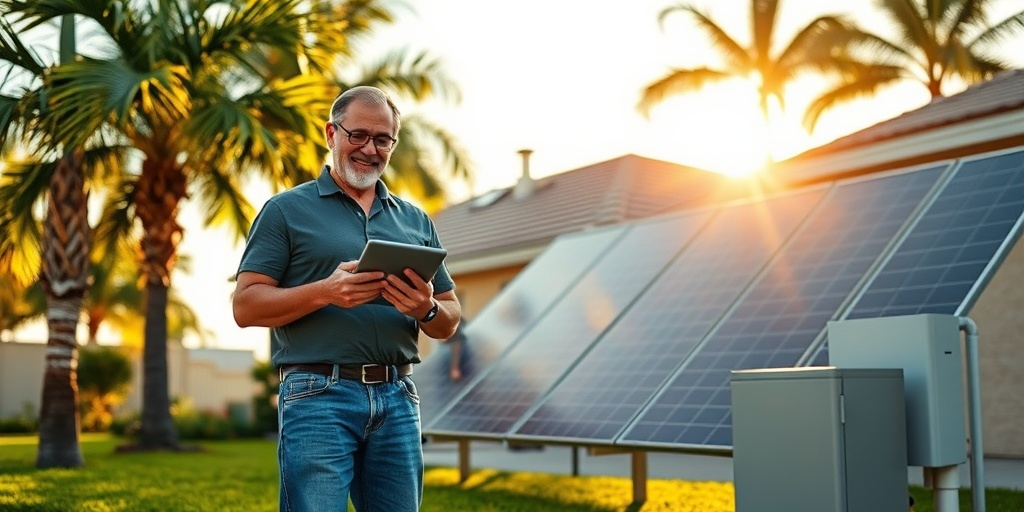
Did you know that community solar programs can nearly eliminate energy costs for participating households? According to the Solar Energy Industries Association, community solar could allow up to 1.3 million Florida homes to gain access to renewable energy by 2025 (SEIA.org). With rising energy prices and climate change gaining urgency, 2025 is shaping up to be a pivotal year for Florida homeowners looking to make the switch to sustainable energy solutions. In this article titled What Are the Benefits of Community Solar for Homeowners?, we’ll explore how community solar can offer significant savings and a path toward sustainability. We’ll guide you through real-life examples, debunk common myths, and provide actionable steps toward harnessing solar power in your community. Here’s a glimpse of what’s in store: a deep dive into community solar’s impact, a comprehensive checklist, myth-busting insights, localized context for Florida homeowners, and a technical breakdown of how community solar systems work. Let’s illuminate the pathway to solar innovation and conservation!
Understanding Community Solar: A Deep Dive into Its Advantages
Community solar represents a transformative shift in the energy landscape. Instead of being confined to individual homeowner’s rooftops, solar panels installed in community solar farms generate power that can be shared among multiple households. Imagine a cluster of neighbors coming together to harness the sun’s energy, significantly lowering their electric bills and reducing their carbon footprint. Consider the story of the Martinez family from Tampa, FL. They were initially apprehensive about the costs associated with solar energy. However, after enrolling in a community solar program, their savings were immediately visible on their energy bills. Over the course of a year, they saved an impressive 30% on their electric costs.
This transition was facilitated by a community solar initiative launched by a local energy provider. As reported by the National Renewable Energy Laboratory, homeowners who subscribe to community solar can expect savings that average between 10-30% on their monthly energy bills (NREL.gov). In addition to lowering costs, community solar offers an appealing alternative for those who may not have suitable roofs for solar panels or want to avoid the upfront costs of installation.
- Step 1: Determine eligibility by checking whether there are available community solar programs in your area. Each program operates under specific guidelines that vary by provider.
- Step 2: Assess your energy consumption. Understanding your monthly electricity usage gives you a better idea of how much you can save through community solar.
- Step 3: Research community solar projects in your neighborhood. You want to ensure you are joining a reputable program that offers flexible pricing structures.
- Step 4: Enroll in the program. Work with your energy provider to start receiving credits on your electric bill for the solar energy generated.
- Step 5: Monitor your savings and energy usage over time. This not only helps you gauge the financial benefits but also allows you to appreciate the environmental impact of your participation.
Despite its advantages, myths surrounding community solar persist. One common misconception is that community solar is only available for homeowners with large houses or those living in affluent neighborhoods. In reality, several community solar programs in Florida are designed explicitly to accommodate various income levels. Another myth is the assumption that participation in community solar requires abandoning traditional energy sources entirely. Instead, you will continue to rely on your existing energy provider, while the community solar project supplements your energy needs.
In fact, over 15 states now have community solar laws or regulations in place, with Florida leading the charge with significant expansion plans ahead (SolarReviews.com). Such flexibility allows for broad participation regardless of physical property attributes or upfront investment capabilities.
Exploring Local Community Solar Options
Community solar isn’t just a distant concept; it’s becoming a thriving reality for many Florida homeowners. Across the state, numerous innovative community solar initiatives are available, providing local residents with not just energy but actual ownership in the transition toward solar power. Community solar projects are springing up in urban and suburban areas alike, allowing residents with or without suitable roofs to invest in solar energy.
- Local Project Examples: Investigate community solar farms near your neighborhood that allow residents to buy in, including programs led by major electric utilities as well as cooperatives.
- Legislation Support: Florida state laws now support the growth of community solar, making it easier for developers to initiate new projects.
- Financial Incentives: Many community solar programs also incorporate financial incentives, such as tax credits, grants, or price-lock agreements, which can enhance the value proposition.
The accessibility of community solar aligns well with Florida’s mindset towards sustainability, making solar energy a viable option for the masses. One particular project in Gainesville has been highly successful, enabling participants to share the benefits of a 100-kilowatt solar farm while contributing to the local economy and their monthly savings (GainesvilleSun.com). With increasing collaboration among energy providers, government agencies, and environmental groups, Florida is poised to lead the way into a sustainable energy future.
Best Practices for Community Solar Participation
Ready to maximize the advantages of community solar? Here are five expert tips to ensure you’re making the most of your journey into sustainable energy solutions:
1. Don’t Skimp on Research
Investigate potential community solar programs in your area. Every program has unique offerings, eligibility requirements, and savings structures. Some might promise higher savings but come with hidden fees, while others may provide less-overwhelming offers with no surprises. Use resources like community forums or local energy websites to gauge other homeowners’ experiences.
2. Understand Your Contract
Getting involved in community solar usually requires a contract. Be sure to read the fine print! Understand how the payment model works, how long your commitment is, and what happens if you move or wish to exit the program. Additionally, look for any fine-print clauses that could affect your access to savings.
3. Monitor Your Savings
Once you enroll, keep a close eye on your energy savings. Check your energy bills regularly to confirm that the community solar program is delivering on its promises.
4. Engage with Your Community
Community solar fosters a sense of togetherness. Participate actively in community events or forums organized by your solar provider. Staying informed and involved helps you gauge how your solar project develops and opens doors to advocacy opportunities.
5. Keep an Eye on Policy Changes
Energy policies are dynamic and can change frequently in Florida. Stay updated on legislation that affects community solar and solar energy incentives, as they can impact your savings and participation rights. Websites like floridaelectricandsolar.com are excellent resources to monitor local solar developments.
The Solar Journey: A Real-World Story
Let’s take a closer look at how one family—a hypothetical example, the Johnsons—navigated their community solar journey. Initially skeptical about the upfront costs of solar energy, the Johnsons learned about community solar options available in their area, prompting them to act. Living in central Florida, they found a community solar project that promised meaningful savings and direct benefits.
- Enrollment: They joined a community solar initiative that allowed them to share a solar farm with other local households, thus making solar energy affordable.
- Engagement: By participating in community meetings organized by the solar farm operator, they connected with neighbors who shared valuable insights and practical advice.
- Savings: After a year, the Johnsons reported saving approximately $600 on their electric bills while also contributing to a cleaner environment.
- Community Impact: Understanding their positive impact encouraged them to invest further, advocating for more sustainable practices in their neighborhood.
With their success story unfolding, the Johnsons are now on a mission to educate others about community solar’s benefits, highlighting how it can help address rising energy costs and promote sustainability. According to the U.S. Department of Energy, community solar has the potential to bring renewable energy to up to 50% of households that don’t have suitable rooftops for solar panels (Energy.gov). Stories like that of the Johnson family underscore the community-driven nature of solar advancements and illustrate the positive ripple effect community solar can have on neighborhoods, economies, and the environment as a whole.
Next Steps for Florida Solar Buyers in 2025
After diving deep into the world of community solar, the next logical step is to take action. Here’s a practical step-by-step plan tailored for Florida homeowners looking to transition to solar energy in 2025:
- Step 1: Audit Your Electric Bill – Review your average monthly electric costs to determine how much you can potentially save through community solar.
- Step 2: Research Community Projects – Look for community solar farms in your area. Check with local utilities to see what’s available. Initiatives may vary based on location and accessibility.
- Step 3: Attend Information Sessions – Many community solar projects offer informational webinars or local sessions. This is a prime opportunity to ask questions and clarify details.
- Step 4: Enroll and Subscribe – Once you find a suitable program, enroll and start reaping the benefits of lower energy costs.
- Step 5: Stay Informed and Involved – As a participant, actively engage with community solar initiatives. Monitor energy performance and provide feedback to improve services.
By following these steps, you’re taking control of your energy future. Remember, community solar is not merely an alternative energy source; it’s a movement toward a more collaborative, environmentally conscious way of living. To learn more and explore your options, visit floridaelectricandsolar.com.
Implementing community solar in your life is about achieving long-term benefits. With an expanding array of options available in 2025, your journey can dramatically shift the narrative around energy consumption in Florida. Reducing energy costs while simultaneously contributing to a sustainable future is a win-win! Together, as a community, we can harness the power of the sun to build a better tomorrow.
Are you ready to start your solar journey in 2025? Connect with a certified expert at floridaelectricandsolar.com today, and become part of the community-wide movement that is shaping a sustainable energy future for Florida!
Related Articles
More insights about Community Solar

Florida Residents: 5 Reasons to Consider Community Solar Benefits

South Florida Community Solar Benefits: What Residents Should Know

Beginner’s Guide to Understanding Community Solar Benefits
Ready to Go Solar?
Have questions about solar energy? Our experts are here to help you make the switch to clean, renewable energy.