
A Comprehensive Deep-Dive into Off-Grid Solar Systems
Share:
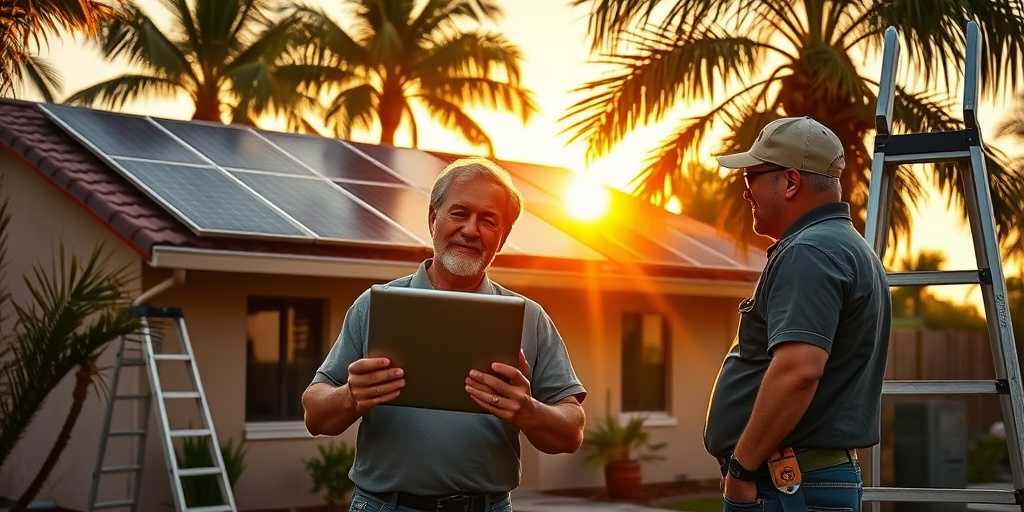
Imagine a life where your energy bills are nonexistent, where you have the freedom to power your home without relying on a fluctuating electricity grid. This is the promise of off-grid solar systems, a solution that is growing increasingly vital as energy demands rise and conventional power sources become less reliable. According to the U.S. Energy Information Administration, over 40% of Florida homeowners are now considering solar solutions to combat sky-high energy costs (EIA.gov). Moreover, a striking 76% of surveyed homeowners state that energy independence is a crucial factor influencing their decision to transition to solar power (SEIA.org). In 2025, this topic has never been more urgent. With rising energy costs, new state incentives promoting renewable energy, and growing concerns over grid instability, understanding how off-grid solar systems work and what they can offer you is essential.
In this article, titled A Comprehensive Deep-Dive into Off-Grid Solar Systems, we will explore the ins and outs of going off-grid in Florida, perfectly tailored for both homeowners and commercial property owners. By equipping you with expert insights, we aim to arm you with the knowledge necessary to make informed decisions. Throughout the post, we will discuss the following five sections:
- Case Study: The Journey of a Florida Homeowner Embracing Off-Grid Living
- Checklist: How to Make Your Off-Grid Solar Transition Smooth and Effective
- Myth-Busting: Debunking Common Misconceptions About Off-Grid Systems
- Local Focus: The Florida Context and Its Solar Power Landscape
- Technical Deep-Dive: Exploring Solar Technology for Off-Grid Solutions
By reading on, you will not only learn about the nuts and bolts of off-grid solar energy but also why now is the time to take action. Let’s begin our journey into this transformative world of energy independence.
Case Study: The Journey of a Florida Homeowner Embracing Off-Grid Living
Meet the Johnson family from Gainesville, Florida. After living through multiple hurricanes and an ever-increasing utility bill, they decided it was time for a change. In 2024, they took the leap and installed an off-grid solar system. Initially skeptical about the costs versus the benefits, they conducted thorough research and found that off-grid systems not only stabilize their energy supply but also cut their electric bills significantly, leading to savings of approximately $200 monthly. The family’s journey illustrates the tangible benefits of using off-grid solar systems while showcasing the intricacies involved in making such a significant investment.
The Johnsons started by assessing their energy consumption patterns—an essential step in determining the size of their solar array. They discovered that on average, they used about 800 kWh per month, prompting them to plan for a solar system capable of generating at least that much energy. Utilizing high-efficiency solar panels that offer better peak outputs, they landed on a configuration with 12 panels, each rated at 350W, equating to a system size of 4.2 kW. Consulting with Florida Electric & Solar, they personalized their installation to meet their needs, which prompted a seamless transition to off-grid living.
- Step 1: Assess Your Energy Needs: Break down your monthly energy usage to determine the size of the system you’ll require.
- Step 2: Choose Your Solar Panels: Opt for panels that offer the most efficiency given your space constraints.
- Step 3: Incorporate a Battery Storage System: Don’t forget that battery selection will significantly affect your ability to store energy for cloudy days.
- Step 4: Installation Process: Choose a qualified local contractor who understands Florida’s specific regulations and your regional climate.
- Step 5: Monitor Your System: Regular maintenance and performance checks will ensure you maintain peak efficiency.
Interesting statistics add depth to the Johnson family’s narrative. According to the National Renewable Energy Laboratory, solar panel prices have dropped nearly 89% over the last decade, making off-grid systems a financially viable option for many households (NREL.gov). Additionally, more Floridians are expected to opt for off-grid living, as studies indicate a projection of 15 million solar-powered homes in the U.S. by 2030, a significant portion of which will be in sunny states like Florida (SEIA.org).
Through their journey, the Johnsons not only embraced a cost-saving and sustainable lifestyle but also became advocates for off-grid solar solutions in their community, proving that transitioning is not just beneficial but empowering. Their story exemplifies the transformative potential of going off-grid—leading anyone to rethink their energy solutions.
Checklist: How to Make Your Off-Grid Solar Transition Smooth and Effective
Transitioning to an off-grid solar system involves various steps that can often seem overwhelming, but with a documented checklist, you can simplify the process. Below is a comprehensive checklist designed to help prospective solar energy adopters in Florida effectively plan their off-grid journey.
- Step 1: Audit Your Electric Usage – Create a detailed account of your monthly energy use. Document which appliances consume the most energy and their average usage hours.
- Step 2: Research Your Solar Options – Research the various solar technologies available, such as mono-crystalline, polycrystalline, and thin-film solar panels, and their respective benefits.
- Step 3: Select the Right Battery Storage – Evaluate high-capacity battery systems suitable for your energy consumption needs. Lithium-ion batteries could be ideal due to their longevity and efficiency.
- Step 4: Consider Installation Factors – Determine factors such as roof orientation, shading from trees, and local zoning laws that might impact your installation process.
- Step 5: Understand Financial Incentives – Familiarize yourself with the possible tax incentives and rebates available in Florida for off-grid systems, which can significantly reduce installation costs.
By diligently following this checklist, you can create a seamless pathway to energy independence. In Florida, recent state incentives favor solar adoption, highlighting the benefits for homeowners who wish to own their power instead of renting it from utility companies (DSIREUSA.org). The timeframe for transition can be reduced significantly if proper planning is done in advance.
Furthermore, understanding the importance of these steps can enhance your decision-making abilities and procedures, ultimately leading to more successful installation results. Always consider consulting professionals like Florida Electric & Solar to guide you throughout the process to avoid common pitfalls.
Myth-Busting: Debunking Common Misconceptions About Off-Grid Systems
The world of solar is rife with misconceptions, particularly when it comes to off-grid living. Here, we will tackle some of the most common myths that may deter Florida homeowners from considering this viable energy solution.
- Myth #1: Off-grid systems are too expensive to install.
Reality: While upfront costs can be significant, the long-term savings through decreased energy bills typically outweigh initial investments, especially with available incentives (SEIA.org). - Myth #2: You can’t power essential appliances off-grid.
Reality: Off-grid systems can be designed to power all sorts of household appliances, from refrigerators to air conditioners, depending on your energy needs and battery storage. - Myth #3: Off-grid living means living in a cabin in the woods.
Reality: Many suburban and urban homeowners are successfully transitioning to off-grid systems without sacrificing comfort or modern amenities. - Myth #4: You need access to the grid to use solar power.
Reality: Off-grid systems are designed precisely for those who want independence from centralized power sources. - Myth #5: Battery systems are unreliable and costly.
Reality: Advances in battery technology have led to reliable, more affordable storage solutions that allow homeowners to store energy efficiently for later use (NREL.gov).
Understanding the facts behind these myths is instrumental as you consider going off-grid. Exploring these common misconceptions can reveal how an off-grid solution may be more relevant than you anticipated, showcasing that modern solar technology can blend seamlessly into your lifestyle.
Local Focus: The Florida Context and Its Solar Power Landscape
Florida’s abundant sunshine presents a golden opportunity for off-grid solar systems. As the sunshine state, it’s no surprise that solar energy production is highly efficient here. In fact, studies show that Florida ranks third in the nation for installed solar capacity, with growth projected to continue well into 2025 (SEIA.org).
Additionally, local policy changes, such as net metering and rebate programs, have made transitioning into solar an attractive investment. For instance, the state offers various incentives that can significantly lower installation costs, ranging up to 26% of your system cost if installed before the end of 2025 (Energy.gov). Navigating through available incentives ensures that you can leverage maximum savings with minimal initial financial strain.
- Incentive #1: Tax exemptions on solar energy systems, which keeps more money in your pocket.
- Incentive #2: State grants aimed at assisting property owners in Florida pursuing off-grid installations.
- Incentive #3: Local utility provider rebates that encourage consumers to transition toward renewable energy sources.
Moreover, understanding how local utilities operate can provide further insights into adjusting your home infrastructure. By aligning your energy consumption profile with solar technology advancements, Florida homeowners can tap into innovative options to ensure stability in their off-grid setups. Consulting with a local expert from Florida Electric & Solar will provide necessary expertise tailored to Florida’s unique solar landscape.
Technical Deep-Dive: Exploring Solar Technology for Off-Grid Solutions
As we transition to the tech side of off-grid solar systems, a clear understanding of different components is crucial. The success of an off-grid system rests on four key components: solar panels, charge controllers, batteries, and inverters.
1. Solar Panels: These are the heart of your solar system. High-efficiency panels convert sunlight to electricity. With Florida’s abundance of sunlight, panels that deliver maximum output during peak hours are critical for achieving energy independence.
2. Charge Controllers: Essential for regulating the voltage and current coming from your solar panels. This prevents overcharging your battery banks and helps extend their lifespan.
3. Batteries: Your battery bank stores excess solar energy generated during the day. Newer lithium-ion batteries are lightweight and highly efficient, making them ideal for residential setups. Investing well in battery technology ensures a reliable energy source to draw upon during cloudy days or nighttime.
4. Inverters: The role of inverters is pivotal as they convert the direct current (DC) electricity generated by panels into alternating current (AC) electricity, which is what most home appliances use. Understanding your inverter’s capacity and functions is imperative to ensure it’s compatible with your system’s requirements.
Having comprehensive knowledge of these components allows you to make better decisions when planning your system. With the right setup, an off-grid solar system can be incredibly powerful, transforming your approach to energy consumption. Furthermore, many manufacturers are now offering warranties and support directly aimed at Florida homeowners, making transitioning smoother than ever.
In summary, understanding each component leads to better long-term savings and reliability in your solar energy solutions. It is advisable to engage with professionals at Florida Electric & Solar who can guide you through selecting equipment that best suits your off-grid solar needs.
Next Steps for Florida Solar Buyers in 2025
The journey toward a sustainable, energy-independent lifestyle doesn’t need to be daunting. By following a clear action plan, Florida homeowners can smoothly transition to an off-grid solar system. Here’s a structured action plan to get you started:
- Step 1: Audit Your Electric Bill: Review your past utility bills to understand your energy use patterns, which will be pivotal in sizing your system correctly.
- Step 2: Research Financing Options: Look into financing solutions, tax credits, and incentives that can ease the financial burden of your solar setup.
- Step 3: Consult Experts: An expert consultation from local solar providers can provide tailored solutions that consider your specific requirements.
- Step 4: Installation and Setup: Work with trusted contractors to ensure your system is set up efficiently and in line with Florida regulations.
- Step 5: Ongoing Monitoring: After installation, keep a close eye on your system’s performance to ensure it’s operating at optimal efficiency, and adjust as necessary.
This step-by-step checklist not only reduces friction in the decision-making process but also empowers you to take control of your energy future. With government support and market viability for solar solutions, there’s no better time than now to commit to energy independence.
In conclusion, the transition to off-grid solar systems represents a pivotal moment for Florida homeowners and commercial property owners alike. Not only does it promise significant cost savings, but it serves as a practical solution to a growing energy independence need. You now possess a wealth of knowledge from what off-grid systems entail to the practical steps you can take to begin your journey. As we step into 2025, owning your power has never seemed more achievable.
Ready to start your solar journey in 2025? Connect with a certified expert at floridaelectricandsolar.com today.
Related Articles
More insights about Off-Grid Solar

Myth-Buster: Off-Grid Solar Systems Are Not Always Unaffordable

What You Need to Know About Off-Grid Solar Systems

How One Florida Business Reduced Costs with Off-Grid Solar Systems
Ready to Go Solar?
Have questions about solar energy? Our experts are here to help you make the switch to clean, renewable energy.