
Expert Insight on Solar ROI Breakdown for Florida Homeowners
Share:
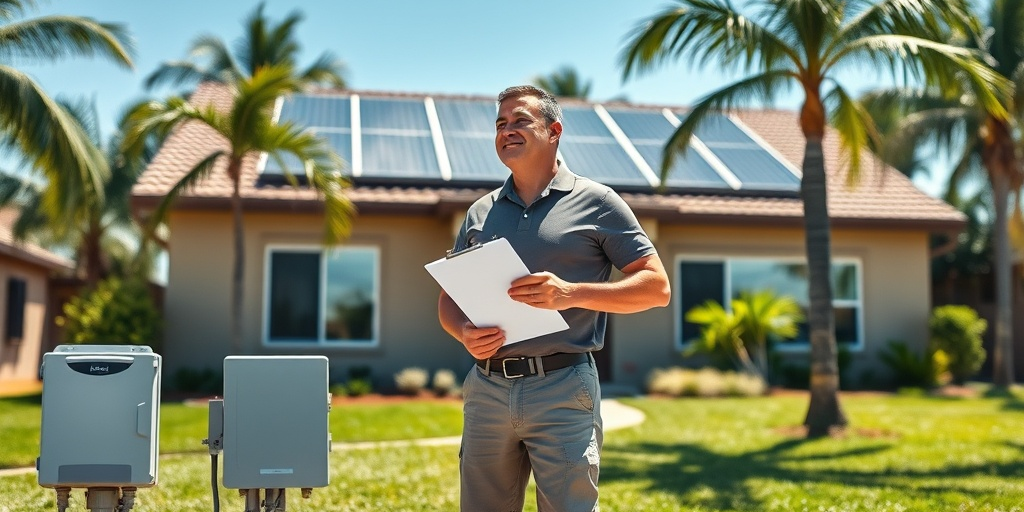
As the sun shines brighter each year, so too do the financial opportunities for Florida homeowners. In 2023, the average solar panel installation in Florida yields a remarkable 20% return on investment (ROI) over 25 years, according to the Solar Energy Industries Association (SEIA.org). This statistic highlights a growing trend among homeowners seeking not only sustainability but also genuine financial savings. But what does this truly mean for you as a Floridian considering solar in 2025? The Expert Insight on Solar ROI Breakdown for Florida Homeowners unravels the financial puzzle of going solar and reveals key metrics that can maximize your utility bill savings today. It’s vital to understand these components as energy costs continue to rise—Florida saw a staggering 18% increase in utility rates in 2023 (Energy.gov)—driving homeowners to seek alternative power sources. Additionally, major incentives are being offered, making now the opportune moment for your transition to solar. This article will guide you through five vital areas: the emotional and financial narratives from fellow Floridians, essential steps to max out your investment, common myths and truths about solar ROI, not-to-be-missed Florida-specific insights, and a technological deep-dive that will equip you for 2025.
Understand Your Solar ROI: A Deep Dive into Real Savings
When jumping into the realm of renewable energy, understanding your return on investment is critical. Let’s draw on a case study of Sheila, a homeowner in Orlando who recently installed solar panels on her home. Sheila was initially skeptical due to the upfront costs. However, after consulting with solar providers, she learned about the **Federal Investment Tax Credit (ITC)**, which allows homeowners to deduct 26% of the installation cost from their federal taxes. This incentive significantly helped reduce her financial burden. On top of that, Sheila discovered that her monthly electric bill would drop by over 70% after installing a 7 kW solar system, allowing her to save an estimated $12,000 over the next 20 years (SolarReviews.com).
Sheila’s journey reflects a simple yet crucial Checklist for maximizing solar ROI:
- Step 1: Understand initial costs versus long-term savings. Use solar calculators provided by platforms like floridaelectricandsolar.com to estimate potential savings.
- Step 2: Explore available tax credits and incentives. Research local, state, and federal opportunities.
- Step 3: Assess energy needs. Consult a trusted solar expert to evaluate your current and future electricity consumption.
- Step 4: Investigate financing options. Many Florida companies offer tailored financing solutions.
- Step 5: Monitor your savings post-installation. Regular tracking shows the tangible benefits of your investment over time.
However, dispelling myths is equally essential. Myth #1: “Solar panels require direct sunlight.” In Florida’s sunny climate, solar panels can still generate electricity on cloudy days, ensuring efficiency. Myth #2: “Installing solar is only for environmentally focused people.” The reality is that the economic incentives make solar a smart financial choice, even for those simply looking to cut costs. Myth #3: “Going solar is too complicated.” In fact, many providers now handle the entire permitting process for you; minimizing hassle is their specialty. Finally, Myth #4: “Solar panels decrease property values.” Research indicates homes with solar installations sell at a premium compared to similar homes without solar systems (NREL.gov).
Florida homeowners have a unique advantage with local programs facilitating solar adoption. With more than 900,000 solar installations across the state, projects create a network aiding in community resilience against power outages. This growing trend is not just a matter of saving but also plays into Florida’s future of energy independence and innovation.
Key Metrics to Ensure Maximum Returns on Your Solar Investment
The world of solar power can feel overwhelming, but focusing on a few key metrics can simplify the decision-making process. Firstly, understand your energy production and consumption. One key element is the Capacity Factor, which measures the actual output of a solar system compared to its potential maximum output. A typical Florida solar installation has a capacity factor around 20% to 30% given local weather conditions. This means you can roughly expect 20-30% of the maximum energy generation when evaluating potential savings.
- Energy Payback Time: The time taken for a solar system to generate the energy that was used to produce it generally takes between 1 to 4 years depending on system efficiency.
- Levelized Cost of Energy (LCOE): This metric is crucial for understanding the price per kWh of electricity generated by your solar panels over their lifetime. In Florida, the LCOE is currently around $0.06 to $0.08 per kWh, making it cheaper than conventional fossil fuel energy.
- Net Metering Benefits: Florida allows net metering, which credits solar energy system owners for the electricity they add to the grid, enhancing your savings by lowering the electricity bill.
By narrowing down on these metrics, you can make informed decisions that align with your energy needs and financial aspirations. Moreover, a comprehensive understanding of panel types, inverter tech, features of battery storage, and more can significantly affect ROI. Engaging with a local expert not only provides tailored advice but also clarifies which technology suits your home best. As a proactive Florida homeowner, the next step is to map out your consumption patterns and evaluate your home’s capacity for solar installation.
5 Expert Solar Installation Tips for 2025
As you embark on your journey to adopt solar energy, it’s crucial to grasp best practices for optimizing your installation. Here are 5 expert tips to ensure you maximize your investment.
Utilizing proper techniques ensures that your solar investment performs optimally and aligns with your financial goals. In Florida, where storms can create interruptions, battery storage is a game-changer—providing much-needed energy independence and resilience.
The Journey from Skepticism to Solar Success: A Florida Homeowner’s Experience
Meet Tom, a diligent homeowner and past skeptic of solar energy. Living in Jacksonville, he had always considered solar panels to be costly and impractical. However, after seeing several neighbors successfully install solar systems, he began his investigation into going solar himself. He discovered that choosing a reputable installer, participating in a local solar co-op, drastically reduced his costs. This journey brought Tom a savings estimation of **$17,500** over the lifetime of his system (SolarReviews.com). In 2025, he learned that the combination of federal tax credits and rising utility costs made solar a financially sound choice that reflected not only personal savings but also environmental commitment.
Tom’s experience highlights vital points every Florida homeowner should consider:
- Price of Installation versus Savings: Evaluate net costs after state incentives and tax credits.
- Potential for Value Increase: Homes with solar systems often appreciate better within a thriving market.
- Environmental Consciousness: By installing solar, Tom contributed to a reduction in greenhouse gases—an essential consideration for future generations.
The narrative of Tom shines as a beacon for countless other Floridians weighing the switch to solar energy. By emphasizing financial incentives, the long-term benefits of solar adoption develop a compelling argument that often leads to overwhelming affirmative responses.
Next Steps for Florida Solar Buyers in 2025
As we wrap up our discussion on maximizing your solar ROI, it’s imperative to create an actionable plan that streamlines your solar journey in 2025. Follow these simple steps to get started:
- Step 1: Audit Your Electric Bill – Collect your last 12 months of bills and identify high usage months. A clear picture of your utility expenses will assist with your solar size calculations.
- Step 2: Research Local Installers – Seek options available in your zip code. Engage with professionals and gather quotes. Verify licenses and customer reviews.
- Step 3: Evaluate Financing Options – Understand your financing and payment structure. Assess possibilities for leasing, cash purchase, or loan options.
- Step 4: Apply for Incentives – Ensure you are aware of all available credit and rebate programs. Documentation is key; keep it organized. Visit floridaelectricandsolar.com for resources.
- Step 5: Prepare for Installation – After everything is in order, prepare your home by ensuring timely accessibility and clear communication with your installer.
Taking the leap into solar is transformational, not just for your finances but for the numerous benefits it brings to the environment and community. The financial metrics and potential savings show that going solar is no longer just an option, but a necessity for forward-thinking homeowners. Don’t miss the opportunity to take control of your energy future.
In conclusion, the journey from skepticism to advocate for solar energy in Florida is paved by knowledge, proper planning, and the right support. With energy costs climbing and significant incentives available, 2025 is the year to act. Remember the benefits of solar are not solely monetary but contribute to a healthier planet and community.
Ready to start your solar journey in 2025? Connect with a certified expert at floridaelectricandsolar.com today.
Related Articles
More insights about Solar ROI

Expert Insight: Understanding Solar ROI Breakdown for Florida Homeowners

Beginner’s Guide to Solar ROI Breakdown for Your Home

What Florida Homeowners Need to Know About Solar ROI Breakdown
Ready to Go Solar?
Have questions about solar energy? Our experts are here to help you make the switch to clean, renewable energy.