
Florida Homeowners’ Essential Guide to Solar Battery Storage
Share:
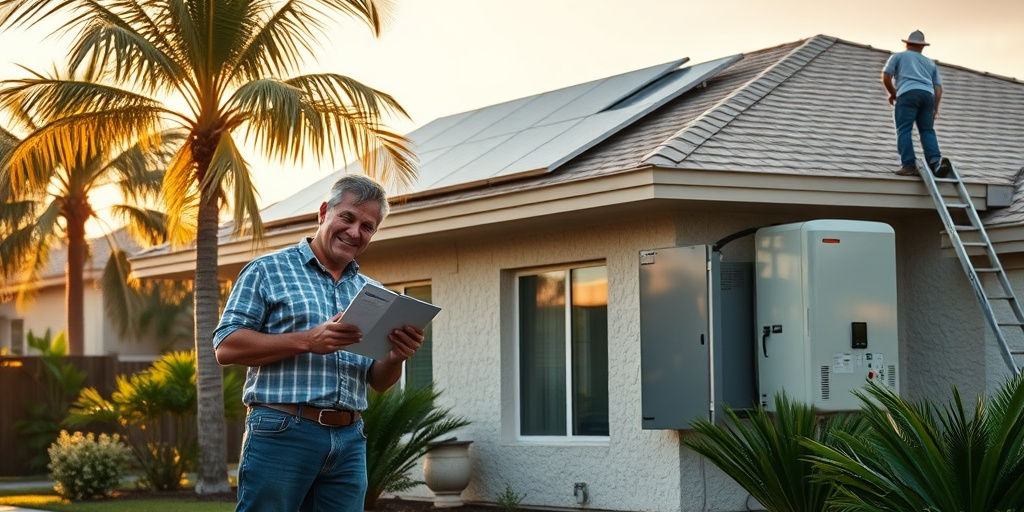
As Florida homeowners look to the future, the question on everyone’s mind is: “How can I ensure my energy independence amid rising electric rates and increasingly unstable weather patterns?” In 2025, the answer becomes clear: solar battery storage. This technology not only allows you to maximize your solar energy usage but also ensures that you remain powered even during outages and peak demand periods. In our article titled Florida Homeowners’ Essential Guide to Solar Battery Storage, we will delve deep into this vital aspect of solar energy. Did you know that in 2025, over 20% of Floridians will be using solar energy to power their homes (SolarReviews.com)? Additionally, numerous incentives will be available, making solar battery systems more affordable than ever (SEIA.org). As energy costs continue to rise and climate volatility increases, understanding solar battery storage becomes urgent. Join us as we explore five essential areas: why solar battery storage matters, actionable steps to implement it, common myths debunked, technical know-how, and an action plan for all Florida homeowners looking towards next year.
Understanding Solar Battery Storage: The Key to Energy Independence
To fully appreciate the benefits of solar battery storage, let’s take a closer look at a fictional Floridian homeowner named Jessica. Jessica and her family live in Orlando, where summer storms often cause blackouts. In 2024, she decided to install solar panels on her roof, and she soon learned about the importance of energy storage systems. With a solar battery installed, she could store excess solar energy generated during sunny afternoons and utilize it during the evenings or when the grid went down. Jessica’s experience exemplifies the potential that these systems hold for not only saving money but ensuring power reliability.
To start with, here’s a checklist of actionable steps Jessica took to dive into solar battery storage:
- Research local solar incentives: She learned about tax credits and rebates specific to Florida homeowners to reduce her overall costs.
- Choose the right battery: After discussions with her installer, she opted for a lithium-ion battery due to its higher efficiency and longevity.
- Evaluate energy needs: She calculated her family’s daily energy requirements to select a suitable battery capacity.
- Connect with experts: Jessica consulted with local contractors at floridaelectricandsolar.com for installations and best practices.
- Stay updated on local policies: Jessica remained informed about new regulations or incentives that could benefit her solar investment.
Now, let’s take a step back and investigate some common myths surrounding solar battery storage that might keep homeowners from making informed decisions:
- Myth #1: Solar energy is only for sunny days.
Many presume that solar energy isn’t useful when the sun isn’t shining, but battery storage allows homeowners to use their harvested energy irrespective of weather conditions. - Myth #2: Batteries are too expensive.
The initial investment can be offset by the savings on electricity bills, tax credits, and utility incentives available in Florida. - Myth #3: Battery systems require excessive maintenance.
Modern solar batteries are designed to be low-maintenance, often with warranties for up to 10 years. - Myth #4: It’s unnecessary if you’re on the grid.
Having battery storage can provide backup in case of outages, especially significant in hurricane-prone areas like Florida. - Myth #5: Batteries degrade too quickly.
With advancements in technology, most modern systems maintain their efficiency for many years, ensuring a good return on investment.
But all these aspects depend heavily on local relevance — understanding Florida-specific policies and incentives is crucial. In fact, as of 2023, Florida offered a Property Tax Exemption for solar equipment, making installations even more appealing (DSIREUSA.org).
As we transition into the next section, exploring best practices for solar installations and battery systems installation could further enhance our knowledge and assist homeowners like Jessica to optimize their systems.
5 Expert Solar Installation Tips for 2025
Setting up solar battery storage effectively involves more than picking a battery; it also requires strategic installation. Here are five expert tips to keep in mind:
- 1. Don’t skimp on panel placement: Optimal placement is critical for maximizing sun exposure. Position your panels away from shade and at an angle that aligns with the sun’s trajectory.
- 2. Invest in high-quality equipment: Selecting a reliable brand for both your solar panels and batteries will ensure durability and efficiency over time. Look for certifications and warranties.
- 3. Don’t overlook inverter quality: The inverter converts stored solar energy into usable power. Investing in a high-efficiency inverter can lead to improved overall energy performance.
- 4. Plan for future expansion: If you foresee increasing your energy needs, ensure your system is flexible enough to allow for future upgrades.
- 5. Engage with a knowledgeable contractor: Partner with solar experts who understand local regulations, installation procedures, and post-installation maintenance in Florida to avoid pitfalls.
Research has found that homeowners with well-planned solar installations can reduce their electricity bills by 60% (Energy.gov). By adopting these practices, Florida homeowners can set themselves up not only for significant savings but also for energy security and independence.
As we delve deeper into the current narratives surrounding solar battery technology and its implementation, let’s examine a realistic journey that one Florida homeowner might take.
A Florida Homeowner’s Solar Journey: From Hesitation to Empowerment
Meet Tom, a Tampa resident skeptical about going solar. Initially apprehensive due to the perceived costs and effort, Tom’s family faced frequent power outages during storm season. After conducting some research, he discovered the profound benefits of solar battery storage. This is his story:
- Your motivation: The power outages pushed Tom to explore alternatives, realizing how vulnerable he and his family were without a reliable energy source.
- Initial research: He reached out to local solar providers, combing through online reviews and insights from Florida homeowners who shared their experiences.
- Community conversations: Tom spoke with neighbors about their solar experiences, eventually finding one who recommended a solar battery system for energy independence.
- Cost analysis: Using a custom calculator, he compared energy bills before and after converting to solar, realizing he could save up to $1,000 annually.
- Final decision: With help from professionals, Tom installed solar panels and a Tesla Powerwall, effectively transforming his household’s energy management.
His journey highlights a growing trend: according to the Solar Energy Industries Association, Florida ranks third in the nation for solar capacity (SEIA.org). The decision to invest in solar technology can enhance your home’s value while lowering your electric bills significantly.
With the increasing availability of incentives and rebates from the state government, navigating the transition towards solar power is less cumbersome than ever. Now, let’s focus on some actionable strategies for Florida homeowners ready to take the leap towards solar energy in 2025.
Next Steps for Florida Solar Buyers in 2025
If you’re ready to embrace solar energy and battery storage for your home, here’s a bold and clear checklist to guide you through the process:
- Step 1: Audit Your Electric Bill: Review your bills from the past year to understand your average energy consumption and peak usage times. This will guide you in selecting the right battery capacity.
- Step 2: Research Local Incentives: Understand available rebates, grants, and tax credits specific to Florida homeowners. Programs like the Federal Solar Investment Tax Credit can significantly lower the upfront costs.
- Step 3: Choose a Reputable Installer: Engage with qualified solar installation companies. At floridaelectricandsolar.com, find certified professionals who will ensure smooth installations adhering to local regulations.
- Step 4: Select the Right System Components: Pair your solar panels with the best battery and inverter. This is crucial for optimizing your solar setup’s efficiency.
- Step 5: Monitor System Performance: Once installed, use applications provided by your battery and inverter manufacturers to track your system’s efficiency and savings over time.
Embracing this checklist can lead to an empowered ownership experience and a significant financial turnaround. Moreover, with increasing energy demands, securing a self-reliant energy source through solar battery systems is more critical than ever.
Final Thoughts: Taking Control of Your Energy Future
In summary, solar battery storage is not just a feature; it’s a lifeline for Florida homeowners. We’ve explored how crucial it is to understand your energy needs, deconstruct myths, and follow proven best practices. Today’s decisions in solar investments delineate the path to energy independence and long-term savings. The urgency is clear: with rates projected to keep climbing and disasters increasing in frequency due to climate change, making informed choices in 2025 will lay the foundation for your family’s energy future.
Ready to start your solar journey in 2025? Connect with a certified expert at floridaelectricandsolar.com today.
Related Articles
More insights about Solar Battery Storage

What Is a Solar Battery and How Does It Store Power for Your Florida Home?

What Florida Homeowners Should Know About Solar Battery Storage

5 Steps to Understand Solar Battery Storage for Your Home
Ready to Go Solar?
Have questions about solar energy? Our experts are here to help you make the switch to clean, renewable energy.