
Understanding Solar Battery Storage and Its Impact on Your Home
Share:
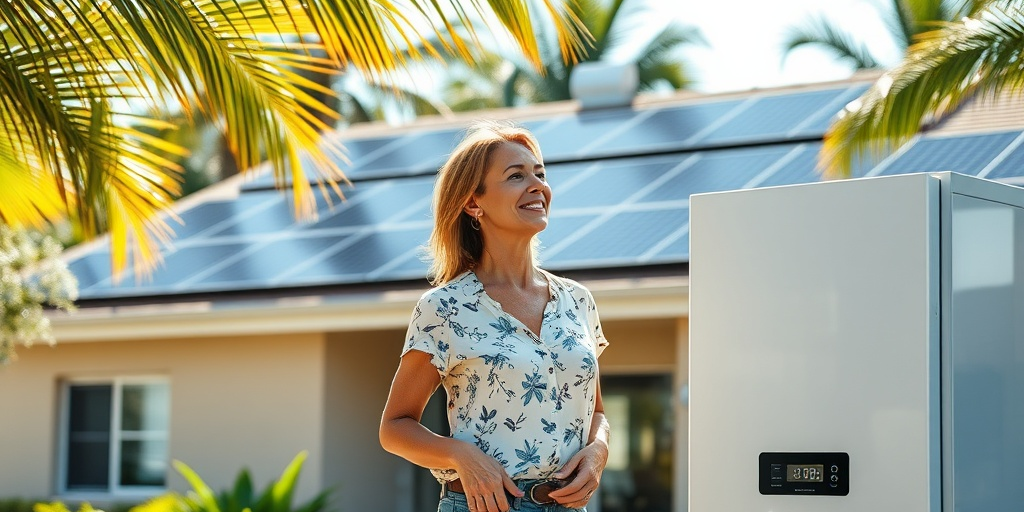
As Florida homeowners gaze towards the horizon of renewable energy, an electrifying statistic leaps off the page: nearly 70% of families in the Sunshine State are considering solar energy in some form by 2025 (SEIA.org). This surge of interest is driven by escalating energy costs, with Floridians paying, on average, 15% more for electricity compared to the national average (Energy.gov). The combination of these factors makes understanding solar battery storage and its impact on your home imperative not just for energy independence, but for financial prudence as well. In this detailed exploration of “Understanding Solar Battery Storage and Its Impact on Your Home,” we lead you through an enlightening journey designed to highlight the transformative power of solar battery systems in your household. By the end of this article, you will be armed with a comprehensive understanding of battery technology and how it could be an integral part of your home’s solar journey.
In urgent societal shifts such as increasing energy instability and new solar incentives scheduled for rollout in 2025, your decision to shift towards solar energy can resonate beyond your family. It can resonate through community resilience to climate change and adaptation to variable energy needs. This article will guide you through five essential sections, including: a technical deep dive into battery storage technology, actionable steps for assessment and installation, the debunking of common solar myths, real-life case studies from Florida homeowners, and a roadmap to empower your solar journey. Let’s embark on this quest for knowledge together—they say knowledge is power, and in this case, it’s about owning yours.
Understanding Solar Battery Storage: The Key to Energy Independence
Imagine living in a Florida home where your energy bills dwindle while your comfort flourishes, thanks to a harmonious blend of solar panels and battery storage. This dream isn’t far-fetched; it’s entirely possible with modern solar technology. A neighbor, Jane, made the decision to install a solar battery alongside her solar panels in 2023, not just for savings, but for reliability. After her installation, she boundlessly enjoyed the climate-controlled peace of mind during hurricane season, knowing she could rely on stored energy. In Jane’s case, her battery system provided over 10 kWh (kilowatt-hours) of electricity per day, which significantly diminished her reliance on the grid (SolarReviews.com).
Here’s a straightforward checklist to consider when thinking about solar battery storage for your home:
- Assess Your Energy Needs: Review your energy consumption over the past year. Consider key appliances, emergency needs, and any future increases in consumption.
- Understand Your Solar Capacity: Evaluate the size of your solar panel system. A quality installer can help determine how much energy you can generate based on your roof size and sun exposure.
- Evaluate Battery Options: Research different battery brands and technologies. Lithium-ion batteries are currently the most popular due to their efficiency and effectiveness.
- Consider Local Incentives: Investigate state and local incentives available for installing battery storage systems. Florida has numerous incentives as part of renewable energy goals.
- Plan for Installation: Find reputable solar providers in Florida that can guide your installation while discussing cost breakdowns, warranties, and service agreements.
However, a cloud of misinformation often obstructs the sunlit path forward for consumers. Let’s demystify some of the most common beliefs.
Myth #1: Solar battery storage is only for off-grid homes.
This is a common misconception. Even homeowners connected to the grid can significantly reduce their electricity bills by utilizing storage technology to store energy during peak production times (GeorgiaSolar.org).
Myth #2: Batteries require constant maintenance.
Modern battery systems are designed for low maintenance. Manufacturers provide warranties often lasting 10 years or more, effectively covering most common issues.
Myth #3: Solar batteries slow down panel performance.
On the contrary, integrating a battery with your solar panel system can optimize your energy usage by storing excess energy to be used later, especially during peak hours (SEIA.org).
Myth #4: Installation is prohibitively expensive.
While upfront costs may seem high, the long-term savings on energy bills offset these initial expenditures. This especially holds true considering potential tax credits and incentives (SolarReviews.com).
Myth #5: You’ll be powerless when the grid goes down.
With a solar battery storage system, many homeowners maintain power even when outages occur by using stored energy (NREL.gov).
The future is bright in Florida, with various incentives promoting solar battery storage. It’s projected that solar energy will cover approximately 20% of the state’s energy needs by 2025 (Energy.gov). These statistics underscore the importance of battery systems as a vital component for energy resilience and sustainability going forward.
Maximizing Your Solar Investment: Key Considerations
Investing in solar and battery storage is more than just a trend; it’s a strategic decision aimed at long-term, sustainable savings. Here are essential considerations that can help elevate your energy efficiency throughout your journey:
- Energy Management Systems: These innovative systems allow homeowners to monitor and control individual energy consumption. Smart features enable real-time tracking, setting priority use of solar-generated electricity, and automating savings.
- Battery Sizing: Properly sizing your battery is quite essential. Too small, and you risk losing out on stored energy value; too large, and you overspend for capacity you do not use. Your energy auditor can guide you in selecting the correct size based on your energy profile.
- Location: Florida’s abundant sunlight presents a unique advantage. Consider your installation location; south-facing angled roofs can yield up to 30% more output compared to less optimal orientations (Energy.gov).
- Efficiency Ratings: Look for batteries with high round-trip efficiencies (the ratio of energy you put in versus how much you get back). Leading models currently offer efficiencies exceeding 90% (SolarReviews.com).
As you move closer to making an informed investment, you’ll want to consider contacting floridaelectricandsolar.com for expert consultation tailored to your needs.
5 Expert Solar Installation Tips for 2025
Once you decide to go solar, ensuring a seamless installation process becomes paramount. Here’s a selection of expert tips.
1. Don’t Skimp on Professional Assessment: A qualified installer analyzes every detail, from shading issues based on landscaping to structural capacity and electrical load. Relying solely on DIY assessments can lead to costly mistakes.
2. Understand Battery Lifespan: Most solar batteries last about 10-15 years. Knowing this can help you budget for eventual replacements and maximize your investment.
3. Plan for Future Expansion: Should you decide to increase your solar array, ensure that your system is flexible enough to accommodate future growth without excessive additional costs.
4. Monitor Performance: Post-installation, utilize the monitoring tools available for your system. Immediate feedback can alert you to any issues, ensuring optimal performance and energy savings.
5. Stay Updated on Incentives: Legislation and incentives are changing, especially as we approach 2025. Engage regularly with local solar experts who can cue you into new opportunities to save money.
By adhering to these guidelines, you ensure a solid return on your investment. The cost of solar equipment may be significant, but the savings can be realized in many forms, from reduced bills to peace of mind during unexpected outages (SEIA.org).
The Journey of a Florida Family: Realizing Solar Dreams
Let’s pivot from theory to the real-world experiences of families harnessing the power of solar energy. Meet the Sanchez family from Orlando, who decided to transform their utility burden into solar saviors.
Living in a sprawling suburban property, the Sanchez family had seen the monthly electricity bills climb year after year, peaking at an unsustainable $300 in the summer months. With three children, it was not just about the bills; it was about creating a more sustainable environment for generations to come.
After researching solar solutions, they contacted a local advisory service to better understand their options. By installing a 10 kW solar system with a 15 kWh battery back-up, the Sanchez family now enjoys the benefits of the abundant Florida sunshine. They reduced bills to approximately $50 monthly while storing excess energy to power their home during peak hours or outages.
Here’s a list of the major benefits they noted after transitioning to solar:
- Significant Reduction in Monthly Bills
- Energy Independence from the Local Grid
- Reassurance of Continued Power During Outages
- Boost to Home Market Value
Statistics suggest that properties with solar energy systems see increased market value of around 4% compared to those without solar installations (DSIREUSA.org). With growing public interest and favorable policies around solar investments, the Sanchez family’s decision paid off.
Next Steps for Florida Solar Buyers in 2025
So, what’s next for homeowners ready to seize the solar opportunity in 2025? Here’s a checklist that outlines the actionable steps towards a solar-powered future.
- Step 1: Audit Your Electric Bill: Review your recent bills to determine your average monthly usage and peak usage times. Understanding your patterns will guide your solar system’s design.
- Step 2: Consult a Solar Expert: Speak with a reputable solar installer to review the feasibility of solar battery systems in your area. This conversation is crucial to tailor systems according to location and usage.
- Step 3: Inquire About Financing: Understand the financial options available—loans, leases, or power purchase agreements (PPAs) can have different implications on your budget and long-term savings.
- Step 4: Research Financial Incentives: State and federal incentive programs may significantly offset the cost of installations. Staying informed is vital for maximizing potential savings.
- Step 5: Move Forward with Installation: Once everything is in place, schedule the installation. Following safety protocol throughout the process will help ensure things go smoothly.
Remember, an informed decision will ensure you maximize your energy efficiency while fostering a sustainable way of living, so don’t hesitate to connect with floridaelectricandsolar.com for guidance tailored to Floridian homeowners.
Conclusion: The Solar Road Ahead
As we’ve explored, understanding solar battery storage and its effects on your home is no longer a luxury but a necessity for modern living. The Sanchez family’s story is just one shining example of how solar energy is reshaping lives in Florida. Solar power offers an abundance of benefits—reduced electric bills, increased home value, sustainable independence, and a shield against energy inflation. With advancements in technology, accessibility of options, and financial incentives in 2025, your time to act is now. Make this decision not just for you, but for future generations. Remember, living sustainably can and should go hand in hand with living economically. Are you ready to start your solar journey in 2025? Connect with a certified expert at floridaelectricandsolar.com today.
Related Articles
More insights about Solar Battery Storage

What Is a Solar Battery and How Does It Store Power for Your Florida Home?

What Florida Homeowners Should Know About Solar Battery Storage

5 Steps to Understand Solar Battery Storage for Your Home
Ready to Go Solar?
Have questions about solar energy? Our experts are here to help you make the switch to clean, renewable energy.