
What You Need to Know About Solar Panel ROI
Share:
Did you know that the average return on investment (ROI) for solar panel installations can reach as high as 20% in some areas? This means that for every dollar you spend, you could potentially reclaim 20 cents annually. This compelling statistic captures the essence of what homeowners in Florida need to understand about solar power: it’s not just about energy savings; it’s an investment in your future. In “What You Need to Know About Solar Panel ROI,” we will explore how you can achieve optimal savings and enhance your financial future through solar energy, especially as we approach 2025 when energy costs are projected to surge dramatically. With Florida’s increasing energy demands and shifting policies in favor of renewable energy, understanding your ROI is more critical than ever. In this blog post, we’ll delve into five sections: a deep dive into case studies, a practical checklist, address common myths, highlight regional insights, and provide a detailed technical analysis. Let’s unravel how solar power can work for you!
Understanding Solar Panel ROI: A Case Study in Action
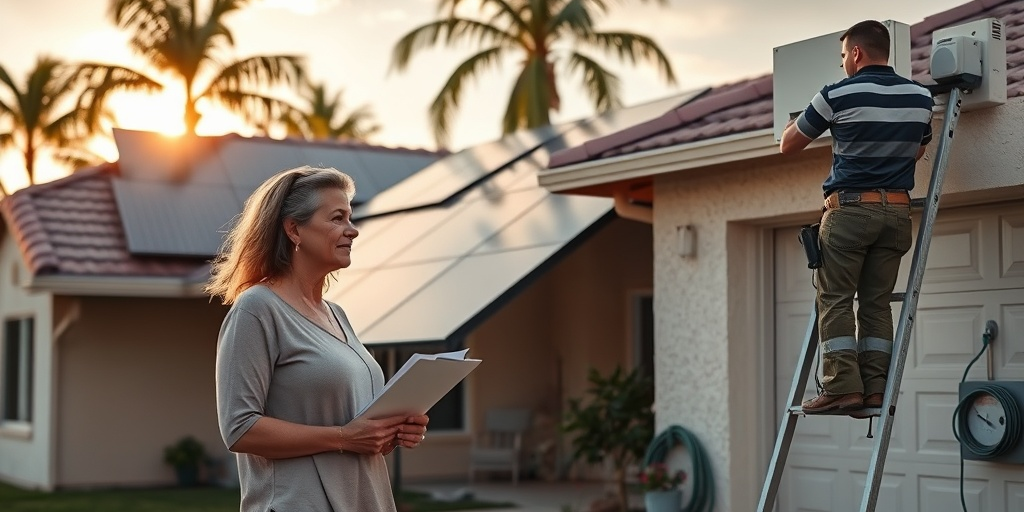
Meet Sarah and Mike, a couple living in sunny Sarasota, Florida. Eager to harness their rooftop’s potential, they took the leap into solar energy last spring. Initially apprehensive about the upfront costs—estimated at $20,000—they focused on the long-term financial benefits that could follow. Sarah, an accountant, crunched the numbers, eyeing the various incentives offered. Research showed that Florida homeowners could qualify for a 26% federal tax credit, reducing their investment by $5,200. In addition, with solar energy, their monthly electric bill plummeted from $180 to a mere $30. That’s not just a lower bill; that’s a saving of $1,800 per year! This case study encapsulates the very essence of solar panel ROI, illustrating how Florida residents can reclaim costs while making a substantial slice of energy savings.
- Step 1: Invest wisely by utilizing tax credits and rebates. Research available incentives that can decrease your initial investment significantly.
- Step 2: Analyze your energy usage closely. Sarah and Mike monitored their electric bill and usage patterns to optimize panel placement.
- Step 3: Choose quality equipment. Not all solar panels perform the same; ensure you’re investing in high-efficiency panels that offer longevity.
- Step 4: Monitor your system regularly. Utilize apps and monitoring tools to assess your solar energy production versus consumption, ensuring optimal performance.
- Step 5: Stay informed about energy market trends. As Florida approaches 2025, staying engaged with new solar policies and innovations can provide critical insights into your investment.
While their story unfolds, let’s tackle some widespread myths that may discourage homeowners from taking the solar plunge.
Myth-Buster: Debunking Solar Misconceptions
Myth #1: Solar panels are too expensive for average homeowners. While upfront costs have historically been a barrier, the availability of financing options, combined with federal and state incentives, has made solar electricity accessible for most homeowners. Additionally, the long-term savings greatly outweigh these initial costs (Energy.gov).
Myth #2: Solar energy doesn’t work on cloudy days. Although sunshine is ideal for solar panels, they can still generate electricity during cloudy weather. In fact, in Florida, where the sun shines 237 days a year on average, your investment will still yield significant returns (SEIA.org).
Myth #3: All solar panels are of similar quality and efficiency. This couldn’t be further from the truth. It’s essential to research brands and their efficiency rates, as the market offers a spectrum of options. High-efficiency panels might cost more upfront but can drastically increase your productivity and ROI (SolarReviews.com).
Myth #4: Solar energy is only for single-family homes. Commercial properties are transitioning to solar as well, and various financing models are designed specifically for these types of customers. Dual-site installations can take advantage of economies of scale and yield excellent returns.
Myth #5: Installing solar panels is a complex process for the average homeowner. The truth is, professionals in the field handle the entire installation and code compliance process. Companies like Florida Electric & Solar ensure a hassle-free experience, allowing you to sit back and enjoy your solar energy savings.
With these myths debunked, it’s clear that solar energy is a viable option for Floridians looking to improve their ROI. Now, let’s focus on how this investment can specifically benefit Florida homeowners.
Local Focus: The Bright Future of Solar in Florida
Florida is often dubbed the “Sunshine State,” and for a good reason. In 2023, Florida ranked second in the nation for solar power capacity, positioned to take full advantage of its sun-filled days. As a Florida homeowner, it’s important to consider the specific benefits relevant to your investment. One of these is the state’s unique Net Metering policy, which allows homeowners to sell excess energy back to the grid, further increasing their return on investment.
- Benefit 1: With approximately 266 days of sunshine a year, Florida homeowners can maximize their solar production, significantly lowering their electricity bills (NREL.gov).
- Benefit 2: Floridians may take advantage of the Property Assessed Clean Energy (PACE) program, which offers financing solutions that don’t require upfront capital.
- Benefit 3: Solar energy systems installed in Florida increase a home’s value. Many buyers are interested in energy-efficient homes, making it a lucrative investment.
With state incentives like the 26% tax credit available until the end of 2025, the time to act is now. In 2023 alone, Florida saw a surge in solar installations, providing more opportunities for homeowners to gain significant financial benefits. As energy prices continue to skyrocket, going solar is not just an investment in energy independence; it’s an economic necessity.
Next, let’s dive deeper into the technical aspects of solar installations and how to ensure you’re making a wise investment.
Technical Deep-Dive: Maximizing Your Solar Panel Investment
Getting a grasp on how the technology behind solar power works is crucial for any interested homeowner. Solar panels convert sunlight into electricity using photovoltaic cells. Investing in quality panels can yield long-term energy efficiency, but it’s equally important to understand additional components of your solar system, such as inverters and battery storage.
- Inverters: These vital components convert the direct current (DC) generated by solar panels into alternating current (AC) that powers your home. String inverters are common but consider microinverters or power optimizers for better efficiency.
- Solar Batteries: Investing in battery storage allows you to store excess energy for use during non-sunny hours. This is especially useful for those aiming to achieve energy independence.
- Monitoring Systems: Regular monitoring can help homeowners understand their energy production and savings. Smart technology can notify you of any maintenance needs while optimizing performance.
When considering the installation, it’s essential to consult with professionals who can explain local codes and regulations, ensuring everything meets safety and utility requirements. Using quality materials may have a higher initial cost, but you’re investing in a more robust system that will yield savings for years to come.
As you prepare to invest in solar energy, the next step is establishing your actionable plan for 2025 to optimize your solar journey.
Next Steps for Florida Solar Buyers in 2025
As the demand for renewable energy rises, you’re likely wondering how to take advantage of Florida’s solar opportunities effectively. Here’s a comprehensive action plan to guide your journey:
- Step 1: Audit Your Electric Bill: Review your last several months of bills to determine your average energy consumption. This information is essential when calculating potential savings.
- Step 2: Research Available Incentives: Look into federal, state, and local incentives that can significantly reduce installation costs. Florida offers attractive options, such as the aforementioned federal tax credit.
- Step 3: Select an Installation Company: It’s crucial to choose a reputable contractor for your solar system. Seek recommendations and verify customer reviews.
- Step 4: Calculate Your ROI: Utilize calculators available online or consult professionals to project your potential savings and payback period.
- Step 5: Finalize Your Funding Options: Whether through traditional loans or PACE financing, outline how you’ll cover your expenses.
Ensure you engage with local experts who can navigate your installation smoothly, such as the dedicated team at floridaelectricandsolar.com. Solar power is more than just a trend; it’s a smart, long-term investment.
In conclusion, the journey to understanding solar panel ROI can feel overwhelming, but the benefits far outweigh the initial hurdles. Florida homeowners like Sarah and Mike illustrate how smart investments in solar energy can translate into substantial savings, increasing property value, and energy independence. Debunking myths surrounding solar energy emphasizes that this isn’t merely a trend; it’s an opportunity to secure a financial advantage, particularly as energy prices rise. By leveraging local incentives and maximizing your investment through quality equipment and technology, you’re not just preparing for 2025—you’re defining a sustainable future for your family and community.
Ready to start your solar journey in 2025? Connect with a certified expert at floridaelectricandsolar.com today.
Related Articles
More insights about Solar Panel

Florida Homeowners: Why Solar Panel Maintenance Is Essential

7 Essential Steps for Solar Panel Installation Success

Expert Insights: Key Factors Influencing Solar Panel Lifespan
Ready to Go Solar?
Have questions about solar energy? Our experts are here to help you make the switch to clean, renewable energy.