
How One Florida Homeowner Transformed Their Property with Solar Panel Installation
Share:
Imagine turning your yearly utility expenses into a greenhouse gas reduction while increasing your property’s value. In 2025, that dream becomes a more tangible reality for many Florida homeowners as the state pushes for smart energy solutions amid rising energy costs and an unstable grid. The future of energy is here, and for those who act quickly, embracing solar power is not just a choice, it’s a necessity. Today, we dive into an inspiring narrative: How One Florida Homeowner Transformed Their Property with Solar Panel Installation. This blog post unveils the journey of a homeowner who transitioned to solar power and the profound impact it had—not just financially but also environmentally. This transformation comes at a crucial time, especially with the recent statistic that electricity prices in Florida have increased by 30% over the last decade (Energy.gov). More significantly, the federal solar tax credit remains at 30% through 2032, providing an irresistible incentive for homeowners looking to invest in solar energy (SEIA.org). In this article, we’ll explore five essential sections that encompass the full scope of this case study: an in-depth homeowner narrative, actionable steps to consider when going solar, myth-busting common misconceptions about solar installations, a local focus on Florida’s solar landscape, and a technical deep dive into the solar panel technology empowering this green revolution.
Inside the Solar Transformation: A Florida Homeowner’s Journey
Meet Maria, a passionate advocate for sustainability and a homeowner in sunny Sarasota. With an outdated roof and increasing electric bills nearing $300 a month during the scorching summer months, Maria faced a significant financial strain. Among her neighbors, the chatter about solar energy was becoming increasingly frequent. She listened intently, intrigued by tales of others upgrading their roofs, slashing bills, and contributing to a healthier planet. As 2025 approached, her curiosity shifted to urgency. Rising electricity prices and an ongoing problem of unstable grids prompted her to research solar options thoroughly.
- Understanding the ROI: Maria soon realized that investing in solar was more than a fad; it was a financially savvy decision. Studies illustrated that solar panels increase property values by an average of 4.1% (SolarReviews.com), a considerable incentive for any homeowner.
- Choosing the Right Provider: After exploring local companies, Maria decided to partner with Florida Electric & Solar, renowned for their reputable service and community involvement.
- Environmental Impact: Another driving factor was Maria’s desire to reduce her household’s carbon footprint, knowing her switch to solar would eliminate approximately 44,000 pounds of CO2 emissions over the panel’s lifespan (NREL.gov).
Over the next few weeks, everything moved quickly. A qualified solar representative offered a presentation explaining the types of panels available, the installation process, and financing options, including the ongoing federal tax credit that substantially reduced upfront costs. Maria was amazed at how easy the transition could be. With financing options, she felt excited rather than overwhelmed. It was clear that solar energy posed an opportunity not just to control her energy bill but to contribute positively towards a greener future.
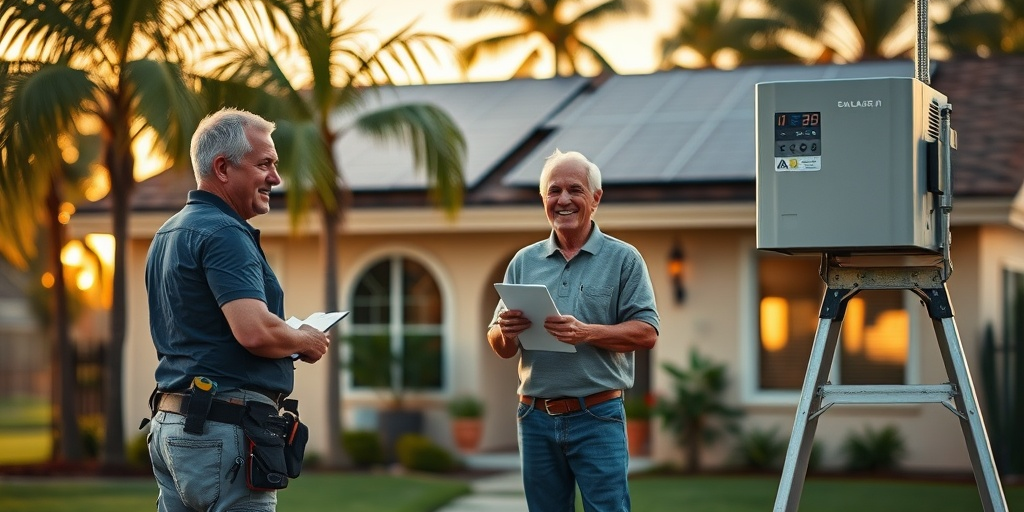
On the day of installation, a team of expert technicians arrived at her home with equipment in tow. Maria felt a rush of anticipation as they swiftly worked to install solar panels on her south-facing roof. Within hours, they had set up not just solar panels but an entire system that included energy-efficient inverters and batteries for nighttime energy storage, ensuring that she could harness Florida’s abundant sunshine effectively.
Within weeks, Maria noticed changes that exceeded her expectations. Her electric bill, which once reached $300, had plummeted to less than $40 a month—what a transformation indeed! Suddenly, she was building equity in her home while enjoying clean, renewable energy. This exciting journey showcases the many facets of what adopting solar power entails for local homeowners. With the launch of this successful case study under our belt, let’s break down actionable steps for considering a solar installation of your own.
5 Essential Steps to Go Solar
Ready to embark on your own solar journey? It’s crucial to begin with a well-laid plan. Here’s a comprehensive checklist that outlines the essential steps involved in the solar panel installation process:
- Step 1: Audit Your Current Electric Bill
Before jumping into solar, evaluate your energy consumption. Take a look at your current electric bill and monthly usage. Doing so will provide a clear understanding of how much energy you consume and, consequently, how much solar capacity you might need. Compare your monthly bill to the projected savings from a solar system with the help of your solar consultant. - Step 2: Research Local Solar Incentives
The state of Florida is known for its supportive stance on solar energy. Investigate local incentives, such as tax credits and any rebate programs offered by utility companies. Florida’s solar homeowners can benefit from the federal solar tax credit, as mentioned earlier, which stands at 30% until 2032 (SEIA.org). - Step 3: Find a Reliable Solar Provider
Not all solar providers are created equal. Take time to research local solar companies and read reviews. Don’t hesitate to ask for references, and ensure they are licensed and insured. A reputable provider like Florida Electric & Solar can help guide you seamlessly through the installation process. - Step 4: Customize Your Solar System
Work with your solar provider to determine the necessary components for your desired solar system. Consider factors like the orientation of your roof, energy needs, and the number of panels required. Tailoring the system to meet your specific goals is vital for maximizing savings. - Step 5: Monitor Your System Post-Installation
Once the solar panels are up and running, regular monitoring will ensure they’re producing energy at optimal levels. Many reputable companies offer monitoring apps that let you track your energy generation and consumption, so you can enjoy peace of mind and understand your savings firsthand.
By methodically following these steps, you can train your focus on what’s crucial and avoid common pitfalls. Transitioning to solar energy not only benefits your wallet, but it also positively impacts the environment, fostering sustainability for future generations. Next, let’s delve into some common misconceptions surrounding solar installations that could be clouding your decision-making process.
Debunking 5 Common Myths About Solar Energy
There are numerous myths circulating in the solar world, and as a prospective solar homeowner, you might find some of these widespread beliefs influencing your decision-making. However, we’re dismantling these misconceptions today:
- Myth #1: Solar Panels Are Too Expensive
Many believe the upfront costs of installing solar panels are insurmountably high. However, thanks to federal and state incentives, the actual financial burden is significantly reduced. Programs like the solar tax credit can cut costs by up to 30%, and financing options allow for manageable monthly payments (Energy.gov). - Myth #2: Solar is Only Worth It in Sunny States
While Florida has an abundance of sunlight, even homeowners in less sunny regions can benefit from solar. Solar technology has advanced significantly to harness energy effectively, even in partially cloudy conditions, providing substantial savings year-round (NREL.gov). - Myth #3: Solar Panels Require Constant Maintenance
Contrary to popular belief, solar panels are relatively maintenance-free. A semi-annual cleaning usually suffices, and most manufacturers offer warranties that last for two decades. Therefore, solar panels can provide peace of mind without constant upkeep (SolarReviews.com). - Myth #4: Installing Solar Is Complicated
Understanding how to engage with solar technology might seem overwhelming, yet qualified professionals simplify the process significantly. A trustworthy company will guide you through every step, from assessment to installation (SEIA.org). - Myth #5: Solar Panels Damage Home Value
On the contrary, studies show that homes with solar installations often sell for more than comparable homes without them. In fact, solar panels can increase property values by approximately 4.1% (SolarReviews.com), making it a smart investment in your home.
With a clearer understanding of the myths that could hold you back, you can approach your solar investment knowledgeably and confidently. Ready to dive into the local solar landscape? Let’s explore how Florida’s specific legislations and incentives enhance the transition to solar power.
Exploring Florida’s Solar Landscape
As hurricane season becomes a definitive part of Floridian life, there is a growing need for sustainable energy sources and smart energy solutions. Florida is rolling out a range of policies to bolster the clean energy transition, encouraging homeowners to embrace solar power without being held back by initial costs. Here’s how Florida’s landscape shapes the implementation of solar power:
- Incentives Available: In addition to the federal solar tax credit, Florida homeowners can take advantage of state-level incentives like property tax exemptions. Homeowners in the Sunshine State are not taxed for the increased value resulting from solar installations, thus preserving their real estate wealth (Florida Department of Revenue).
- Net Metering: The state offers a beneficial net metering program that credits you for excess energy produced, allowing solar panel owners to further reduce their electric bills. This credit system can make your solar investment even more rewarding (SEIA.org).
- Community Solar Programs: For those who may not have suitable rooftops or cannot invest directly in solar, Florida’s community solar programs make it possible to benefit collectively by investing in shared solar farms. You’re still reaping the benefits of solar without the individual installation (Florida Solar Energy Center).
As a Florida homeowner, tapping into these available resources can significantly enhance your solar journey while providing both environmental and financial returns. With this solid foundation, let’s move on to the core aspects of choosing the right technology for solar installations.
The Technical Deep Dive: Everything You Need to Know
Choosing solar technology involves understanding several components, including solar panels, inverters, batteries, and monitoring systems. Each plays a critical role in maximizing your solar energy production. Here’s a detailed look at each component to guide your decisions:
- Solar Panels: These are the heart of any solar installation, capturing sunlight and converting it into electricity. Options include monocrystalline, polycrystalline, and thin-film technologies, each varying in efficiency, cost, and longevity. Monocrystalline panels are typically the most efficient and space-efficient, making them ideal for smaller roofs (Energy.gov).
- Inverters: Solar inverters convert the direct current (DC) produced by the solar panels into alternating current (AC), the form of electricity used in homes. Choosing between string inverters and microinverters is crucial; microinverters typically offer higher efficiency, especially in shaded areas (NREL.gov).
- Batteries: Consider battery storage options to store excess energy generated during the day for use at night or during outages. Lithium-ion batteries have emerged as the most popular choice due to their efficiency and longer lifespan (SEIA.org).
- Monitoring Systems: Effective monitoring systems enable homeowners to track energy generation and consumption, ensuring your panels operate optimally. Monitoring apps can alert you to any performance issues instantly, maximizing your investments’ longevity.
Armed with this expert knowledge, Florida homeowners can make educated choices regarding their solar panel installations, resulting in greener energy solutions that suit their unique needs. Finally, we’ll ensure you understand how to move forward once you’ve learned everything about solar. Here are the next steps for buying a solar system in Florida in 2025.
Next Steps for Florida Solar Buyers in 2025
Congratulations on reaching the stage where you’re ready to take your solar ambitions to the next level! Here’s a streamlined checklist designed to ensure a seamless transition towards solar power:
- Conduct an Energy Audit:
Determine your household’s energy needs by analyzing your electricity usage, determining your peak usage times, and noting any seasonal changes. This data will empower your provider to design a solar system that meets your actual consumption. - Understand Financial Options:
Explore different financial options available to you, such as loans, leases, and power purchase agreements. Your provider can outline various choices and work to find a solution that suits your budget and energy goals. - Receive Multiple Quotes:
Don’t settle for the first quote you receive. Get multiple estimates to compare pricing, equipment, and warranties. Use this information to make an informed decision, allowing for a smoother experience (Florida Electric & Solar). - Check Local Codes and Permits:
Work with your solar provider to ensure all necessary permits are obtained before installation. Knowledge of local building codes will prevent unnecessary delays and ensure compliance. - Installation and Monitoring:
Coordinate installation dates and monitor performance post-installation. Regular checks will confirm your solar panels are efficiently generating electricity and help you track how much you’re saving.
With this action-oriented checklist, you’re officially equipped to join the ranks of Florida homeowners benefiting from solar energy. The journey may feel demanding, but its rewards—financial savings, environmental protection, and energy independence—make every step worthwhile.
In conclusion, the inspiring journey of Maria and thousands of other Floridians showcases not just a trend but a sustainable future fueled by clean energy. Embracing solar energy is about more than saving money; it’s about empowering families and communities, stepping away from fossil fuels, and paving the way for future generations. With incentives in place and technology continually evolving, the issues of rising energy costs and climate change are urging homeowners to act—with time running out to harness these opportunities before long-term benefits slip away.
Ready to start your solar journey in 2025? Connect with a certified expert at floridaelectricandsolar.com today.
Related Articles
More insights about Solar Panel

Florida Homeowners: Why Solar Panel Maintenance Is Essential

7 Essential Steps for Solar Panel Installation Success

Expert Insights: Key Factors Influencing Solar Panel Lifespan
Ready to Go Solar?
Have questions about solar energy? Our experts are here to help you make the switch to clean, renewable energy.