
Expert Insight: The Essential Guide to Financing Options for Solar
Share:
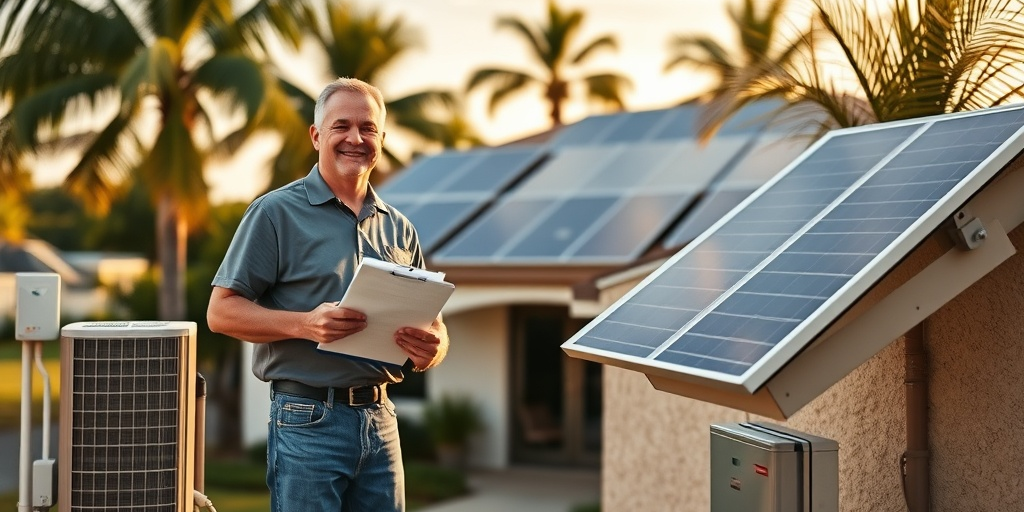
Have you ever wondered how solar power could simplify your life while saving you money? With energy prices soaring and climate change concerns escalating, the urgency for homeowners and business owners, especially in sunny Florida, to transition to renewable energy has never been greater. In the groundbreaking article titled “Expert Insight: The Essential Guide to Financing Options for Solar”, we delve into the essential strategies for financing solar energy systems in 2025. Did you know that Florida ranks third in the nation for solar installations, and in 2022 alone, solar energy accounted for 17% of the total energy capacity in the state, upping your chances of getting cutting-edge solar technology? (SEIA.org) As the cost of electricity continues to rise, it becomes crucial for you to consider options that will not only reduce your energy bills but also enhance your property value and contribute positively to the environment. In the sections that follow, you’ll discover five essential insights: a deep dive into financing options, actionable steps for financing your solar investment, myth-busting around solar capabilities, a focus on Florida’s unique market conditions, and best practices for choosing the right system. Whether you’re new to solar energy or looking to expand your knowledge, this guide will help illuminate your path to a more sustainable future.
Unlocking the Power of Solar Financing
Let’s start by understanding the various financing avenues available for solar installations, particularly for Florida residents. As more homeowners recognize the investment potential behind solar energy, the financing landscape has expanded significantly, providing options suited for diverse financial situations and preferences.
Case Study: Meet the Johnsons
The Johnson family, perennial Florida residents, decided to install a 10 kW solar power system on their home. Initially hesitant about the upfront costs, they explored various financing options, eventually opting for a solar loan that enabled them to cover the installation costs without breaking the bank. Their monthly loan payments were equal to their previous energy bills. However, they started benefiting from reduced costs of electricity from the first month of operation. Within three years, the tax credits further improved their return on investment, leading to significant savings and increased equity in their home.
Actionable Checklist for Solar Financing
When assessing your solar financing options, consider this actionable checklist:
- Assess Your Property’s Solar Potential: Utilize solar calculators or consult with experts to understand the sunlight exposure and potential energy savings for your home.
- Explore Financing Types: Choose from options like solar loans, leases, or power purchase agreements (PPAs) depending on your financial health and risk tolerance.
- Understand State Incentives: Investigate Florida’s solar incentives, including the sales tax exemption and the federal solar tax credit, as these can significantly affect overall costs.
- Evaluate Reputable Providers: Research and compare solar companies to find one that suits your needs, focusing on reviews and their warranty offerings.
- Calculate Long-Term Savings: Factor in how your financing option will impact long-term savings on your electricity bills and overall energy efficiency.
Taking actionable steps ensures you make informed decisions throughout the financing process, setting you up for success.
Myth-Busting Solar Financing Misconceptions
As we navigate the financing landscape, let’s tackle some common myths surrounding solar financing:
- Myth #1: Solar Financing is Only for Wealthy Homeowners: This is false. Solar loans, leasing options, and financing programs are accessible to many budgets, making sustainable energy attainable.
- Myth #2: You Have to Pay Up Front for Solar Panels: Not true. Options like PPAs allow homeowners to enjoy solar energy with little or no upfront cost, paying only for the energy produced.
- Myth #3: The Federal Tax Credit is Complicated to Access: The truth is, the solar Investment Tax Credit (ITC) is straightforward and can substantially lower your tax burden when installed by experts.
- Myth #4: Solar Negatively Affects Property Value: In reality, studies show homes with solar panels sell for more than those without, making the panels a valuable investment. (NREL.gov)
- Myth #5: Solar Systems Require Extensive Maintenance: In fact, most solar systems require little maintenance. With occasional checks and cleaning, they can efficiently perform for decades.
Dispelling these myths helps pave the way for more confidence in pursuing solar financial avenues.
Florida-Specific Financial Incentives
Florida shines brightly in the solar universe, boasting several state-level incentives and policies that foster solar adoption.
The Florida Solar Energy Center reports that 8.5 million homes could benefit from solar energy, representing a vast untapped market. Additionally, the state offers a sales tax exemption for solar energy systems pushing down initial costs. For 2025, the federal Solar Investment Tax Credit will continue to deliver up to 26% back on your solar system. (Energy.gov). These incentives make solar energy not just an eco-friendly choice but also a financially savvy decision.
Furthermore, utilities in Florida are mandated to offer net metering, which allows homeowners to sell excess energy back to the grid. This reduces energy costs significantly. Understanding these nuances can empower you to make the most financially sound choice.
Technical Deep-Dive into Financing Mechanics
When it comes to financing solar power systems, understanding the technicalities is vital. Let’s examine the frameworks available:
- SOLAR LOANS: These are personal loans that cover the up-front cost of the solar installation. They allow homeowners to pay the cost upfront and enjoy savings on the back end. Various credible institutions offer competitive interest rates.
- PPA (POWER PURCHASE AGREEMENT): With a PPA, you agree to purchase the power generated by the solar panels at a fixed rate. It usually requires little or no upfront costs. However, you lose some benefits in equity as panels are owned by the installer.
- SOLAR LEASES: Similar to a PPA, a solar lease allows you to pay a fixed monthly fee to use the solar system without ownership. This can limit your long-term savings compared to outright purchasing or financing via a loan.
- DERATING FACTORS: Always consider system losses due to shading, inverter efficiency, and degradation rates. These factors will determine the actual energy production and should inform your financing decision.
Understanding these elements is critical when deciding how to finance your solar investments effectively.
Maximizing Returns: Expert Solar Installation Tips for 2025
As we move into 2025, optimizing your solar installation is essential for getting the most value out of your investment. Here are five key expert tips.
1. Choose the Right Timing
January to April is typically the best time to install solar. This is when solar energy companies see a high influx of business and can provide better deals. Plus, many homeowners want the systems set up before the summer heat kicks in. Ensure you plan your installation accordingly.
2. Don’t Skimp on Panel Placement
Optimal panel placement is crucial for maximizing energy production. Consult with your installer about the best location on your roof for maximum sun exposure. Even minor adjustments can improve output significantly.
3. Prioritize Quality Over Cost
When evaluating solar systems, focus on quality and efficiency rather than just price. Higher-quality panels and inverters yield better performance over time. Investing now pays off in future energy savings.
4. Explore Community Solar Programs
If a home installation isn’t feasible due to financial constraints or roof conditions, look into community solar programs. These allow you to benefit from solar energy without needing panels on your property.
5. Work with Accredited Installers
Ensure your installer is licensed, insured, and has good reviews. Accreditation from the North American Board of Certified Energy Practitioners (NABCEP) is a hallmark of quality in the solar industry.
Adhering to these best practices not only maximizes your investment but also enhances the longevity and efficiency of your solar system.
Understanding Your Solar Journey: A Florida Homeowner’s Story
To illustrate the transformative journey of going solar, let us introduce you to Rachel, a fictional homeowner in Miami, Florida. After experiencing a shocking spike in her energy bill last summer, she became determined to find a sustainable solution.
Rachel started her research, reading blogs, attending community meetings, and engaging with solar companies. After consulting with a few providers, she learned about the various ways to finance a solar system. After weighing her options, she opted for a solar loan, allowing her to keep a stable payment every month. Excited about her choice, she proceeded to install a 7 kW system on her roof.
Rachel’s Solar Success Steps
- Determined to Save: She calculated her monthly savings, realizing she would break even in just five years.
- Shared Knowledge: Rachel took her experience and shared it with friends and family, informing them about solar benefits and local programs.
- Community Advocate: With her newfound knowledge, Rachel became a local advocate for solar energy, assisting others in navigating the same electric transition.
- Continued Learning: She remained informed about policy changes and new technologies, ensuring she gets the best from her solar investment.
In essence, Rachel’s story exemplifies how knowledge and preparation can lead to remarkable savings and a profound positive impact on her community.
Next Steps for Florida Solar Buyers in 2025
Taking the first steps toward solar energy can feel overwhelming, but breaking this down into digestible actions makes it manageable.
- Audit Your Electricity Bills: Review your recent utility bills to understand your energy usage and current expenses. This provides a baseline for assessing potential savings.
- Research Local Regulations: Familiarize yourself with state and federal incentives, local solar policies, and available financing options. Make informed decisions based on current regulations.
- Consult with Solar Experts: Engaging with reputable solar companies, such as floridaelectricandsolar.com, lets you tap into professional insights tailored to your needs.
- Flexible Financing: Explore different financing options that suit your financial situation while maximizing savings through state incentives and rebates.
- Schedule Your Installation: Choose a date that aligns with optimal solar conditions and ensures your home is ready for the installation process.
Working through these steps will set you up for success in transitioning to solar energy and help maximize your investment.
Conclusion: Your Solar Journey Starts Here
Transitioning to solar energy is not just an environmentally responsible choice—it’s an investment in your financial well-being and future. As we’ve explored in this essential guide, various financing options exist that make solar energy more accessible than ever for Florida homeowners and commercial property owners. By leveraging tax credits, understanding local incentives, and following best practices, you can reclaim control over your energy costs in 2025. From the stories shared to actionable steps provided throughout this guide, one thing remains clear: now is the time to act. Your decision will resonate for years to come, impacting your family, your finances, and the planet.
Ready to start your solar journey in 2025? Connect with a certified expert at floridaelectricandsolar.com today.
Related Articles
More insights about Financing Options

Solar Panel Financing in Florida: Loans, Leases, and $0-Down Options for 2026

What Are the Critical Financing Options for Solar Panel Installation?

What Are the Best Financing Options for Solar in Florida
Ready to Go Solar?
Have questions about solar energy? Our experts are here to help you make the switch to clean, renewable energy.