
Expert Insights on Financing Options for Solar Panel Installation
Share:
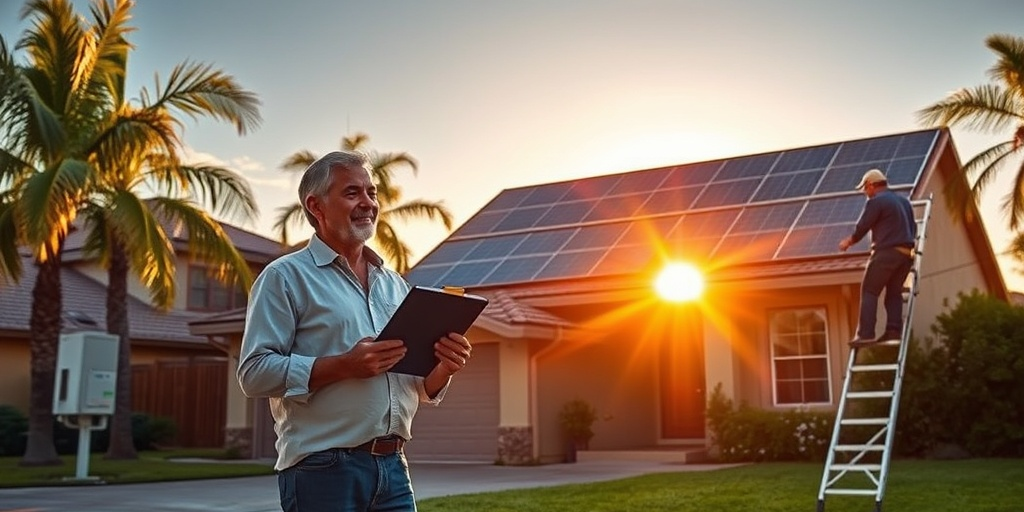
Did you know that over 20% of households in Florida are considering solar energy solutions by 2025? This is a staggering figure that illustrates a growing awareness of the benefits solar power can bring to homeowners in the Sunshine State. Yet, many still harbor concerns regarding the upfront costs and financing options available for solar panel installation. In this educational journey, we will explore these financial pathways in-depth in our article titled, Expert Insights on Financing Options for Solar Panel Installation.
Besides the soaring interest in renewable energy, according to a recent study, solar power can potentially save Floridians up to $31,647 over the lifetime of a system (SEIA.org). Furthermore, with new solar incentives set to maximize utility bill savings in 2025, understanding your financing options has never been more urgent. This exploration will cover five key sections: 1) A Case Study highlighting a successful Florida homeowner, 2) A practical Checklist for financing your solar installation, 3) A Myth-Buster segment addressing common misconceptions, 4) A Local Focus on Florida’s unique policies and incentives, and 5) A Technical Deep-Dive into financing mechanisms. Each section aims to empower you with the information necessary for making an informed decision on your solar power journey.
Discovering Financing Solutions: A Florida Homeowner’s Success Story
Meet the Rodriguez family in Palm Harbor. A vibrant family of four, they were struggling to keep up with their consistently rising electric bills that averaged around $220 per month. Discouraged yet driven, they were determined to explore financial options for solar panel installation. After an exhaustive search, they found a solution that not only improved their energy efficiency but also aligned well with their financial planning.
The Rodriguez family decided to finance their solar panel installation through a combination of a solar loan and state incentives. They secured a low-interest loan through one of the local Florida solar lenders that offered terms specifically designed for homeowners eager to go green. The loan covered 100% of the installation costs, enabling them to install a 9 kW solar system generating more than enough energy to meet their home’s needs.
By tapping into the Florida Solar Initiative, they also took advantage of tax credits that provided over $5,000 in savings on their total installation costs. Within the first year, they reported an impressive decrease in their electric bill to just $40—a staggering transformation that saved them $2,000 in energy costs, effectively paying off their investment within just five years (SolarReviews.com).
But this isn’t just a fairy tale; it’s an increasingly realistic goal for homeowners across Florida. The average cost of solar panel installation has dropped by more than 30% since 2010 (SEIA.org), making it an attainable venture for many. As 2025 approaches, the market is ripe with additional funding opportunities that families like the Rodriguez’s can leverage to maximize their utility bill savings. Here’s how you can turn your aspirations into reality with a closer look at financing options available for solar panel installation in Florida.
Your Roadmap to Solar Financing Success
When considering solar technology, securing financing can often be the most daunting hurdle. To distill this process down to manageable steps, we’ve created a straightforward checklist to guide you.
- Step 1: Assess Your Financial Health
Before diving into solar options, examine your budgets, credit scores, and financial capacities thoroughly. A high credit score may qualify you for better financing options. - Step 2: Research Different Financing Options
Explore various financing options such as solar loans, leases, and Power Purchase Agreements (PPAs). Each option has its merits, and understanding them will help you find the best fit for your financial situation. - Step 3: Leverage State and Federal Incentives
Florida offers several incentives to support solar installation, including the federal Investment Tax Credit (ITC) and local rebates. Ensure you are aware of these options to optimize your investment. - Step 4: Consult with Solar Providers
Engage with a trusted solar provider, such as floridaelectricandsolar.com, to get tailored advice and prequalify for financing options. - Step 5: Finalize Your Decision
After thorough research and consultations, it’s time to make an informed decision by understanding the terms of your financing option and ensuring it aligns with your long-term objectives.
This roadmap is designed to eliminate confusion and provide actionable steps for homeowners. By following these steps, Florida homeowners can establish a solid financial foundation as they transition to solar energy.
Debunking Solar Financing Misconceptions
Despite the increasing popularity of solar energy, myths surrounding financing options continue to persist. It is crucial to address these misconceptions to encourage more individuals to embrace solar innovations. Let’s delve into some common myths:
Myth #1: Solar Panels Are Too Expensive
Many believe that solar panels are prohibitively expensive without realizing that costs have dramatically decreased in recent years. The installation costs can often be offset with financing options and local incentives that make solar power more affordable than ever (Energy.gov).
Myth #2: I Can’t Afford the Upfront Costs
While traditional financing might suggest high upfront costs, several programs, such as solar loans and leases, allow homeowners to pay little to nothing upfront. Over time, the savings on energy bills can repay these costs.
Myth #3: Solar Financing Solutions Are Complicated
Though the variety of financing options might seem overwhelming, understanding your choices can simplify the process considerably. A good solar provider will guide you through the options that best fit your financial situation.
Myth #4: Solar Power Doesn’t Work in Overcast Conditions
Another common myth is that solar panels are ineffective without direct sunlight. However, solar panels are designed to harness diffused light, making them efficient even during cloudy days.
Myth #5: Solar Power is Only for Upper-Income Households
Thanks to financing options and incentives, solar is now accessible to households across a variety of income levels. Programs designed specifically for low-income families are increasingly available to help democratize this technology.
Understanding these facts can assist Florida homeowners in making informed decisions regarding their solar journey. It’s essential to debunk myths and encourage community involvement as more residents forge ahead into energy independence.
Florida’s Unique Solar Landscape: Policies and Programs
Florida is witnessing an exciting transition in its energy landscape, with numerous policies and programs aimed at promoting solar energy. For Florida homeowners, awareness of this evolving landscape is crucial in maximizing financial benefits. Let’s dive into several empowering initiatives available right now.
- Florida Solar Incentive Program: Offers rebates based on system size and performance, making it easier for homeowners to go solar.
- Net Metering: Allows homeowners to sell excess energy back to the grid, offsetting their energy costs and contributing to renewable energy supply.
- Property Assessed Clean Energy (PACE): This innovative financing option allows homeowners to finance energy improvements through property tax assessments, reducing the impact on monthly budgets.
- Investment Tax Credit (ITC): The federal ITC empowers solar users with significant tax savings up to 26% of the system cost, allowing for a quicker return on investment.
- Solar Lease Agreements: Companies like Florida Electric & Solar offer financing options that can provide immediate savings and minimal upfront costs for homeowners.
By capitalizing on available policies and incentives, Florida homeowners can optimize their investment in solar energy. Each initiative is crafted to lower financial barriers, helping more families adopt this sustainable and cost-effective energy solution.
Your Technical Financing Deep-Dive: Navigating Numbers
To truly understand solar financing, we must explore the technical aspects that define these solutions. Various financing mechanisms can dictate how homeowners manage their payments, ensuring that they achieve the best possible savings. To start, let’s delve into solar loans, leases, PPAs, and cash purchases.
- Solar Loans: Typically offered by banks or financial institutions, solar loans enable homeowners to install systems without the need for high upfront payments. Interest rates and terms can vary, but they provide homeowners with the freedom to own their systems completely.
- Leasing Solar Panels: Homeowners can choose to lease solar panels, meaning they pay a flat monthly fee for the usage of the system. One major advantage is that the company generally handles maintenance, yet you won’t own the system.
- Power Purchase Agreements (PPAs): This option offers another alternative where the homeowner agrees to buy power from the solar provider at a predetermined rate. PPAs minimize upfront costs while ensuring homeowners benefit from solar power.
- Cash Purchases: The most straightforward option where homeowners pay the total cost upfront. This method leads to maximum long-term savings since there are no payments or interest involved over time.
While all these options have their benefits, understanding the implications of each, including interest rates, ownership benefits, and long-term savings, is essential for Florida homeowners eager to harness solar energy.
Next Steps for Florida Solar Buyers in 2025
As you contemplate the transition to solar energy, it’s essential to have a clear action plan in place. Here are the necessary steps to take:
- Audit Your Electric Bill:
Examine your current energy usage, and understand peak usage times, monthly costs, and if potential savings align with solar energy. - Research Providers:
Connect with reputable local solar providers such as floridaelectricandsolar.com to compare options, services, and financing solutions. - Analyze Financing Options:
Understand different financing options available and evaluate how each can align with your long-term financial goals. - Consider Future Energy Needs:
Think ahead—if you plan to expand your family or add new devices, calculating these future needs can help structure your solar system efficiently. - Finalize Your Installation:
Once financing and providers are chosen, finalize your installation and enjoy the benefits of renewable energy.
With pressing energy costs and a shift towards sustainability, taking these steps will empower Florida homeowners to enjoy long-term savings and energy independence in 2025.
In conclusion, as we navigate through the intricate world of solar energy financing, it is essential to remember that transforming energy bills into savings is not only achievable but can secure a sustainable future for your family. Whether you are inspired by success stories like the Rodriguez family, or equipped with the information from our myth-busting section, the journey towards solar energy is now filled with possibilities. The financial advantages of solar power are steadily becoming undeniable, with clear paths emerging in our increasingly supportive climate.
Ready to start your solar journey in 2025? Connect with a certified expert at floridaelectricandsolar.com today.
Related Articles
More insights about Solar Panel

Florida Homeowners: Why Solar Panel Maintenance Is Essential

7 Essential Steps for Solar Panel Installation Success

Expert Insights: Key Factors Influencing Solar Panel Lifespan
Ready to Go Solar?
Have questions about solar energy? Our experts are here to help you make the switch to clean, renewable energy.