
Expert Insights: Maximizing Your Solar Panel ROI in Florida
Share:
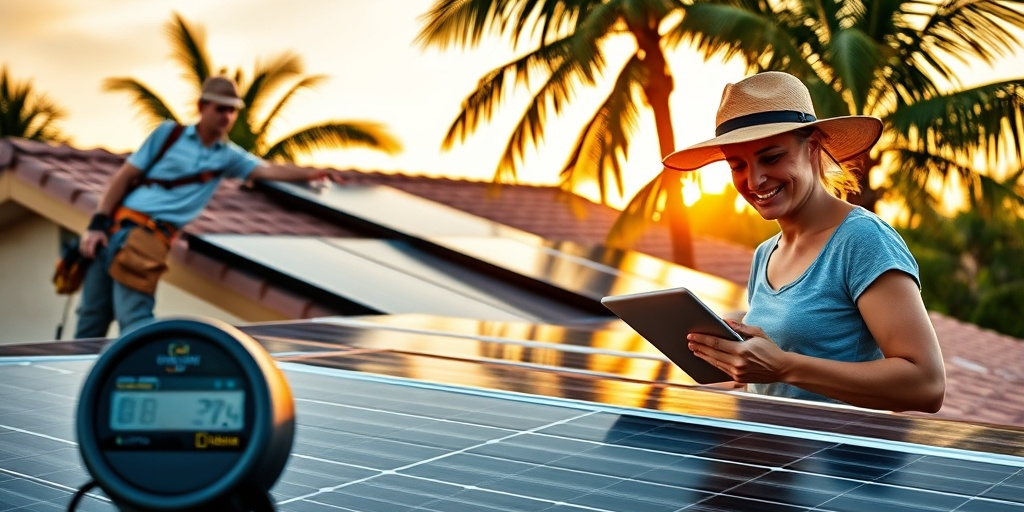
In a world increasingly reliant on electricity, the costs associated with energy consumption have skyrocketed, leaving homeowners and business owners struggling to manage utility bills. Did you know that in Florida, the average monthly electricity bill is over $130, and it can be much higher in the scorching summer months? As we look towards 2025, the necessity to invest wisely in alternative energy solutions has never been more pressing. That’s why we bring you our blog post titled “Expert Insights: Maximizing Your Solar Panel ROI in Florida.” With new solar incentives on the horizon and savings that could amount to thousands over time, understanding how to maximize your solar investment is essential.
Many homeowners still harbor misconceptions regarding solar energy, often overlooking the long-term benefits of such investments. Currently, about 33% of Florida residents utilize solar power to offset their energy expenses (SEIA.org). This shift towards solar energy isn’t just a passing trend; it’s a necessary transition as fossil fuels become obsolete. As inefficiencies arise in the traditional grid and energy costs rise, the push toward sustainable solutions will accelerate. In this article, we’ll explore five key sections that will help you navigate your solar journey:
- Case Study: A Florida Homeowner’s Journey to Solar Success
- 5-Point Checklist to Maximize Your Solar ROI
- Myth-Busting Common Solar Misconceptions
- Local Focus: Solar Incentives and Benefits in Florida
- Technical Deep-Dive: Understanding Your Solar Investment
Understanding how to maximize your solar panel ROI in Florida isn’t just intelligent planning; it’s a necessary step toward energy independence. Let’s dive in!
Case Study: A Florida Homeowner’s Journey to Solar Success
Meet Sarah, a typical Florida homeowner who wanted to cut her horrendous electric bills while enhancing her property’s value. As the summer heat soared, so did her electricity costs—this year alone, she paid over $2,500! After realizing the potential of solar energy, Sarah decided to equip her home with solar panels in early 2025. But how did she navigate this life-changing investment?
Initially skeptical, Sarah sought expert advice and quickly learned about the various financial incentives available to her as a Florida resident. After consultation, she found that installing a solar system would not only reduce her monthly utility bills significantly, but she could also take advantage of the federal solar investment tax credit (ITC), which was available until the end of 2025 and would save her nearly $4,700 (Energy.gov). Sarah’s story exemplifies a growing trend: Florida homeowners are increasingly investing in solar systems not only for savings but for the environment and energy independence.
Here are the steps Sarah took to maximize her ROI:
- **Research**: Sarah meticulously studied Florida’s solar programs and incentives. She compared offers from multiple solar vendors.
- **Tailored Installation**: She chose a provider that offered customized solutions and ensured optimal panel placement for maximum energy generation.
- **Financing Options**: Sarah explored financing solutions, securing a low-interest loan that made her monthly payments lower than her previous electric bill.
- **Battery Addition**: To further maximize savings, she invested in a solar battery that enabled her to store excess power for night use.
- **Regular Maintenance**: Understanding maintenance is vital, Sarah committed to periodic system checks and performance monitoring to ensure peak efficiency.
By the end of the first year, Sarah had seen a 50% reduction in her energy costs, a benefit that aligned with the findings indicating that Florida solar panel owners save an average of $14,200 over the system’s lifetime (SolarReviews.com). With an estimated ROI of approximately 20% from her solar investment, she felt reassured that she made the right choice. This case study highlights that planning is essential, and that anyone can enjoy the benefits of solar.
Next, let’s explore a practical checklist that will guide you in maximizing your solar ROI effectively.
5-Point Checklist to Maximize Your Solar ROI
When it comes to solar energy, being informed and prepared is crucial to maximizing your return on investment. The choices you make initially can directly influence your long-term savings. Here’s your comprehensive checklist to follow:
- Step 1: Audit Your Energy Needs
Begin by analyzing your past electricity bills to identify usage patterns. Knowing your typical monthly consumption will help you size your solar system accurately. - Step 2: Research Local Incentives
Take advantage of Florida’s unique solar incentives, including the statewide property tax exemption that allows you to save on property taxes after panel installation (DSIREUSA.org). Always check for available grants or rebates. - Step 3: Choose the Right Installer
A reputable installer will ensure you get high-quality materials and craftsmanship. Look for certifications and reviews from previous customers to help with this choice. - Step 4: Opt for Quality Equipment
Invest in high-efficiency solar panels and reliable inverters. You want to maximize energy output; cheaper options could lead to underperformance. - Step 5: Monitor and Maintain
Regularly check your solar system’s performance and schedule maintenance to ensure peak efficiency. Many homeowners forget this crucial aspect!
By following this actionable checklist, you’ll be one step closer to enjoying the renewable energy you’re generating while maximizing savings on your utility bills. To start your solar journey today, consider consulting expert insights from floridaelectricandsolar.com.
Myth-Busting Common Solar Misconceptions
Despite the growing popularity of solar energy, many myths persist that prevent homeowners from making the switch. Let’s debunk some of the most common misconceptions:
- Myth #1: Solar Panels Are Too Expensive
While the initial costs can be high, tax incentives, financial options, and the decreasing price of solar panels make them more accessible than ever. - Myth #2: Solar Energy Only Works on Sunny Days
Solar panels can generate energy even on cloudy days! They utilize indirect sunlight, making them efficient all year round. - Myth #3: Solar is Only for New Homes
Older homes can be retrofitted with solar solutions as long as the structure can support the installation—a study shows that retrofitted homes often see even higher savings (NREL.gov). - Myth #4: Solar Panels Are Bad for the Environment
In reality, solar energy systems produce clean energy, significantly reducing your carbon footprint and promoting a healthier planet. - Myth #5: You Can’t Go Off-Grid in Florida
While it’s challenging, it’s certainly possible with the right combination of solar panels, batteries, and other solutions, giving you full control over your energy consumption.
By dispelling these myths and equipping yourself with accurate information, you’ll be better positioned to make informed decisions. Up next, let’s take a closer look at the local focus on solar opportunities available for Florida homeowners!
Local Focus: Solar Incentives and Benefits in Florida
Florida is rapidly becoming a solar powerhouse, especially with competitive solar policies and financial incentives catered to homeowners. Understanding these opportunities will empower you to harness the sun’s energy effectively.
First, Florida homeowners benefit significantly from the federal solar investment tax credit (ITC), which allows you to deduct a percentage of your solar installation costs from your federal taxes. As of 2025, this credit will stand at 26%, potentially saving you thousands of dollars (Energy.gov).
Additionally, Florida has implemented several state-level incentives:
- No State Sales Tax on Equipment: Florida waives state sales tax on solar panels and installation, saving you around 6% of your total project cost.
- Property Tax Exemptions: Homes equipped with solar installation are exempt from property tax increases, meaning your home’s value will not be assessed at a higher rate post-solar installation (DSIREUSA.org).
- Net Metering: With net metering, any excess energy produced by your solar panels can be sent back to the grid. Homeowners receive credits for this, helping to further reduce future bills.
- Community Solar Programs: If on-site installation isn’t feasible, Florida has several community solar programs that allow participation in shared solar facilities, making solar accessible to all.
By leveraging these incentives, you can drastically decrease the costs associated with your solar installation, leading to significant savings. Understanding Florida’s landscape allows you to maximize the advantages available to you and empowers you to move forward with confidence.
Now let’s transition to a technical deep-dive to give you a comprehensive understanding of what goes into a solar system.
Technical Deep-Dive: Understanding Your Solar Investment
Investing in solar requires a strong grasp of the technical aspects of the equipment and installation process. Here are the critical components of a solar power system that affect your ROI:
1. Solar Panels
Each panel has a power rating, measured in watts, which defines how much electricity is generated. Higher-rated panels produce more energy but often incur higher upfront costs. Researching brands and efficiencies can pay dividends in the long run.
2. Inverters
Inverters convert the direct current (DC) energy generated by solar panels into alternating current (AC) energy, which is what most appliances use. Choosing a quality inverter ensures that you maximize energy conversion effectiveness.
3. Battery Storage Systems
Battery systems allow you to store excess energy generated during the day for nighttime use or power outages. This inclusion can further boost your energy independence, making it a worthwhile investment.
4. Monitoring Systems
Many systems include monitoring technology that allows you to track your energy production online. Understanding how much energy you’re producing and consuming enables you to tweak energy usage patterns and optimize savings.
5. Installation Quality
Choosing a reputable installer ensures quality service throughout the installation process, affecting not just performance but also longevity. Poor installation can lead to lost efficiency and elevated repair costs in the future.
Each of these components plays a critical role in the overall performance and return on your solar investment. By being educated on these systems, you can make informed choices as you plan your solar installation to maximize savings and efficiency.
Next Steps for Florida Solar Buyers in 2025
As you embark on your solar journey, here’s your actionable roadmap to pave the way toward a successful transition.
- Step 1: Audit Your Electric Bill
Review your electricity usage trends to understand your needs. Knowing how much power you consume will guide your system size. - Step 2: Research Incentives
Investigate federal and state-level incentives that can lower upfront costs significantly. Many resources are available online, including floridaelectricandsolar.com. - Step 3: Get Multiple Quotes
Contact several solar companies and examine their proposals and credits to find the best fit for your needs and budget. - Step 4: Verify the Installer’s Credentials
Ensure the installer has proper certifications, licenses, and insurance. Check reviews to gain insights into their professionalism and quality of work. - Step 5: Schedule Installation
Once you choose the right installer, coordinate the installation process, and consider adding a battery for extra savings.
By following these steps, you’ll reduce any barriers to starting your solar journey, ensuring a smooth transition into solar energy.
In conclusion, investing in solar energy is not merely a financial decision; it’s a step toward energy independence and a sustainable future. As Florida homeowners adapt to the rising cost of traditional energy sources, understanding how to maximize your solar panel ROI in Florida has become crucial. With access to financial incentives, technological developments, and an increasingly supportive environment, the benefits of solar energy can no longer be ignored.
Ready to start your solar journey in 2025? Connect with a certified expert at floridaelectricandsolar.com today.
Related Articles
More insights about Solar Panel

Florida Homeowners: Why Solar Panel Maintenance Is Essential

7 Essential Steps for Solar Panel Installation Success

Expert Insights: Key Factors Influencing Solar Panel Lifespan
Ready to Go Solar?
Have questions about solar energy? Our experts are here to help you make the switch to clean, renewable energy.