
What Are the Financial Benefits of Solar Panel Installation?
Share:
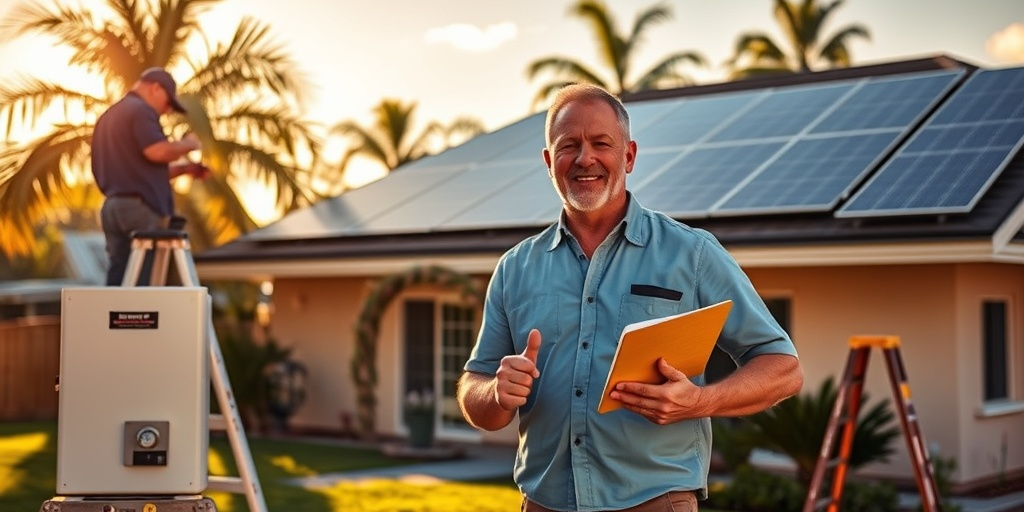
In a state famously bathed in sunlight, it’s no surprise that Florida leads the charge in the solar revolution. Did you know that homeowners can save up to $1,000 on their electric bills in the first year by switching to solar? Yet, despite such compelling financial incentives, many homeowners remain hesitant about making the leap. This leads to the question—what are the financial benefits of solar panel installation? In this comprehensive post titled What Are the Financial Benefits of Solar Panel Installation?, we’ll explore the various ways solar energy can transform your financial outlook, from slashing utility bills to increasing your home’s resale value. According to recent data, nearly 62% of Floridians believe that solar energy can offer monthly savings (SolarReviews.com), yet less than 10% of homeowners have made the switch. As we gear up for 2025, with rising energy costs and new state incentives like SRECs (Solar Renewable Energy Certificates), understanding these financial benefits has never been more pressing. In the sections that follow, we will unpack: 1) Real-life financial transformations of homeowners, 2) A checklist for maximizing your investment in solar energy, 3) Common myths about solar debunked, 4) A focus on Florida-specific advantages, and 5) Technical details about system technology and savings. Ready to illuminate your path to financial empowerment through solar energy? Let’s dive in!
The Transformative Financial Benefits of Solar Panel Installation
Meet the Rodriguez family, Florida homeowners who once struggled with skyrocketing electric bills each summer. Every month, their utility bills hovered around $300, a significant part of their budget that left little room for family vacations or emergencies. Frustrated with the rising costs, they started to consider solar energy. After researching and ultimately opting for solar panel installation, what they found was astonishing: not only could they significantly reduce their electric bills, but they could also take advantage of state incentives that made going solar financially feasible.
Over the first year following installation, the Rodriguez family spent approximately $12,000 on their solar panel system. However, with tax credits and rebates from both the state and federal government, they recouped nearly $3,600. Their first-year savings on energy bills amounted to $1,200, translating to a net gain of $1,800 despite the initial investment. By year three, their savings turned into an impressive $4,800. Cumulatively, they not only managed to cut their utility bills by 50% but also increased their home’s value by approximately $10,000 (NREL.gov).
The Financial Checklist for Solar Installation
Your roadmap to financial empowerment begins with a streamlined checklist:
- Step 1: Evaluate Your Electric Bill
Start by reviewing your electricity consumption over the past year. Knowing your current monthly costs can help you gauge potential savings. - Step 2: Investigate Available Incentives
Florida homeowners can benefit from various incentives, including the federal solar tax credit, which currently allows you to deduct 30% of the cost of installing a solar energy system from your federal taxes. - Step 3: Ask for Quotes from Local Providers
Reach out to at least three local solar companies to get an accurate understanding of installation costs. Don’t forget to check for their experience and customer reviews. - Step 4: Consider Your Financing Options
Explore different financing solutions, including low-interest loans, leases, or power purchase agreements (PPAs) that work for your budget. - Step 5: Calculate Your Return on Investment
Use an ROI calculator to find out how long it will take for your investment to pay off, considering all the savings and incentives mentioned.
A simple but effective way to maximize your financial benefits is to connect with local providers at floridaelectricandsolar.com. They can help you navigate the financial landscape and identify the best options for you.
Dispelling Common Myths About Solar Energy
When considering a switch to solar energy, it’s essential to separate fact from fiction. Here are some myths that often dissuade homeowners, debunked:
- Myth #1: Solar Panels Are Too Expensive
While the initial investment can be significant, state incentives and tax credits significantly reduce the overall cost. Many homeowners see savings on their energy bills as soon as their systems are installed. - Myth #2: Solar Doesn’t Work on Cloudy Days
Solar panels can still generate energy even when it’s overcast. In fact, they are most efficient during colder temperatures. Florida’s sunny climate ensures that solar energy remains a viable option. - Myth #3: Installing Solar Panels Decreases Home Value
Research shows that homes with solar installations often sell for more than their non-solar counterparts. A Zillow study found that homes with solar panels sold for an average of 4.1% more (Zillow.com). - Myth #4: Solar Requires Constant Maintenance
Solar panels have low maintenance needs, requiring only occasional cleaning to maximize efficiency. Most systems come with warranties that last 25 years or more. - Myth #5: You Can’t Install Solar If You Rent
Though homeowners primarily use them, renters can benefit from community solar programs, which allow access to solar energy without having to install systems themselves.
Moving past these myths is crucial for homeowners who desire to realize their energy independence through solar investments, especially in Florida where the potential for savings is significant.
Local Focus: Florida’s Unique Solar Advantage
Florida is leading the solar charge, and for good reason.
- According to the Solar Energy Industries Association, Florida is now the third-largest U.S. state for solar installations, with over 9.7 gigawatts powering homes and businesses (SEIA.org).
- The Sunshine State boasts over 250 sunny days annually, making it an ideal location for solar power generation.
- Governor Ron DeSantis has committed to reducing greenhouse gas emissions, thereby pushing for more renewable energy solutions like solar (FLGov.com).
Florida homeowners are strategically positioned to harness these benefits. With rising utility rates and a commitment to renewable energy, now is the time to invest in solar. Engaging with local experts at floridaelectricandsolar.com can lead to savings and peace of mind.
A Technical Deep-Dive into Solar Savings
Understanding how solar energy impacts your financial well-being requires a closer look at the technology and policies that govern its implementation.
- Solar Panel Technology: Modern solar panels come equipped with advanced photovoltaic (PV) cells that convert sunlight into electricity efficiently, often reaching efficiencies of over 20%.
- Battery Storage: To maximize savings, consider integrating battery storage systems that allow homeowners to store excess energy generated during the day for use during peak hours.
- Net Metering: Florida has a net metering policy that enables homeowners to receive credits for the excess solar power they send back to the grid, enhancing savings.
- Dynamic Pricing: Some utilities in Florida are beginning to offer time-of-use pricing, which charges higher rates during peak hours. By using stored energy during these times, homeowners can drastically reduce costs.
Each option comes with its own costs and potential savings, so weighing these factors can significantly enhance your financial return on investment.
Next Steps for Florida Solar Buyers in 2025
Ready to take the plunge into solar energy? Here’s your step-by-step action plan:
- Step 1: Audit Your Electric Bill
Understanding your current energy consumption and costs provides clarity for your solar installation decision. - Step 2: Research Local Incentives
Look for available rebates, credits, and incentives at both the local and federal levels that can significantly lower your installation costs. - Step 3: Get Expert Evaluations
Speak with solar consultants to gain tailored insights into how solar can specifically benefit your household. - Step 4: Plan for Installation
Pick a reputable solar provider who can guide you through permitting, utility interconnections, and decide on panel types. - Step 5: Monitor Your Savings
Once installed, track your savings diligently, updating your financial plans as necessary.
Now’s the time to invest wisely in the future of your household. By partnering with experts at floridaelectricandsolar.com, you can effortlessly navigate the world of solar and maximize your financial benefits.
As we conclude our examination of the financial benefits of solar panel installation, it’s important to recognize that the effects ripple through both immediate savings and long-term financial growth. The Rodriguez family and many other Floridians have demonstrated that moving to solar energy is not just an environmentally conscious decision; it is also a financially savvy one. The urgency to switch to solar is heightened as energy costs rise and government incentives make this investment more accessible than ever. By taking the plunge, you can not only reduce your utility bills but also enhance the value of your home, contribute to environmental sustainability, and enjoy energy independence.
Ready to start your solar journey in 2025? Connect with a certified expert at floridaelectricandsolar.com today.
Related Articles
More insights about Solar Panel

Florida Homeowners: Why Solar Panel Maintenance Is Essential

7 Essential Steps for Solar Panel Installation Success

Expert Insights: Key Factors Influencing Solar Panel Lifespan
Ready to Go Solar?
Have questions about solar energy? Our experts are here to help you make the switch to clean, renewable energy.