
Top Financing Options for Solar Panel Installation in Florida
Share:
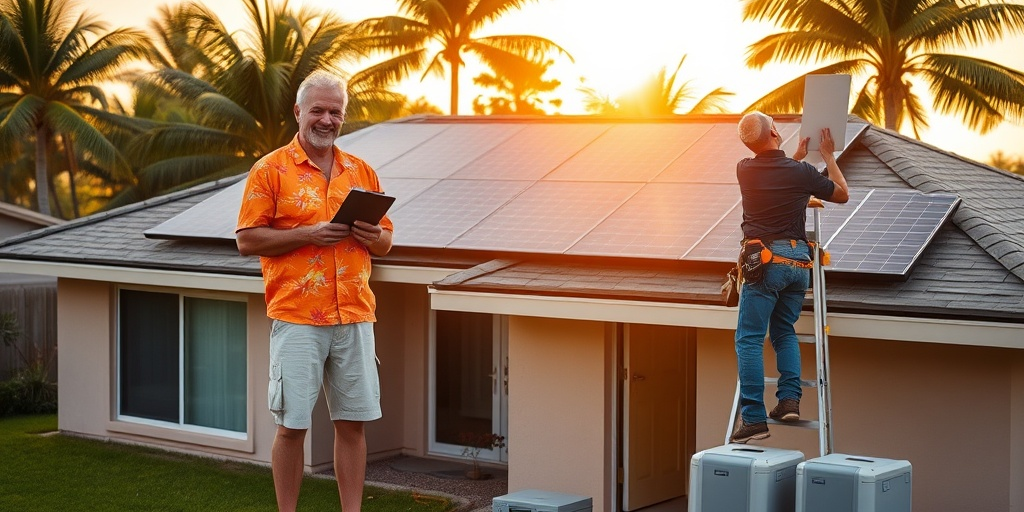
Is the rising sun in Florida about to shine on your savings? As energy costs continue to soar—upward of 25% in the last five years alone—there’s never been a better time for homeowners to consider solar panel installation. With Florida’s abundant sunshine and the potential for significant savings, the possibilities are thrilling. Welcome to our guide on the Top Financing Options for Solar Panel Installation in Florida, where we’ll explore how to make solar energy work for you today!
According to the Solar Energy Industries Association (SEIA.org), the solar market in Florida is growing at an unprecedented rate—an impressive 25.8% increase in new installations was reported in the past year alone. In 2025, the urgency to transition to renewable energy becomes even more critical, as the federal solar investment tax credit (ITC) is anticipated to be reduced. It is imperative for Florida homeowners to take action now to maximize their savings and participate in the transition to a solar-powered future.
In this comprehensive guide, we will delve into five distinct sections, each designed to arm you with the knowledge you need to embark on your solar journey:
- The Local Impact of Solar Financing: A Story of Change
- Your Solar Financing Options: A Practical Checklist
- The Truth Behind Solar Myths: Debunking Misconceptions
- Understanding Solar Technologies: A Deep Dive
- Your Next Steps: A Simple Action Plan for Solar Buyers
By the end of this article, you’ll not only understand the financing landscape but also feel empowered to take the next step in going solar.
The Local Impact of Solar Financing: A Story of Change
Meet Sarah and Tom, a couple living in sunny Sarasota, Florida. Faced with increasing energy bills, they began exploring solar energy options. Feeling overwhelmed by a sea of financing choices and incentives, they were on the verge of abandoning their solar dream. But everything changed when they reached out to a local solar expert.
After consulting with a specialist at Florida Electric & Solar, they learned about multiple financing options, including solar loans, leases, and power purchase agreements (PPAs). With solar installation costs averaging nearly $3.07 per watt in Florida (SolarReviews.com), Sarah and Tom noted that financing could allow them to reduce or even eliminate upfront costs entirely.
They opted for a solar loan with a fixed interest rate, making monthly payments manageable while allowing them to eventually own their system outright. “We realized that the savings on our electric bill would far exceed our loan payments,” Tom said. Indeed, with average electricity prices in Florida exceeding $0.12 per kWh, the couple quickly recouped their investment.
- Step 1: Research local solar financing options that suit your unique circumstances.
- Step 2: Evaluate your credit options: better credit often yields better financing terms.
- Step 3: Understand the potential savings and return on investment for your home.
- Step 4: Schedule an in-home consultation with an expert—ask about local incentives!
- Step 5: Review your options with family and friends to ensure everyone is onboard.
It’s important to understand the different types of financing. Florida is leading the charge towards renewable energy, with more than 24% of residents having already embraced solar technology (NREL.gov). Passionate Floridians like Tom and Sarah exemplify how financing can change lives, making solar affordable and accessible.
Let’s unravel some common myths surrounding solar financing. Many believe that solar is only for the wealthy, but, in fact, financing options make it accessible to everyone. Moreover, understanding local legislation is critical. Florida leads the nation with some of the most favorable solar policies, including net metering and sales tax exemptions, amplifying the case for solar investment in the Sunshine State. With this knowledge, continue exploring the solar financing options available to you.
Your Solar Financing Options: A Practical Checklist
As you prepare to invest in solar energy, it’s vital to understand the different financing options available to Florida homeowners. Each option offers various benefits tailored to different financial situations.
- Cash Purchase: Buying your solar system outright is the most straightforward option. This method provides maximum savings over time but requires full upfront investment, which may exceed $15,000 for a complete system.
- Solar Loans: These loans allow you to finance the system with a fixed or variable interest rate. Often, the monthly payment is comparable to your previous electric bill, allowing you to own your system outright eventually.
- Solar Leases: In a lease agreement, you pay a fixed monthly amount to use the solar equipment without assuming ownership. This route often has lower upfront costs but limits the financial benefits of ownership.
- Power Purchase Agreements (PPAs): Similar to leases, with PPAs, you pay for the electricity generated by the solar system instead of paying for the equipment itself. Payments vary according to the amount of energy produced.
- Home Equity Loans: Utilizing your home’s equity can be an alternative way to finance a solar installation, provided you’re comfortable with the associated risks of borrowing against your asset.
In choosing a financing option, consider your financial situation and long-term goals. What works for one homeowner may not work for another. The ultimate aim is to maximize solar savings! According to Solar Energy Industries Association data, the adoption of residential solar in Florida has more than doubled from 2014 to 2021, indicating that many homeowners are making the switch (SEIA.org).
Keep your finances in check by consulting with experienced solar experts who can guide you through your local options. For tailored assistance, visit floridaelectricandsolar.com to learn more about financing solutions suited to Florida homeowners.
The Truth Behind Solar Myths: Debunking Misconceptions
Even as the solar industry advances, a lingering skepticism persists among potential solar buyers in Florida. Let’s explore some common myths that could be holding you back.
Myth #1: Solar panels are too expensive. While initial costs can seem high, financing options such as loans and leases can significantly reduce upfront costs, making solar accessible. Additionally, federal and state incentives can help offset initial expenses.
Myth #2: Solar power only works in sunny climates. Contrary to popular belief, solar panels can produce electricity even in cloudy conditions. In fact, Florida’s abundant sunshine translates to excellent solar production, making it one of the leading states for solar energy installation.
Myth #3: Solar systems require too much maintenance. Minimal maintenance is needed once installed, with an annual cleaning and sometimes a check-up for system performance. Many manufacturers offer warranties that cover service needs as well.
Myth #4: Solar energy is not reliable. Many homeowners fear that fluctuations in sunlight will impact energy production. However, advancements in battery storage can mitigate these concerns by storing excess energy generated on sunny days to be used later.
Myth #5: You have to live in a certain type of home to go solar. While single-family homes often get the most attention, many multi-family units also harness solar power through shared systems. Reach out to local providers for guidance on your unique situation.
Debunking these myths can open a world of possibilities for many Florida homeowners. Faith in solar’s potential is essential to taking the next steps towards sustainable living. To explore financing options tailor-fit to your household, do not hesitate to reach out to experts at floridaelectricandsolar.com.
Understanding Solar Technologies: A Deep Dive
As you navigate through solar financing options, understanding the technologies available will empower you to make informed decisions. Let’s break down key components in modern solar installations and how they work together to deliver efficient, sustainable energy.
- Solar Panels: These photovoltaic (PV) systems convert sunlight into electricity. Most residential systems use monocrystalline or polycrystalline solar panels, with the former offering higher efficiency rates and sleek aesthetics.
- Inverters: Solar inverters are critical because they convert the direct current (DC) generated by solar panels into alternating current (AC) that your home can utilize. String inverters are common, but micro-inverters offer increased efficiency by allowing individual panel monitoring.
- Batteries: Energy storage systems are critical for storing solar energy to use after the sun sets. Tesla Powerwall and other battery systems enable homeowners to maximize self-consumption and minimize dependence on the grid.
- Racking Systems: Solar panels are mounted on racking, which can be fixed or adjustable based on positioning and weather. The correct placement ensures optimal solar exposure.
- Net Metering: In Florida, net metering allows you to sell excess energy back to the grid, providing cost savings on your electric bills. Understanding how to capitalize on this policy is crucial for maximizing your solar investment.
As you weigh the technological aspects of solar energy, remember that local regulations, incentives, and policies can influence your decision. Staying informed about changes in state laws can greatly impact your financial savings in the long run. Notably, many Florida utilities are becoming increasingly supportive of solar energy and are incentivizing adoption (SEIA.org).
Your Next Steps: A Simple Action Plan for Solar Buyers
Taking the plunge into solar can be both exciting and a bit daunting. But fear not—this action plan will guide you through the process of becoming a solar-savvy homeowner.
Step 1:
Conduct a solar energy audit of your property. Evaluate your average energy usage and assess whether your roof structure can support solar panels. Looking for shading, orientation, and roof age can also offer significant insights.
Step 2:
Research available financing options based on your financial situation. Are you leaning towards a purchase, lease, or financing solution? Determine your budget and be open to consulting with financial advisors.
Step 3:
Understand local regulations—familiarize yourself with permitting processes. Reach out to your local solar authority to ensure compliance with the latest solar policies in Florida.
Step 4:
Consult with solar experts. Schedule consultations with multiple companies, comparing pricing and proposals. Be sure to ask plenty of questions on warranties, service agreements, and installation timelines.
Step 5:
Finalize your decision! Once choosing a provider, review contracts, ensuring clarity on financing terms, and installation details, and secure the best financing option. Your solar journey has officially begun!
By following these steps, you’ll be well on your way to harnessing the power of the sun. Each phase of this journey paves the way for a brighter, more sustainable future. To get started, speak with experts at floridaelectricandsolar.com.
In summary, transitioning to solar energy is not just an environmentally-friendly choice but an essential move for financial well-being in 2025. Understanding financing options, debunking myths, and familiarizing yourself with different technologies is vital in making an informed decision. With rising energy costs and the decreasing tax credit set to alter the solar landscape, the time to act is now.
Solar power can transform your financial landscape while contributing to a greener world. Ready to start your solar journey in 2025? Connect with a certified expert at floridaelectricandsolar.com today.
Related Articles
More insights about Financing Options

Solar Panel Financing in Florida: Loans, Leases, and $0-Down Options for 2026

What Are the Critical Financing Options for Solar Panel Installation?

What Are the Best Financing Options for Solar in Florida
Ready to Go Solar?
Have questions about solar energy? Our experts are here to help you make the switch to clean, renewable energy.