
Florida Homeowners: Explore the Benefits of Community Solar Options
Share:
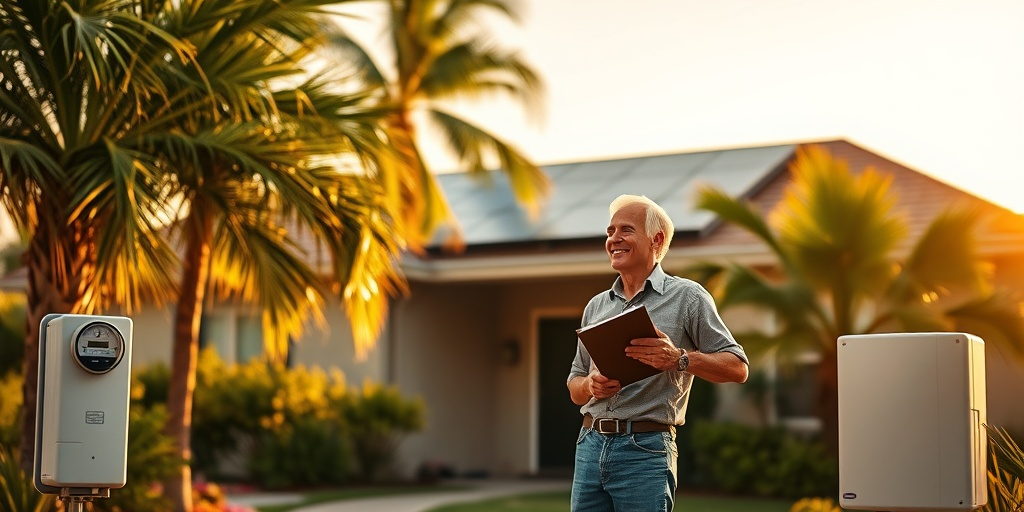
Imagine waking up each morning in your beautiful Florida home and knowing that your electricity bill is shrinking month after month. This is the reality for many homeowners who are harnessing the power of the sun. In fact, recent studies show that community solar projects have rapidly expanded across Florida, providing an accessible avenue for homeowners to reduce their reliance on traditional energy sources (Energy.gov). As of now, over 20% of Florida’s electricity comes from renewable sources, making the Sunshine State a frontrunner in clean energy initiatives (SolarReviews.com). This brings us to our topic today: Florida Homeowners: Explore the Benefits of Community Solar Options. As we head into 2025, the urgency to evaluate solar options is more pronounced than ever. With rising utility costs and impending changes to energy incentives, learning about community solar can empower homeowners to make informed decisions while saving money. In this article, we’ll cover five critical sections to illuminate the path toward solar energy adoption:
- Understanding Community Solar: Real-World Impact
- The Essential Checklist for Joining Community Solar
- Debunking Common Myths about Community Solar
- Florida-Specific Insights: What You Need to Know
- A Technical Deep Dive into Solar Mechanics
Let’s dive into a new energy landscape that can transform not only your wallet but also how you think about energy consumption.
Understanding Community Solar: Real-World Impact
Community solar provides an innovative solution for Florida homeowners to engage with renewable energy without the need to install solar panels on their own roofs. Let’s consider the journey of a hypothetical homeowner, Sarah, who lives in Sarasota. Sarah always wanted to adopt solar energy but felt overwhelmed by the upfront costs and logistics. Then, she heard about a community solar program offered within her local utility district. After researching, Sarah decided to enroll, and the process was seamless.
Sarah’s experience mirrors many Floridians who are hesitant due to the perceived challenges of individual solar installation. But community solar simplifies the process. By subscribing to a local solar farm, Sarah saves money on her monthly energy bill while supporting the expansion of renewable energy in her community. Furthermore, according to data from the Solar Energy Industries Association (SEIA.org), community solar programs have been shown to decrease electric bills by an average of 15-20%. For Sarah, this not only means financial savings but also peace of mind, knowing that she is contributing to a sustainable future.
Case Study: The Local Impact of Community Solar
Community solar is often installed in larger, centralized solar farms that take advantage of economies of scale for reduced costs. In Florida, legislation has supported the growth of community solar projects, leading to a 50% increase in installations over just two years. Communities such as Orlando with established solar networks have reported substantial reduction in energy costs, enabling more families to join the green energy transition.
With Sarah’s involvement in community solar, she also experiences a strengthened connection with her neighbors who share similar values for sustainability. They hold community meetings to discuss their experiences, ways to optimize their energy usage, and share tips on sustainability. This sense of community not only enhances the neighborhood’s spirits but also encourages further investment in green solutions.
Checklist: Steps to Get Started with Community Solar
- Research Local Solar Farms: Identify community solar projects in your area. Utilize platforms like floridaelectricandsolar.com to find information on local initiatives.
- Understand Your Utility’s Solar Policies: Each utility may have unique rules and regulations that govern community solar. Make sure you’re informed about these policies.
- Evaluate Your Savings: Calculate potential savings based on your energy usage and the community solar program’s pricing structure.
- Engage with Community Resources: Attend local informational meetings or webinars offered by solar advocacy groups. Insights from these sessions can equip you with a deeper understanding.
- Sign Up: Once you feel confident about your choice, proceed to enroll with the community solar program that suits your needs best.
Sarah’s transition into renewable energy shows not just an individual shift, but a collective movement towards more sustainable practices in Florida. But are there misconceptions that deter homeowners from joining community solar initiatives? Let’s bust some myths!
Debunking Common Myths about Community Solar
In the realm of renewable energy, misinformation can often cloud judgment. Here, we tackle some common myths about community solar options and arm you with clarity.
- Myth #1: Community Solar is Only for Green Energy Advocates. Community solar is accessible to everyone, offering savings for those who simply want to lower their bills while transitioning to cleaner energy.
- Myth #2: You Need to Own Your Home to Join. This is false; renters can also participate in community solar programs, breaking down barriers to access renewable energy.
- Myth #3: Community Solar Doesn’t Offer Substantial Savings. In reality, many participants experience significant savings—up to 20% off their monthly bills (SEIA.org)—proving that community solar can be financially advantageous.
- Myth #4: Community Solar Projects Aren’t Reliable. Community solar programs are backed by solid infrastructure, and its growth trajectory proves its resilience in energy stability.
- Myth #5: Community Solar is Too Complicated. The enrollment process is user-friendly, with most utilities offering assistance to guide new subscribers through the steps.
The evidence dismantling these myths should empower Florida homeowners to seek more information on community solar. Yet, knowing the benefits isn’t enough; understanding the local landscape can further boost confidence in making decisions. Let’s now explore Florida-specific insights crucial for 2025.
Florida-Specific Insights: What You Need to Know
The state of Florida stands out not just for its sunny beaches, but for the advantageous policies surrounding solar energy. In 2025, as solar incentives continue to evolve, Floridians are uniquely positioned to take advantage of these developments. Here are critical insights that every Florida homeowner should consider:
- Net Metering Policies: As of now, Florida maintains a net metering policy that enables solar panel owners to receive credits for the excess energy they produce. While community solar subscribers enjoy the benefits of shared renewable energy without installation, this policy remains critical for prospective homeowners contemplating rooftop solar.
- Statewide Incentives: Florida offers various incentives, such as the Property Tax Exemption for Solar Energy Systems, which helps reduce upfront costs for those that choose to install their systems (DSIREUSA.org). Community solar customers also benefit indirectly through reduced demand on the grid.
- Climate Resilience Programs: The state has initiated several programs aimed at mitigating climate impacts, enhancing the appeal of community solar. Homeowners can expect a strong focus on sustainability in local policy development.
These initiatives not only provide immediate benefits but also safeguard the environment for future generations. Coupled with the rising energy costs, opting into community solar now may very well be a financially sound decision. But what about the technical aspects of solar? It’s time to delve deeper!
A Technical Deep Dive into Solar Mechanics
Understanding the mechanics of solar energy can be daunting; however, grasping the essentials is vital. Community solar systems encapsulate several advanced technologies that contribute to their effectiveness.
Solar panels, typically composed of photovoltaic (PV) cells, convert sunlight into electricity. These systems are often connected to energy storage components to manage energy load more efficiently. Here’s a deeper look at the mechanics:
- Solar Panels: High-efficiency solar panels capture sunlight and convert it to electrical energy. Many modern panels maintain an efficiency of 20% or more, with innovations pushing boundaries even higher.
- Inverters: They play a crucial role in transforming the direct current (DC) generated by panels into alternating current (AC) that powers your home. Advanced string or microinverters optimize performance and reduce energy loss.
- Energy Storage Systems: These systems, often composed of lithium-ion batteries, allow homeowners to store excess energy for later use, enhancing energy independence.
As community solar continues to grow, understanding the technology behind it empowers consumers to make better decisions and engage in conversations with their utility providers. With this knowledge, it’s clear that the time is ripe for Florida homeowners ready to embrace solar. What are the immediate next steps?
Next Steps for Florida Solar Buyers in 2025
With clarity on the benefits and technology behind community solar options, let’s streamline your action plan. Here’s how you can transition smoothly into the solar energy landscape:
- Audit Your Electric Bill: Start by identifying your energy consumption. Understanding variable costs can provide insights into potential savings when you join a community solar program.
- Research Available Programs: Investigate community solar programs in Florida that suit your needs, particularly those with favorable pricing and reliable performance metrics.
- Assess Your Utility’s Incentives: Different Florida utilities offer varying incentives for community solar participants. Ensure you maximize these benefits to elevate your savings.
- Join a Local Solar Advocacy Group: These organizations can provide valuable guidance, helping you navigate the community solar programs and connecting you with other like-minded homeowners.
- Sign Up! Feel confident in your choices and enroll in a community solar program tailored to meet your energy needs. With the right program, you can enjoy the financial benefits of solar while making a positive environmental impact.
Taking the plunge into community solar doesn’t just make economic sense; it also shapes a more sustainable energy landscape for everyone in Florida. As 2025 approaches, homeowners ought to seize the opportunity to contribute to a greener future. So, what’s holding you back?
To recap, adopting community solar can lead to significant savings, enhance your community’s energy resilience, and support the fight against climate change. With resources available and local policies favoring renewable energy, the time to act is now.
Ready to start your solar journey in 2025? Connect with a certified expert at floridaelectricandsolar.com today.
Related Articles
More insights about Community Solar

Florida Residents: 5 Reasons to Consider Community Solar Benefits

South Florida Community Solar Benefits: What Residents Should Know

Beginner’s Guide to Understanding Community Solar Benefits
Ready to Go Solar?
Have questions about solar energy? Our experts are here to help you make the switch to clean, renewable energy.