
What Florida Homeowners Should Know About Solar ROI Breakdown
Share:
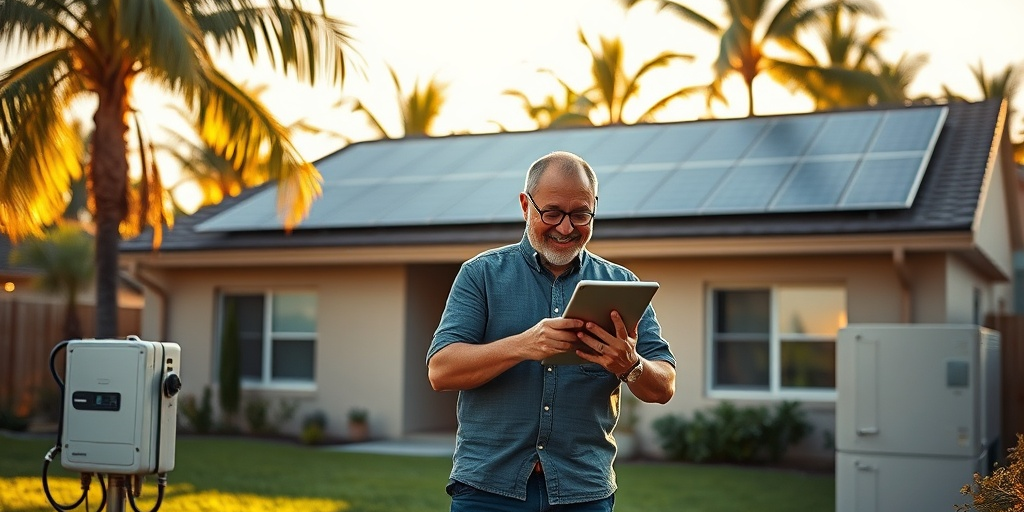
Are you ready for some eye-opening numbers? A recent study indicates that Florida homeowners who invest in solar panels can expect an impressive return on investment (ROI) averaging 12–15% over the system’s lifecycle. In fact, nearly 90% of solar panel owners in Florida reported significant savings on their utility bills, according to the Solar Energy Industries Association (SEIA.org). Such statistics are powerful indicators that homeowners should take a serious look at solar energy, especially as we approach 2025 and the state continues to prioritize clean energy initiatives.
In this article titled What Florida Homeowners Should Know About Solar ROI Breakdown, we’ll delve into the factors that shape solar ROI for residents across the Sunshine State. Here’s what we’ll cover:
1. **Understanding Solar ROI Through Real Stories** – We’ll analyze a compelling case study that highlights the financial benefits of going solar.
2. **Key Steps for Evaluating Your Solar Investment** – A practical checklist will guide you through assessing the potential ROI for your home.
3. **Debunking Common Solar Myths** – We’ll bust misconceptions that might hold you back from making the switch to solar.
4. **Local Focus on Florida’s Solar Landscape** – Discover how state policies and incentives can amplify your savings and investment.
5. **A Technical Examination of Solar Systems** – We’ll take a deep dive into the components of solar technology that impact your ROI.
Why is it urgent for Florida homeowners to understand solar ROI in 2025? As energy costs rise, the need for alternative energy sources has never been clearer. Additionally, burgeoning solar incentives, along with advancements in technology and energy storage, make this an ideal time to reap the benefits of solar investments. Let’s dive in.
Understanding Solar ROI Through Real Stories
Meet Sarah, a recent Florida homeowner. After moving into her more than 2,000-square-foot energy-efficient home in Orlando, she grappled with skyrocketing utility bills. In just a few months, her electricity costs soared, prompting her to investigate alternatives. Sarah discovered that by installing a solar panel system, she could potentially eliminate over 80% of her monthly electricity expenses. After researching her options, she decided to partner with Florida Electric & Solar for her solar journey.
Through comprehensive consultations, Sarah learned that the average residential solar installation in Florida offers an ROI of about 12% (SEIA.org). With her estimated system cost at $20,000, and with state incentives further reducing that cost, Sarah knew she was making a sensible investment.
So what were the compelling factors driving Sarah’s decision? Here’s a checklist for homeowners to evaluate:
- Initial Costs and Financing Options – Understanding your upfront costs and financing options can help assess your initial investment effectively.
- Monthly Utility Savings – Calculating how much you will save each month with solar will enhance your ROI projections.
- Incentives and Tax Credits – Researching available incentives, such as the federal solar tax credit (ITC), can significantly impact your overall costs.
- Energy Production Potential – Your solar system’s expected energy production helps determine long-term savings, especially in a sun-rich state like Florida.
- Property Value Increase – Homes with solar systems installed often see an increase in property value, contributing to a higher ROI when you sell.
With this checklist, Sarah was able to clearly outline her financial expectations and understand why her investment in solar would pay off. She realized she could expect a payback period of about six years, which is considered quite favorable in the realm of solar investments.
Moving forward, a popular myth Sarah encountered was that solar panels were unreliable during cloudy or rainy weather. However, she soon learned solar panels can still generate power in overcast conditions—an important factor in Florida’s humid subtropical climate. Plus, improvements in solar technology have made modern panels more efficient and effective, harnessing more sunlight than ever before.
For Sarah, the decision was clear. Within weeks of installation, she was already witnessing the transformation of her energy bills, realizing an average saving of $150 to $200 monthly (Energy.gov). She felt empowered knowing she was not only contributing to a sustainable future but also saving money in the process. But her story is just one example. With numerous state incentives and financing options, Florida homeowners can emulate her success.
Your Solar Investment Checklist
Now that we’ve seen Sarah’s journey, let’s create a comprehensive checklist to help other Florida homeowners evaluate their solar investment. This will not only help you understand the ROI breakdown but also maximize the potential savings.
- Step 1: Audit Your Electric Bill – Spend a few months analyzing your previous electricity bills to understand your average energy consumption and costs. Look out for peak usage times which could indicate when you may benefit most from solar energy.
- Step 2: Research Solar Options – Explore what types of solar systems are available, such as grid-tied, off-grid, or hybrid systems, comparing their respective benefits and costs.
- Step 3: Consult a Solar Expert – Schedule a meeting with a certified solar consultant from floridaelectricandsolar.com who can provide a tailored analysis for your property.
- Step 4: Explore Financing Options – Determine what financing options are available, including loans, leases, and power purchase agreements (PPAs), and how each affects your return on investment.
- Step 5: Investigate Incentives – Familiarize yourself with state-specific incentives, including Florida’s Solar Energy Systems Incentives Program, which can substantially lower your upfront costs.
By conducting this thorough checklist, homeowners can better navigate the complex solar energy landscape and make informed decisions that will boost their return on investment.
Debunking Common Solar Myths
As solar energy gains popularity, so too do the myths surrounding it. Here, we will shine a light on some common misconceptions that could deter homeowners from investing in solar.
Myth #1: Solar Panels Are Too Expensive
Although the upfront costs can be significant, the long-term savings often outweigh these initial investments. Many financing options and state incentives make solar more affordable than ever.
Myth #2: Solar Panels Require Too Much Maintenance
Solar panels are designed to be low-maintenance. Most require just a simple cleaning once or twice a year to maximize efficiency.
Myth #3: Solar Energy Doesn’t Work on Cloudy Days
Many individuals assume cloudy weather equates to no energy production. In actuality, solar panels continue to function effectively even in overcast conditions, which is crucial for Florida’s weather patterns.
Myth #4: Solar Systems Can Only Be Installed on Rooftops
While rooftops are a common installation site, ground-mounted systems are also viable. This option may provide better exposure to sunlight, especially for homes with ample yard space.
Myth #5: The Federal Tax Credit Will Disappear Soon
There has been ongoing discussion about the extension or modifications to the federal solar tax credit (ITC), but as of 2023, it provides 30% off the installation costs. Staying informed of policy changes will enable timely action.
Don’t let these myths cloud your judgment about solar energy. In fact, most solar panel users report high satisfaction rates, further affirming the positive financial impact of transitioning to solar.
Local Focus on Florida’s Solar Landscape
Florida has gained recognition as a leader in solar energy. In 2022 alone, the state accounted for approximately 17% of all new solar capacity added in the U.S. (SolarReviews.com). As a Florida homeowner, it’s crucial to understand how local policies and incentives can affect your solar ROI.
1. **Net Metering**: Florida’s net metering policy allows homeowners to sell excess solar energy back to the grid at retail rates, significantly enhancing your potential savings.
2. **Property Tax Exemptions**: Under state law, solar systems are exempt from property tax assessments, meaning your investment won’t inflate your property tax bill.
3. **Solar Renewable Energy Certificates (SRECs)**: Florida has established SREC markets where you can earn credits for renewable energy generation, leading to extra income.
4. **State Incentives**: Florida promotes solar adoption through various state incentives, including rebates from the Florida Solar Energy Center.
In addition to state policies, Florida’s climate offers distinct advantages for solar power generation. With an average of 237 sunny days a year, solar installations here have a high energy production potential, leading to quicker ROI. When considering this landscape, homeowners can feel secure in their decision to invest in solar energy.
A Technical Examination of Solar Systems
Understanding the intricate technology behind solar systems can enhance your confidence as a potential investor. Here, we will take a technical deep dive into the core components influencing your ROI—panels, inverters, and battery storage.
Solar Panels: The heart of your system, solar panels, are engineered to convert sunlight into electricity. The efficiency of modern panels can range from 15% to over 22% depending on the technology used, the most efficient options often yielding higher long-term savings.
Inverters: Acting as the middleman, inverters convert the direct current (DC) generated by solar panels into usable alternating current (AC) for your home. Choosing high-quality inverters can optimize your system’s performance and prolong its lifespan.
Battery Storage: Home solar battery systems allow you to store excess energy generated during the day for use during the night or cloudy days. This technology not only maximizes your savings but also provides resiliency during grid outages.
Potential costs vary for these components, but understanding their functions can lead to informed purchasing decisions. With rebates and incentives available for installing battery systems, integrating storage can significantly benefit ROI.
Focusing on high-efficiency panels, reliable inverters, and battery storage can transform your solar installation from a simple utility savings tool into a robust power management system. However, evaluating your options, financing, and understanding the technology can be complex. Therefore, working with a trusted expert can streamline this process.
Next Steps for Florida Solar Buyers in 2025
Having explored the nuances of solar ROI, it’s now time to assess your own journey in transitioning to solar energy. Follow these key steps as you embark on this rewarding path.
- Step 1: Conduct an Energy Audit – Start with an energy audit to comprehend your energy consumption needs accurately.
- Step 2: Research Local Solar Companies – Not all solar companies are created equal. Look for local providers with a solid reputation and proven experience.
- Step 3: Get Multiple Quotes – Don’t settle for the first quote you receive. Gathering multiple offers will ensure you’re getting competitive prices.
- Step 4: Inquire About Roof Conditions – Check your roof’s condition before installation to avoid future costs associated with repairs or replacement.
- Step 5: Stay Informed About Policy Changes – Keep informed on local and state incentives through organizations like SEIA, which can inform on potential changes affecting your ROI.
By following this actionable plan, you’ll be equipped to navigate your solar journey successfully. Remember, proper planning is key to optimizing your solar investment.
In conclusion, understanding the solar ROI breakdown is crucial for Florida homeowners considering making this transition. Each section of this article sheds light on how solar energy can lead to significant savings and financial security. As energy costs escalate, the potential of invested savings is clear.
Embracing a solar energy solution not only reduces reliance on traditional, non-renewable energy sources but also boosts home value and fosters sustainable living. In this changing energy landscape, staying ahead means making informed, proactive decisions.
Have you ever considered how much your life could change if you owned your power? Ready to start your solar journey in 2025? Connect with a certified expert at floridaelectricandsolar.com today.
Related Articles
More insights about Solar ROI

Expert Insight: Understanding Solar ROI Breakdown for Florida Homeowners

Beginner’s Guide to Solar ROI Breakdown for Your Home

Expert Insight on Solar ROI Breakdown for Florida Homeowners
Ready to Go Solar?
Have questions about solar energy? Our experts are here to help you make the switch to clean, renewable energy.