
Grid-Tied vs. Off-Grid Systems: A Detailed Breakdown for Homeowners
Share:
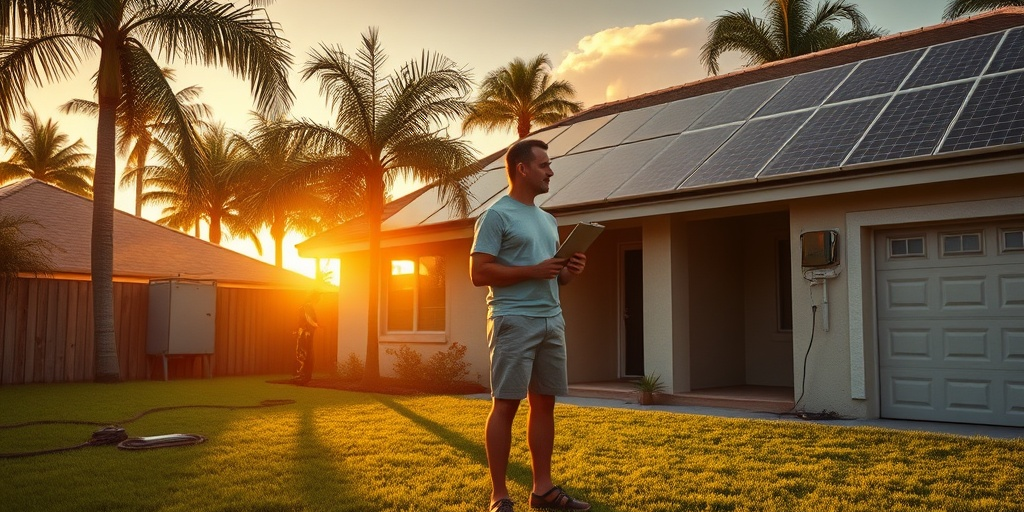
In 2025, as Florida homeowners grapple with an unprecedented rise in energy costs—averaging over $160 a month for residential electric bills—many are considering going solar. If you find yourself amidst friends discussing which solar system might best suit your needs, you might plunge into a sea of uncertainties. Grid-Tied vs. Off-Grid Systems: A Detailed Breakdown for Homeowners is here to help you navigate your options and maximize your savings while powering your home sustainably. Recent studies revealed that a staggering 93% of Floridians have considered switching to solar energy due to soaring electricity prices and increasing environmental concerns (SEIA.org). Moreover, with the announcement of new solar incentives expected this year, there’s no better time to understand your choices.
This blog post unpacks the nuances of residential solar systems—primarily focusing on grid-tied and off-grid configurations. But why does this matter for Florida homeowners in 2025? As climate resilience becomes increasingly critical, understanding these differences can provide you a competitive edge in energy savings and energy independence. Here’s what we will explore:
- Understanding Grid-Tied Systems: The conventional solar route and its limitations.
- Exploring Off-Grid Systems: The self-sufficient approach to solar energy.
- Expert Tips for Installing Solar Systems: Key practices ensuring a successful setup.
- Real Homeowner Stories: Engaging narratives highlighting personal journeys.
- Action Steps for Florida Residents: A practical guide to embarking on solar installation.
With this roadmap, you can confidently wade through the waters of solar systems, enhancing your financial health and environmental impact. Let’s dive in!
Understanding Grid-Tied Systems
Imagine Sarah, a Florida homeowner, making a leap into solar energy in early 2025. After receiving surprise electric bills over $200 during the summer months, she decides it’s time to invest in a solar energy system. Sarah chooses a grid-tied system, captivated by the potential for savings. However, her excitement turns into puzzlement when a hurricane sweeps through, knocking out power to her neighborhood. While her solar panels still produce energy, she realizes her grid-tied system requires a connection to the energy grid to function—rendering her homestead without power until the grid comes back online.
Here’s a checklist for homeowners like Sarah who are considering grid-tied systems:
- Step 1: Assess Your Energy Needs — Review your monthly bills and estimate your energy consumption.
- Step 2: Research Local Net Metering Policies — Understand how excess power generation can benefit you financially.
- Step 3: Choose the Right Equipment — Invest in high-quality solar panels and inverters that match your energy needs.
- Step 4: Consult a Reliable Installer — Look for local solar companies with positive reviews and a strong track record.
- Step 5: Evaluate Future Energy Prices — Factor in the rising costs of traditional electricity to gauge long-term savings.
However, there are common myths surrounding grid-tied systems. Let’s debunk a few:
Myth #1: “Grid-tied solar systems mean you’re never fully ‘off the grid.’”
Actually, while you still depend on the grid for nighttime power or during outages, your system can significantly reduce dependency and costs.
Myth #2: “If your panels produce energy, you won’t face electricity bills.”
Not entirely true; while you may significantly reduce bills through net metering, you’ll still be subject to grid-related fees.
Myth #3: “It’s better to wait for technology to improve.”
The current technology already offers substantial savings. Waiting could mean missing out on substantial federal tax incentives, expected to expire soon (SEIA.org).
For Florida homeowners, approximately 20% more solar energy can be generated yearly than in many northern states (USDA.gov), making the choice even more appealing. As you consider grid-tied options, remember that they are ideal for those who remain connected but want to slash electricity costs.
Ready for a deeper understanding? Let’s explore off-grid systems.
Exploring Off-Grid Systems
Off-grid systems offer independence from the traditional electrical grid. This means you produce and store your energy entirely. Consider Michael, another Florida resident, who wants to be completely in control of his energy production. After a thorough analysis, he decides to install an off-grid solar system. His rationale? Emergencies and power outages have become more frequent in his world of constant unpredictability. He opts for battery storage systems that allow him to store excess solar power for evening and cloudy days.
With an off-grid system, the pros are clear:
- Energy independence, as you are no longer reliant on utility companies.
- The ability to power your home in regions underserved by the electrical grid.
- Potential long-term savings on utility bills, particularly in remote areas.
However, such benefits come with considerations:
- Higher upfront costs due to battery storage and equipment.
- More maintenance required to manage battery health effectively.
- A need for careful planning to ensure that your energy production meets your daily requirements.
For Floridians, the climate can work in your favor, allowing for ample solar energy production year-round. Research indicates off-grid solar installations have grown by over 50% in areas prone to natural disasters (NREL.gov). Florida home and business owners are investing more in energy independence, primarily due to the rise in energy prices and natural disasters.
As you contemplate a switch to off-grid solar systems, consider these architectural factors:
- House Orientation: Ensure your roof faces south for optimal sun exposure.
- Battery Storage: Select high-quality batteries with appropriate capacity based on your energy consumption.
- Inverter Type: Choose a hybrid inverter that permits both grid connection when available and load access during outages.
An interesting takeaway for residents is Florida’s newly constructed tax incentives specifically aimed at encouraging the use of renewable energy, which may significantly benefit your decision-making process.
Moving forward, let’s discuss some expert tips about solar installations for 2025.
5 Expert Solar Installation Tips for 2025
As you contemplate making a solar leap, ensuring a smooth installation is vital. The stakes are high, and you want your investment to pay off. So here are the 5 essential tips for securing a stellar solar experience:
Tip 1: Don’t Skimp on Panel Placement — Proper orientation is crucial. Panels should ideally be at a 30-degree angle to maximize sun exposure, elevating your solar savings substantially.
Tip 2: Invest in Quality Equipment — Cheaper systems degrade faster. An initial investment in quality panels and inverters can assure performance and durability, providing value over time (SolarReviews.com).
Tip 3: Work with Reputable Installers — Research local solar companies that have a good track record. Ask for references to gauge their standing in the community before making decisions. A reliable installer can streamline the entire process.
Tip 4: Evaluate Your Roof Condition — If it’s not structurally sound, repair or replace it before installation. You don’t want future leaks affecting your new solar setup.
Tip 5: Ask About Warranties and Maintenance — Enquire about coverage on your panels and inverters—it’s essential to know they’ll last. Most manufacturers offer warranties ranging from 20 to 25 years.
Additionally, it’s evident that 2025 will usher in advanced technology features such as performance monitoring through smart devices, which can keep you informed about your system’s energy efficiency. Staying ahead means equipping yourself with the latest insights. Homeowners can find expert advice and tailored solutions at floridaelectricandsolar.com.
Staying proactive while exploring has never been more critical—but as essential as insight is, it should go hand in hand with emotional narratives. Let’s look at real solar journeys in our next section.
Real Homeowner Stories
Dive into the stories of real Florida homeowners who made the transition to solar. Take Taylor and Jamie, a couple residing by the coast. They faced two daunting challenges: growing electric bills and increasing anxieties about climate change. After thorough research, they opted for a grid-tied system, perfectly suited for their home in a neighborhood with a reliable energy grid.
They painted the picture of joy and relief upon installation, as a reduction in utility costs became more evident month after month. Their first electric bill after installing solar was a jaw-dropper—down to only $35. But with joy came apprehension: when Hurricane Elsa struck, they lost power, and their system was rendered inoperative until grid restoration occurred. Although frustrated, the couple reflected that their long-term savings significantly outweighed these temporary drawdowns.
For anyone considering solar, here are steps Taylor and Jamie recommend:
- Research Incentives: Florida offers substantial incentives for homeowners—take advantage!
- Plan Around Weather: Know when hurricanes may hit—timing could save damage to your system.
- Engage with Your Community: Surround yourself with neighbors who’ve gone solar for insights and networks.
On the other hand, consider Ava, who chose an off-grid system for her family’s farmhouse located in rural Florida. Her motivation stemmed from a desire to ensure her family had full control over energy costs and reliability. After installing solar panels coupled with high-quality battery systems, Ava’s home became a self-reliant energy oasis. One day however, during an unexpected snowstorm that limited sunlight, her backup generator maintained power until the system revived.
From Ava’s experience, lessons learned included:
- Understand the limits of your system’s production during inclement weather.
- Always have a backup plan in place to navigate through unexpected outages.
- Invest in high-capacity battery systems to prevent over-dependence on renewable production.
These narratives are vital, emphasizing the real-world implications of solar systems and allowing you to relate to the benefits and challenges both grid-tied and off-grid systems can present. As you get closer to making your decision, let’s wrap up with an actionable plan specific for Florida homeowners in 2025.
Next Steps for Florida Solar Buyers in 2025
Now that you’re informed on solar energy systems, what’s next? Here’s a detailed checklist to empower your transition:
- Step 1: Audit Your Electric Bill — Gather past utility statements to identify current energy costs.
- Step 2: Calculate Potential Solar Savings — Use calculators available online to project your savings over the years against installation costs.
- Step 3: Investigate the Solar Market — Read reviews and gather quotes from different local installers to find the best match for you.
- Step 4: Check for Solar Incentives — Research state and federal incentives that apply to your location—timing matters.
- Step 5: Schedule a Site Visit — Meet with a professional installer to assess your property and discuss system options tailored to your needs.
Make sure to keep an eye on the fluctuating energy landscape; in 2025, the shift towards renewable energy is anticipated to grow even more compelling. Being proactive can help you harness this opportunity effectively. For tailored recommendations specific for Florida, consult resources available at floridaelectricandsolar.com.
By taking these steps, you maximize your potential savings, prepare your home for renewable energy usage, and take control of your energy future.
Conclusion
Solar energy isn’t merely a source of power; it’s your pathway to financial freedom, climate resilience, and environmental stewardship. Having explored the differences between grid-tied and off-grid systems, the choice now rests with you. Will you take the leap towards energy savings and independence in 2025? You’ve learned about the potential of solar systems, the experiences of fellow Floridians, and actionable next steps. Your decision matters not just for you but for future generations as well.
Now is the time to act—don’t wait for rising energy costs to push you to a decision. The insights gleaned from your exploration pave the way for informed financial and ecological choices. Ready to start your solar journey in 2025? Connect with a certified expert at floridaelectricandsolar.com today.
Related Articles
More insights about Grid-Tied Systems

Grid-Tied vs Off-Grid Systems: What You Need to Know

Grid-Tied vs. Off-Grid Systems: The Essential Solar Comparison Guide

Technical Deep-Dive: Understanding Grid-Tied vs Off-Grid Solar Systems
Ready to Go Solar?
Have questions about solar energy? Our experts are here to help you make the switch to clean, renewable energy.