
Myth-Buster: Solar Panel Storage Will Not Solve All Your Issues
Share:
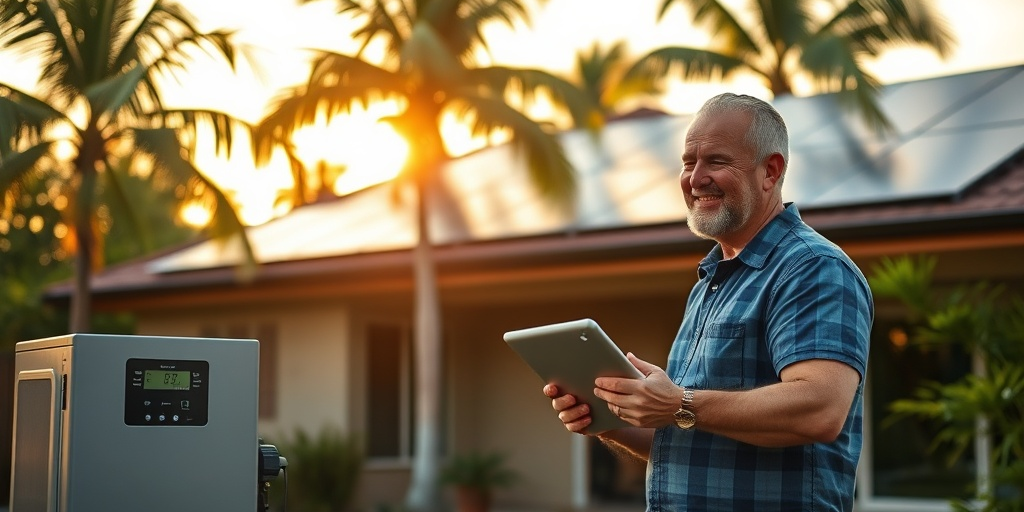
Have you heard the hype about solar battery storage? Many believe that adding a battery system to their solar panels will completely free them from the grid and eliminate all energy issues. But is that really the case? Welcome to our latest blog post, Myth-Buster: Solar Panel Storage Will Not Solve All Your Issues. In this article, we’ll unravel the misconceptions surrounding solar battery storage and reveal the real limitations it poses, especially for Florida homeowners planning to make the switch in 2025.
According to the Solar Energy Industries Association (SEIA), Florida ranks third in the nation for solar installations, with over 100,000 residential solar systems in place last year alone. Moreover, the Florida Power & Light Company reports that energy costs are projected to rise by 20% over the next five years, making it essential for residents to explore viable alternatives. Understanding these dynamics will empower you to make informed decisions as you navigate potential solar investments. In the context of new incentives set to roll out in 2025, it is paramount to approach solar solutions with clarity and prudence.
In the sections that follow, we will:
- Delve deep into the myth of solar battery storage’s capabilities by presenting real-life scenarios, checklists, and key statistics.
- Go through a practical checklist designed for homeowners considering a solar battery installation.
- Debunk common misconceptions about solar technology that could lead to disappointment down the road.
- Explore Florida-specific factors influencing solar adoption and energy independence.
- Provide a technical deep-dive into the workings of solar energy systems and storage solutions.
So, let’s get started!
Understanding the Real Power of Solar Battery Storage
Too often, homeowners envision a battery backup as a silver bullet for their energy worries. But let’s demystify this idea and understand how limited solar battery storage can be while hearing a story that’s all too common.
Meet Jenna, a dedicated Florida homeowner who installed solar panels in the hopes of achieving energy independence. Like many, she was excited to learn about solar storage options. After researching, she invested in a battery system, believing it would allow her to harness the sun’s energy and eliminate her reliance on the grid. Sounds ideal, right? Yet, after a sweltering summer filled with energy consumption, she quickly discovered the limitations.
While Jenna’s battery provided backup during brief power outages, it didn’t fully offset her energy needs. In fact, her battery stored only enough energy to power essential appliances during periods of low sunlight. To add to her frustration, Jenna learned that Florida’s climate and peak energy consumption patterns meant she was still on the grid for the majority of the time. In essence, the battery didn’t live up to her expectations.
This scenario uncovers three critical truths about solar battery storage:
- Limited capacity: Most home battery units provide a limited amount of storage. For example, a typical Tesla Powerwall can store around 13.5 kWh of energy—enough to run a refrigerator and some lights for a couple of days, but not enough for heavy usage over a long period (Energy.gov).
- High initial costs: While prices for batteries have decreased, installation, maintenance, and integration with solar systems can range from $10,000 to $20,000. High upfront costs can lead homeowners to question their return on investment (SolarReviews.com).
- Dependence on solar generation: The effectiveness of a battery system hinges on the solar panels generating enough energy during peak sunlight hours. If there’s insufficient energy to store, the battery won’t be effective (NREL.gov).
In Florida, energy demands peak during the hottest months. Consumers often need more energy than their batteries can supply. Therefore, while battery storage can be beneficial, it’s crucial not to rely solely on it for energy independence.
Your Practical Solar Battery Installation Checklist
When it comes to opting for solar battery storage, it’s essential to evaluate your unique circumstances and needs. Below is a simple yet comprehensive checklist to guide you through your assessment before committing:
- Evaluate your energy consumption: Review your past electric bills to determine how much energy you use monthly. This will help to determine an appropriate battery size and solar panel capacity.
- Research local incentives: Florida homeowners may qualify for various state incentives, federal tax credits, and rebates that can reduce overall costs. Always check floridaelectricandsolar.com for current offers available.
- Choose a reputable installer: Not all solar installation companies provide integrated storage options, so select a service with proven experience and customer satisfaction ratings.
- Understand grid connection benefits: Even with storage solutions, staying connected to the grid can provide a safety net during low-solar production periods.
- Perform a cost-benefit analysis: Calculate long-term savings versus upfront and maintenance costs of both your solar panel system and battery installation.
This checklist should assist you in assessing the feasibility of adding solar battery storage to your energy plan. Financial prudence and realistic expectations will save you headaches in the long run.
Debunking Myths: Unpacking the Solar Battery Storage Illusions
It’s time to clear the air on some of the most pervasive myths regarding solar battery storage that can lead to confusion and unrealistic expectations:
Myth #1: Solar batteries make you completely energy independent.
Many homeowners believe that battery storage will allow them to completely detach from the grid, but this is seldom the case. Limited capacity and energy production fluctuations render total energy independence impractical.
Myth #2: All solar panels come with batteries included.
Homeowner expectations may be skewed by the perception that any solar panel purchase includes storage. However, most systems require separate components and installation for battery integration.
Myth #3: Battery life is unimportant as long as you replace them every few years.
While it’s true that batteries will need replacement, many homeowners underestimate the lifecycle and warranties offered. Investing in quality solutions can save money over time.
Myth #4: Batteries are cheap and affordable for everyone.
Though prices have declined, they still represent a significant investment. Homeowners must account for installation costs, which can elevate the total financial commitment significantly (Energy.gov).
Myth #5: Maintenance isn’t an issue with battery systems.
Like all integral systems, solar batteries require ongoing maintenance, and failure to perform regular checks can lead to diminished performance and financial losses (SEIA.org).
By critically evaluating these myths, Florida homeowners can make better-informed decisions based on facts rather than misconceptions.
Florida-Specific Considerations for Solar Adoption
When contemplating solar battery storage, Florida homeowners must also keep an eye on state-specific factors that could influence their decision-making:
- The net metering policy: Florida’s net metering program allows homeowners to sell excess energy back to the grid at a retail rate. This significantly impacts the battery’s efficacy. With net metering in effect, homeowners reap greater benefits than relying solely on battery storage.
- Weather variability: Florida’s tropical climate often brings stormy weather. Battery systems can provide benefits during power outages but remind users they cannot replace the full energy need during prolonged outages.
- Incentives and rebates: The residential solar market has several incentive programs; aspiring solar users should stay abreast of which incentives remain available to reduce costs substantially.
According to a recent report, Florida saw a 13% increase in solar panel installations last year, indicating a growing trend towards renewable energy (SolarReviews.com). Is your neighborhood among these progressive communities embracing energy independence?
A Technical Deep-Dive: The Mechanics of Solar Energy Systems
Understanding how solar systems function will enhance your knowledge about battery storage limitations. Let’s break down how these systems operate:
- Solar panels: Generate electricity from sunlight and store it directly into an inverter or solar battery. The efficiency of conversion impacts how much energy is available for use.
- Inverters: Convert direct current (DC) generated by the solar panels into alternating current (AC) for use in your home. The inverter plays a vital role in energy efficiency.
- Battery storage: Stores excess power for use during low sunlight hours or power outages. Most batteries function with a limited lifespan and capacity, necessitating careful investment consideration.
The technology continues to advance, and innovations in battery chemistry and grid integration are evolving, promising more efficiency and cost-effectiveness over the next decade. With these understandings, you can craft a more effective solar strategy that is not wholly reliant on storage solutions.
Next Steps for Florida Solar Buyers in 2025
Now that you’re more informed, here’s a straightforward action plan for embarking on your solar journey:
- Step 1: Audit Your Electric Bill: Begin by collecting and reviewing your past utility bills to understand your energy consumption patterns. Highlight peak usage periods to gauge when storage might be necessary.
- Step 2: Explore Solar Options: Research and select an installer experienced in both solar panel and battery installation. Check service reviews and ask questions about system performance and warranties.
- Step 3: Review Incentives: Eligibility for state and federal incentives can significantly decrease the amount you pay upfront. Always check the latest offerings from the state government.
- Step 4: Assess Site Conditions: Ensure your property has enough sun exposure and space for an installation that meets your energy needs. Your installer can assist with this assessment.
- Step 5: Make an Informed Decision: After exhausting all research avenues and consultations, feel confident in selecting a solar energy system that fits your needs. Remember to balance your storage desires with realistic expectations.
Taking these steps can empower you to make educated choices as you navigate solar adoption.
Throughout this article, we have demystified the limitations of solar battery storage. It’s essential to recognize that while batteries can provide backup energy in certain situations, they are not a failsafe solution. By understanding the market landscape and considering state-specific factors, you can shape a more sustainable energy future for yourself and your family.
Ready to start your solar journey in 2025? Connect with a certified expert at floridaelectricandsolar.com today.
Related Articles
More insights about Solar Panel Storage

Myth: Solar Panel Storage Only Benefits Large Homeowners

Why Florida Homeowners Should Consider Solar Panel Storage

Case Study: How One Family Achieved Energy Independence with Solar Panel Storage
Ready to Go Solar?
Have questions about solar energy? Our experts are here to help you make the switch to clean, renewable energy.