
Understanding Grid-Tied vs Off-Grid Systems: A Technical Deep-Dive
Share:
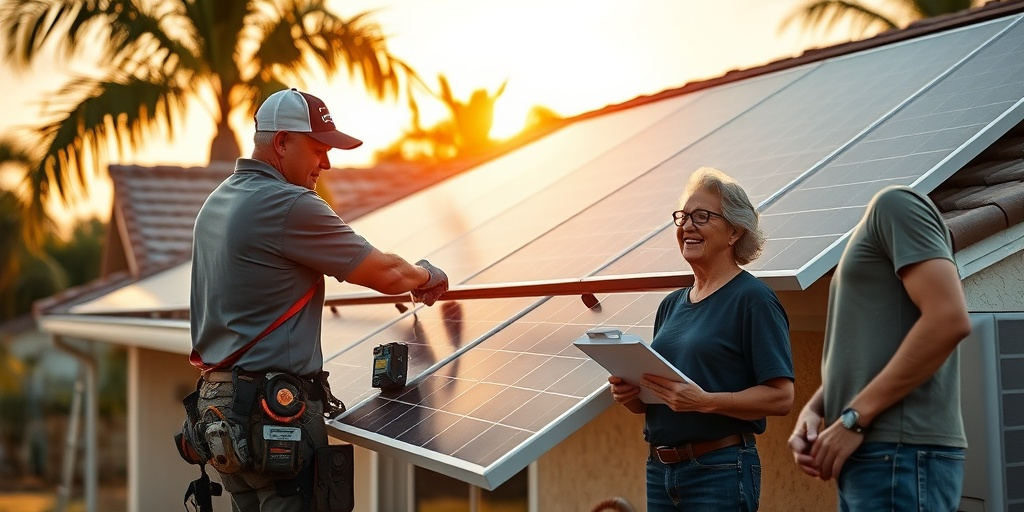
In the sunny state of Florida, homeowners and business owners are increasingly exploring the solar energy landscape as a viable option for saving money and enhancing energy independence. Have you ever considered how much electricity costs could cut into your budget? A staggering 50 million American households are projected to use solar energy by 2035, highlighting an undeniable trend towards cleaner energy solutions (SEIA.org). But here’s the catch: with 2025 knocking on our doors, homeowners must navigate a critical decision: should you choose a grid-tied or an off-grid solar system? Welcome to our blog titled “Understanding Grid-Tied vs Off-Grid Systems: A Technical Deep-Dive.” In this post, we’ll unravel the complexities of both systems, detailing their respective benefits and drawbacks, and how these choices can significantly impact your investment in solar energy.
Why is this topic so urgent? As electricity prices expected to rise by 9% over the next decade (EIA.gov), and new solar incentives being rolled out, the time to act is now. Additionally, the increasing unreliability of the electrical grid poses risks to household and business energy security. This deep dive will empower you to make informed decisions about your solar choices.
In this article, we’ll explore the following five sections: the emotional journey of a Florida homeowner choosing between grid-tied and off-grid systems, actionable checklists to help you through the decision-making process, myth-busting misconceptions about solar systems, our local Florida focus highlighting specific stats and insights, and a technical analysis of the underlying technology. By the end, you’ll be well-equipped to choose the solar option that best aligns with your energy needs.
Choosing Your Path: Grid-Tied vs Off-Grid Solar Systems
Let’s begin by diving into a poignant case study that illustrates the emotional and financial benefits of solar energy. Meet Sarah, a Jacksonville homeowner. Concerned about climate change and rising electric bills, she decided to explore renewable energy options. After extensive research, she discovered two paths: a grid-tied solar system that allows her to remain connected to the local utility, versus an off-grid system that would provide complete energy independence.
Sarah’s decision was not solely financial; it was also about lifestyle. After consulting a local expert, she learned that a grid-tied system could reduce her electricity bill by up to 50% and has the advantage of net metering, which allows her to sell excess energy back to the grid. This appealed to her desire to cut costs while still being connected. In 2025, net metering in Florida is still robust, incentivizing homeowners with excess solar production (SolarReviews.com).
On the other hand, Sarah became intrigued by the idea of having full control over her energy through an off-grid system. This choice would allow her to generate her own electricity using solar panels and battery storage, eliminating her dependence on the grid. However, she realized that off-grid systems require a significant upfront investment and ongoing maintenance.
Here’s a checklist to consider when making your decision:
- Evaluate Your Energy Needs: Calculate your current energy consumption and future needs.
- Analyze Your Location: Understand solar resource availability and incentives in your area.
- Consider Financial Implications: Look at initial costs versus long-term savings.
- Review System Options: Research both grid-tied and off-grid solutions.
- Consult Experts: Get advice from certified solar professionals.
To help Florida homeowners like Sarah understand common misconceptions, let’s debunk some prevalent myths surrounding grid-tied and off-grid systems.
Myth #1: You’ll be completely off the grid with an off-grid system.
In reality, while off-grid systems operate independently, many homeowners opt for a hybrid system that allows them to connect back to the grid for backup during low solar production times.
Myth #2: Grid-tied systems are more prone to outages.
While it’s true that grid-tied systems shut down during outages for safety, they provide energy flexibility and savings through net metering, which off-grid systems cannot offer.
Myth #3: Off-grid systems are always more cost-effective in the long run.
Upfront costs can be significant for off-grid systems, and ongoing maintenance may lead to higher costs compared to the typically more economical grid-tied option.
Myth #4: Solar panels are ineffective during cloudy weather.
Recent advancements in solar technology mean that solar panels can still generate energy even in overcast conditions, significantly benefiting both grid-tied and off-grid setups.
With these insights, it’s essential to weigh your options carefully. Florida is dynamically pushing towards solar with incentives indicating continued support (SolarReviews.com). In the next section, we’ll explore expert strategies for efficient solar installation for those ready to embrace their solar journey.
Expert Strategies: 5 Tips for Effective Solar Installation
As solar energy enthusiasts gear up for implementation in 2025, it’s vital to grasp crucial installation techniques that maximize performance and savings. Remember, the effectiveness of your solar system greatly relies on its initial setup.
Tip 1: Invest in Quality Panels.
Opt for reputable brands that provide solid warranties and high efficiency. Research shows that higher quality solar panels can lead to increased energy production over the system’s lifespan (NREL.org).
Tip 2: Ensure Proper Placement.
Panel orientation and angle are critical; they should be positioned toward the sun’s path to optimize energy generation throughout the day. Don’t skimp on placement to save costs!
Tip 3: Integrate Smart Technology.
Consider using solar inverters that allow you to monitor energy use and performance in real-time, enabling adjustments that can enhance savings and efficiency.
Tip 4: Factor in Future Scalability.
Plan for potential expansion based on your growing energy needs. Installing a system that can be expanded can save you costs down the road.
Tip 5: Review Local Regulations and Incentives.
Stay informed about Florida’s solar policies and financial incentives that can ease initial investments. Familiarizing yourself with these regulations can save you a considerable amount (Energy.gov).
For the best results, consider consulting with credible experts, such as those at floridaelectricandsolar.com, to help you navigate the solar landscape effectively.
The Narrative of a Solar Journey: A Homeowner’s Story
Imagine a fictional but realistic scenario: Tom and Lisa, living in sunny Tampa, decide to transition to solar in 2025. Faced with rising energy prices smashing their budget and a desire to meet their environmental convictions, they grapple with their options.
Initially leaning towards a grid-tied system, Tom and Lisa appreciate the idea of net metering and lower costs. As they gather quotes and consult with local solar companies, they notice a recurring theme: the need for reliable financial planning coupled with expert consultation.
After initial installations, they also realize the panels are performing better than expected. This solar surge has empowered them to cut their electric bill down by 70%, and they often export excess energy to the grid (SolarReviews.com). With their newfound energy savings and reduced carbon footprint, Tom and Lisa feel a surge of pride in their transformation.
As they continue their solar journey, they made some key realizations:
- Investing in solar is as much about lifestyle choices as it is about finances.
- Verification of their installers can significantly affect the project’s quality.
- Staying engaged with local incentives can yield significant savings.
- Patience is crucial; solar systems take time to pay off, but the results are worth the wait!
With a commitment to sustainability, Tom and Lisa embody the future of Florida homeowners, eager to embrace the energy revolution heading into 2025.
Next Steps for Florida Solar Buyers in 2025
Now that you have explored the intricacies of grid-tied versus off-grid systems and learned of the compelling stories and strategies, it’s time to forge your path. The following checklist outlines actionable next steps for Florida solar buyers in 2025:
- Step 1: Audit Your Electric Bill.
Look for trends in your energy consumption to dictate your needs going forward. - Step 2: Research Potential Installers.
Seek out certified companies with proven track records and favorable reviews. - Step 3: Assess Your Property’s Solar Potential.
Evaluate your roof’s orientation, shading factors, and available space for solar panels. - Step 4: Understand Financial Incentives.
Familiarize yourself with state incentives that could significantly lower your initial investment (Energy.gov). - Step 5: Finalize Your Energy Plan.
Weigh your grid-tied vs. off-grid options, balancing cost and independence.
Florida’s solar landscape is evolving, and with adequate research and careful planning, you can position yourself to reap the rewards. Don’t hesitate to consult experts to ensure you maximize your investment. More resources can be found at floridaelectricandsolar.com.
Conclusion
As we journeyed through the intricacies of grid-tied versus off-grid solar systems, one truth emerged: the solar decision isn’t just about energy—it is about creating a sustainable future for ourselves, our families, and our planet. In 2025, as we face rising energy costs and evolving incentives, now is the time to take charge of your energy future. With the right information and guidance, you can make a choice that not only cuts your electric bills but fosters environmental impact and energy independence.
By understanding the benefits and challenges of each system, you can confidently navigate your options and lead the charge towards solar energy. Your story could unfold like those of Tom, Lisa, and Sarah—each embarking on a transformational journey toward energy independence.
Ready to start your solar journey in 2025? Connect with a certified expert at floridaelectricandsolar.com today.
Related Articles
More insights about Grid-Tied Systems

Grid-Tied vs Off-Grid Systems: What You Need to Know

Grid-Tied vs. Off-Grid Systems: The Essential Solar Comparison Guide

Technical Deep-Dive: Understanding Grid-Tied vs Off-Grid Solar Systems
Ready to Go Solar?
Have questions about solar energy? Our experts are here to help you make the switch to clean, renewable energy.