
Beginner’s Guide to Solar Panel Installation for Florida Homeowners
Share:
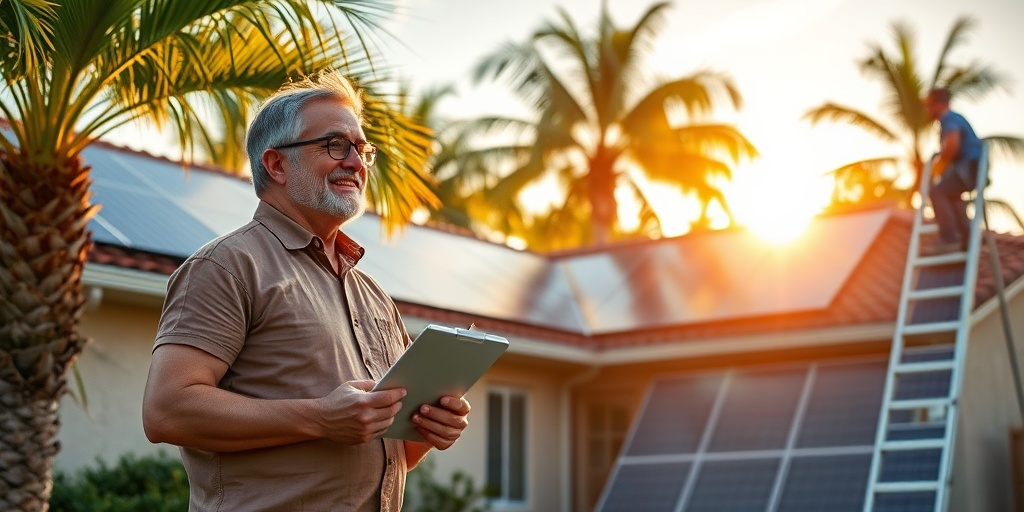
Imagine looking at your electric bill and seeing it slashed by half—or maybe even eliminated altogether. For many Florida homeowners, the shift to solar energy has transitioned from a dream to an achievable reality. In fact, as of 2023, over 1.1 million homes in Florida are powered by solar energy—the third-highest in the nation (SolarReviews.com). But how does one embark on this rewarding journey? Welcome to the “Beginner’s Guide to Solar Panel Installation for Florida Homeowners.” In this guide, we will help you navigate the exciting world of solar power installation in Florida. It’s essential to act now, as 2025 comes with promising new solar incentives that could further maximize your savings while you go green. This journey will take us through five key sections: a case study of a Florida homeowner’s experience, a practical checklist for solar installation, common myths debunked, a focus on local Florida policies affecting solar, and an in-depth technical overview of solar technology. Each of these will arm you with the knowledge needed to turn your solar dreams into reality.
Real Stories: Solar Success in Florida
Meet Julia and Mark, a couple living in Orlando, who decided to switch to solar energy after they realized their summer electric bills were exceeding $300. After conducting extensive research, they learned about the potential savings offered by solar energy and decided to take the plunge. Through their journey, they not only achieved significant savings but also contributed to a healthier planet. The Financial Impact: Julia and Mark installed a 10 kW solar panel system that cost approximately $30,000. With various incentives available in Florida, including the federal solar tax credit currently set at 26%, they were able to reduce the total cost to about $22,200. Given the average savings of $1,250 per year on their electricity bills, they started seeing a return on their investment in just 6 years (Energy.gov).
Before diving into their installation process, let’s look at some vital steps every Florida homeowner should consider before embarking on this journey:
- Assess Your Energy Needs: Monitor your electricity usage over the past year to gauge what size system you will need effectively.
- Research Solar Installers: Quality counts. Choose a reputable installer with understanding of Florida’s unique solar landscape.
- Evaluate Incentives: Take advantage of federal and potential state incentives available to homeowners in 2025.
- Understand Financial Options: Whether it’s purchasing outright, financing, or leasing, examine your financial landscape.
- Schedule an Installation: Ensure your home is ready by checking for any roof issues or possible shade obstructions.
Even with all the advantages that solar power offers, honey, skepticism is widespread. A common fear among homeowners is the myth that solar panels won’t work in the Sunshine State if it rains. Let’s debunk this and other misconceptions.
Myths About Solar Energy – Debunked
There are plenty of misunderstandings surrounding solar power that tend to deter Florida homeowners. Here are five myths you might encounter during your solar installation journey:
- Myth #1: Solar Panels Are Too Expensive. While it’s true that solar panel installation requires an upfront investment, numerous incentives exist that can significantly lower costs. In Florida, components of the installation are often eligible for state and federal tax credits (SEIA.org).
- Myth #2: Solar Panels Don’t Work on Cloudy Days. Florida’s sunny climate is evidently favorable, but even on overcast days, solar panels can still produce significant power—up to 25% of their potential output (NREL.gov).
- Myth #3: Homeowners can’t profit from selling solar energy. Net metering laws in Florida allow homeowners to sell excess energy back to the grid, generating income (DERA.org).
- Myth #4: Solar Panels Require Too Much Maintenance. In reality, solar panels require minimal maintenance—just regular cleaning and occasional inspections to ensure optimal performance.
- Myth #5: Solar Energy Is Not Energy-Efficient. Residential solar energy systems can reduce your carbon footprint significantly. Statistics show that the average Florida homeowner can cut their carbon emissions by 80% with solar power (FloridaSolar.org).
Florida-Specific Information on Solar Policies
Florida remains one of the most favorable states for solar energy due to several local policies designed to support homeowners. Some key statistics show that Florida’s solar market has grown by 26% annually over the last five years, setting a strong path for future developments (SEIA.org). But what do these policies mean for you? Let’s explore some essential components:
- Net Metering: This is a billing mechanism that credits solar energy system owners for the electricity they add to the grid, turning your meter backward.
- Federal Solar Tax Credit: Florida residents can benefit from a 26% tax credit available for solar systems installed by the end of 2022, with incentives continuing into 2025. This means considerable savings when filing taxes!
- No Property Tax Increase: Adding solar systems to your property will not increase taxable value under Florida law, which mitigates potential risks associated with increased property tax.
By leveraging these local policies and state incentives, a Florida homeowner can substantially minimize their upfront costs and maximize long-term savings. Transitioning to solar is more than just an environmental choice; it makes solid financial sense, particularly with the supportive framework provided in Florida.
Understanding Solar Technology: How It Works
Solar power technology can be overwhelming for those new to the subject, but understanding its elements is crucial for any hopeful installer. Here are some primary components and concepts every homeowner should grasp:
- Solar Panels: These are the heart of your solar energy system, absorbing sunlight and converting it to electricity. Most commonly, solar panels are made up of silicon cells.
- Inverters: These devices convert the generated DC (direct current) electricity from the panels into usable AC (alternating current) electricity for your home.
- Batteries: Solar batteries store excess energy produced during sunny days for use during non-sunny hours or emergencies.
- Monitoring Systems: Essential for tracking the system’s performance and ensuring it operates at maximum efficiency.
Understanding these fundamental components will empower you in choosing the right systems and upgrades, so you can ensure peak performance and longevity of your installation. As Florida homeowners know, investing in quality equipment pays off in the long run.
Next Steps for Florida Solar Buyers in 2025
With the knowledge you’ve gained from this guide, it’s time to take action and transition from learning to implementation:
- Step 1: Audit Your Electric Bill. Review your past electricity bills to assess how much you could potentially save with solar.
- Step 2: Consult a Solar Expert. Connect with professionals at floridaelectricandsolar.com who can provide personalized insights based on your property.
- Step 3: Get Multiple Quotes. It’s essential to compare and contrast from local installers to ensure competitive pricing and quality.
- Step 4: Check Your Roof. Ensure your roof structure is stable and suitable for solar panel installation before the process begins.
- Step 5: Schedule Your Installation. Once you’ve made a decision and financing is set, it’s time to book your installation dates.
The transition to solar will not only reduce your energy bills; it’s a conscious step toward sustainable living, preserving our environment for future generations.
Your journey toward solar energy is just beginning. You hold the power to cut costs, enhance your home’s value, and positively impact the world around you. The earlier you make this shift, the better—especially as new benefits are rolling out in 2025. So, act now!
Ready to start your solar journey in 2025? Connect with a certified expert at floridaelectricandsolar.com today.
Related Articles
More insights about Solar Panel

Florida Homeowners: Why Solar Panel Maintenance Is Essential

7 Essential Steps for Solar Panel Installation Success

Expert Insights: Key Factors Influencing Solar Panel Lifespan
Ready to Go Solar?
Have questions about solar energy? Our experts are here to help you make the switch to clean, renewable energy.