
Florida Homeowners: The Critical Benefits of Zero Down Solar
Share:
As the sun rises over the picturesque landscapes of Florida, it illuminates a reality that is as bright as the sun itself: solar power is not just a trend—it’s an essential transformation redefining our relationship with energy. In fact, recent data shows that Florida ranks third in the nation for installed solar capacity, reflecting an optimistic change towards renewable energy (SEIA.org). Yet, one of the most common misconceptions that still holds homeowners back is the cost of entering the solar space. A substantial number of Florida homeowners continue to believe they need to invest thousands upfront. What if I told you that it’s possible to go solar with zero down? Welcome to our article titled, Florida Homeowners: The Critical Benefits of Zero Down Solar. As energy costs continue to climb—projected to increase about 20% by 2025—zero down solar is not merely an enticing option; it’s a necessity (Energy.gov). In this post, we’ll explore the critical benefits of zero down solar solutions that empower homeowners to maximize utility bill savings through innovative solar technologies.
In this enlightening journey, we will delve into five key sections: first, an in-depth case study showcasing the real-life impact of zero down solar; second, a practical checklist that homeowners can use to make informed decisions; third, a myth-busting segment to address common misconceptions; fourth, a local focus on Florida’s solar policies and incentives; and lastly, a technical deep dive into the workings of solar technology. Let’s begin the journey towards harnessing the sunny potential of Florida!
Understanding Zero Down Solar: The Cost-Effective Solution for Floridians
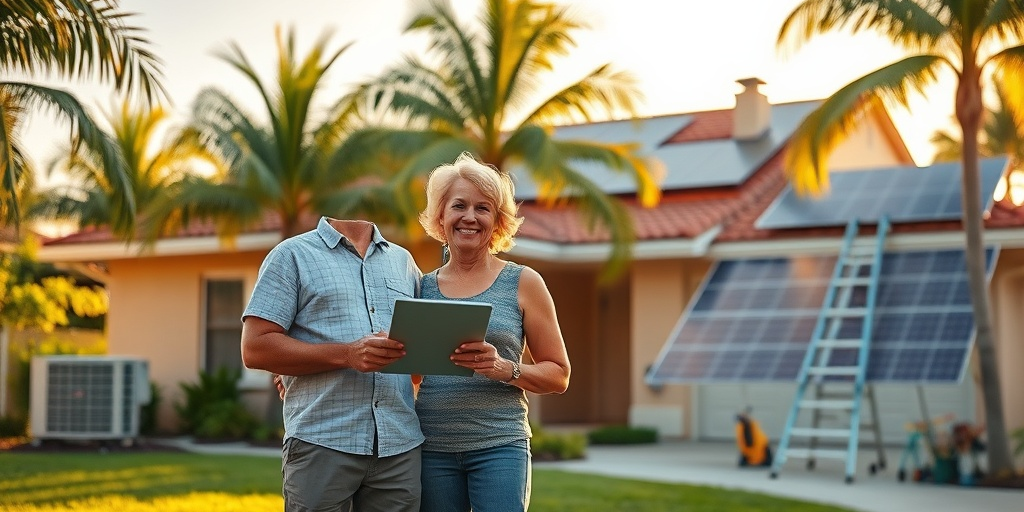
More than ever, Florida homeowners are gravitating towards the green revolution and the exciting potential of solar energy. Going solar without upfront costs represents a powerful paradigm shift. Picture this: Jack and Lisa, a couple residing in Sarasota, faced skyrocketing electric bills because of the oppressive Florida heat. After finding out about zero down solar options, they felt empowered to capitalize without breaking the bank. They partnered with Florida Electric & Solar, allowing them to install a state-of-the-art solar system entirely without upfront investment.
This leads us to consider why zero down solar is suitable and practically essential for Florida homeowners in 2025. According to a 2023 SEIA report, Florida has facilitated the installation of approximately 21.5 gigawatts of solar capacity, with expectations of continued expansion due to future incentives (SEIA.org). If we think about the financial landscape in 2025 and beyond—with potential grid instability, fluctuating energy prices, and growing climate concerns—making renewable energy accessible with $0 down provides a viable path for community-wide energy independence.
Here’s a brief checklist that every homeowner should consider when navigating the process of going solar:
- Research local solar companies: Look for organizations with extensive experience and customer satisfaction—like Florida Electric & Solar.
- Understand your energy needs: Evaluate your monthly electricity consumption for a tailored solar solution.
- Review financing options: Determine the best financing solution, focusing on zero down options that suit your budget.
- Schedule a solar consultation: Have professionals assess your home’s solar potential, roof orientation, and shade analysis.
- Read the contract thoroughly: Ensure you understand terms related to savings, warranties, and equipment quality.
While Jack and Lisa made that pivotal decision, they benefitted from a customized installation plan, allowing them to switch to solar seamlessly. Among the statistics that drove their decision were that homeowners could expect to save an average of $1,500 annually on their utility bills after installation (Energy.gov). By opting for zero down, they avoided the initial financial barrier while harnessing the significant long-term benefits.
Moreover, let’s dispel some myths surrounding zero down solar solutions:
- Myth #1: You can save only if you pay upfront. Many believe upfront payments are the only way to reap benefits from solar. However, financing options allow the same savings with zero initial investments.
- Myth #2: All solar systems are the same. The quality and efficiency of solar panels can greatly vary. Investing in high-quality equipment generates more power, thus yielding higher savings in the long run.
- Myth #3: Solar energy is only for affluent homeowners. The power of zero down solar makes it accessible for everyone, regardless of income. Community solar or specific financing options can help lower-income families to share in the benefits.
Moving forward, Florida continues to make strides in becoming a leader in solar energy production. Many counties are offering favorable policies to boost local businesses and residential adoption—a signal for homeowners to act while the opportunity is ripe. In coming years, as installation prices decline and efficiency rises, the formula for solar savings will shift dramatically, making options like zero down increasingly attractive.
The Advantages of Going Solar Without Upfront Costs
The concept of zero down solar isn’t just a financial strategy; it’s a personal empowerment movement for homeowners aiming to invest in sustainable energy solutions. Here are the primary advantages:
- Immediate savings: Without spending a dime upfront, homeowners can start saving on electricity costs right away.
- Affordable monthly payments: Monthly payments are structured to be less than the average electric bill if clearly identified in contracts.
- Awareness of future savings: With the tax incentives available, including a 30% federal tax credit for solar panel installation, solar customers stand to save significantly over time (DSIREUSA.org).
These key benefits lead us to grasp why opting for zero down solar is a strategic move, particularly in states like Florida that experience expansive solar growth. Additionally, the cost of energy is rising, with utilities across the nation increasing rates anywhere from 5% to 10% annually (Energy.gov). Homeowners who take advantage of zero down solar will not only escape the pressure of immediate payments but also shield themselves from the relentless tide of rising energy bills.
A crucial point worth noting: achieving energy independence allows homeowners to lock in their energy costs for the future, even amidst fluctuating utility rates. This becomes especially important as natural disasters—common in Florida—can disrupt traditional energy infrastructure, yielding unexpected charges during peak crisis periods.
To establish a successful zero down solar installation, here’s how to navigate the process effectively:
- Consult reputable solar installers: Seek companies known for excellent service and proven results, like Florida Electric & Solar.
- Evaluate your roof: Determine whether your roof is suitable for solar panels, ensuring it meets longevity and condition standards.
- Understand your utility rates: Knowing how much you pay for electricity will set expectations for solar power benefits.
- Explore available incentives: Research federal, state, and local incentives for which you might qualify.
- Stay informed on technology: Keep an eye on new solar technologies that could enhance your savings prospects.
Each of these steps plays a pivotal role in ensuring you make the best decisions when moving towards zero down solar. Jack and Lisa successfully navigated this process, ultimately realizing that their installed system did not merely represent an energy source—it signified a newfound control over their living expenses and a commitment to a sustainable future.
Common Myths About Solar Energy Explained
While many are eager to adopt solar energy, misconceptions still hold some homeowners back. Addressing these myths brings clarity to the various aspects surrounding solar power:
- Myth #1: Solar energy isn’t effective in cloudy areas. Despite Florida’s tropical storms, solar panels can efficiently generate energy even on overcast days.
- Myth #2: Only new homes qualify for solar installation. Both new and existing homes can benefit from solar energy solutions, regardless of age.
- Myth #3: Solar energy generation requires constant maintenance. Solar panels merely require periodic cleaning and inspections, making them relatively hassle-free.
As we dissect these myths, we can see a clearer path forward, paving the way for greater adoption of solar solutions throughout Florida’s communities. Homeowners often overlook that reputable solar companies provide warranties to cover maintenance for years, easing concerns about potential issues.
Additionally, many counties are stepping up to offer grants and programs to encourage installation, further illustrating how solar’s evolution continues to foster opportunities for all Florida homeowners.
This journey toward understanding has revealed not just the potential for significant savings but also an opportunity for every Floridian to work towards a cleaner environment while enjoying energy independence.
The Future of Solar Energy in Florida: What to Expect
As we look forward to the implications of zero down solar solutions in the coming years, it’s crucial to analyze the trajectory of the solar landscape as innovations emerge. This section delves deeper into expected future developments:
- Increased efficiency: Industry experts predict that advancements in solar technology will lead to panels becoming more efficient in converting sunlight to energy.
- Improved financing options: Financing mechanisms will likely diversify, allowing more homeowners to enter the solar space with flexible terms and minimal stress.
- Legislation supporting solar growth: State and federal policies will continue to evolve, incentivizing a broader audience to invest in solar energy.
Let’s adopt the inspiring story of Jennifer from Jacksonville, who recently transitioned to solar energy. Faced with rising costs and an antiquated roof system, Jennifer leveraged her option for zero down financing through an established installer. With the solar panels installed, she not only reduced her bills, she also received a variety of local incentives that made the system even more affordable.
Throughout Jennifer’s journey, she discovered the impact of rising tides affecting local energy production while also learning about how much solar energy can help stabilize the grid during peak times. According to a recent study, solar installations reduced greenhouse gas emissions by 40% in areas with substantial adoption rates (NREL.gov).
In conclusion, Jennifer’s story, along with many others, paints a vibrant picture of how solar energy can reshape the future for Floridians. Floridians should take advantage of growing solar technologies and energy-efficient solutions to lighten the financial burdens associated with energy supply while working towards environmental sustainability.
Next Steps for Florida Solar Buyers in 2025
As we wrap up our in-depth exploration of zero down solar solutions, it’s vital to provide a straightforward action plan for homeowners looking to embark on their solar journey in the coming years. Here’s a simplified roadmap that can ease the process:
- Audit your electric bill: Understand your energy consumption over the last few months to gauge savings.
- Research available solar providers: Evaluate options by comparing services and community feedback before making your choice.
- Clear financing options to fit your needs: Opt for zero down programs that maximize your savings.
- Understand the installation process: Familiarize yourself with what to expect during the solar installation from start to finish.
- Schedule a consultation: Connect with experts, such as the professionals at floridaelectricandsolar.com, to create your personalized solar plan.
These careful steps will help you navigate the transition toward cleaner energy solutions tailored to your home. As your final takeaway, remember that the potential for significant savings through a zero-down approach to solar energy awaits you. Each journey into solar power represents a commitment not just to an energy source but to a sustainable future for yourself and generations to come.
In conclusion, as Jack, Lisa, Jennifer, and countless other Floridians already know, embracing solar energy through accessible solutions is more than just a financial investment; it’s a leap towards energy independence and environmental stewardship. Ready to start your solar journey in 2025? Connect with a certified expert at floridaelectricandsolar.com today.
Related Articles
More insights about Zero Down Solar

Why Florida Homeowners Should Explore Zero Down Solar Options

How One Florida Family Benefited from Zero Down Solar

Why Gulf Coast Residents Should Explore Zero Down Solar Options
Ready to Go Solar?
Have questions about solar energy? Our experts are here to help you make the switch to clean, renewable energy.