
How Long Do Solar Panels Last in Florida? What to Expect From Your System
Share:
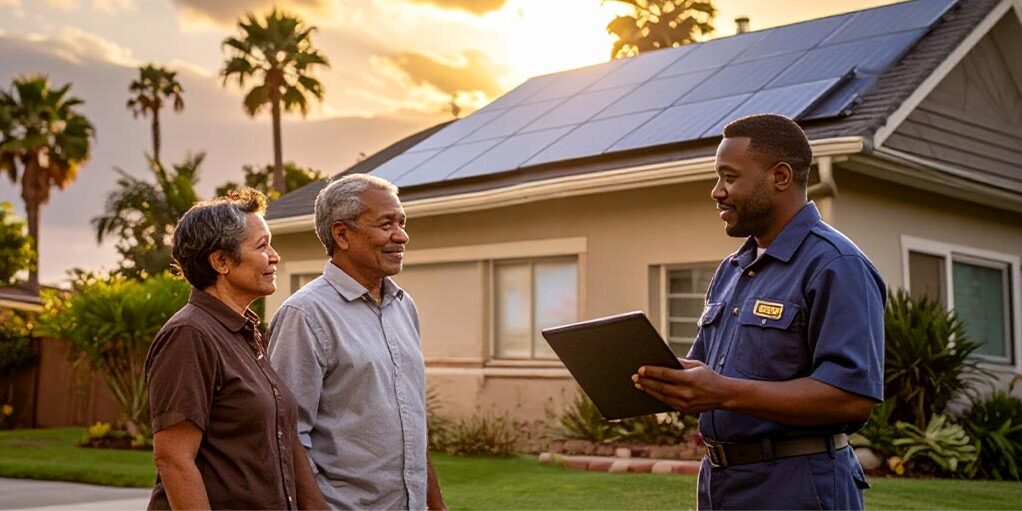
Most homeowners going solar have one version of the same question somewhere in the back of their mind: How long are my Florida solar panels going to last?
It’s a fair thing to wonder. A solar system is a significant investment, and the Sunshine State’s climate isn’t exactly gentle on outdoor equipment. But modern solar is built for exactly these conditions.
This post walks through the environmental factors that affect solar panel lifespan in Florida: solar panel degradation rate, heat cycling, UV intensity, humidity, and the specific considerations for coastal homeowners dealing with salt air. We’ll cover what puts the most stress on a system over time, and how a quality installation accounts for it.
Key Takeaways
- Solar panels last 25–30 years in Florida — the climate presents real challenges, but panels are engineered for them.
- Panel output declines gradually at roughly 0.5% per year — a well-maintained system still produces around 87–88% of its original output at year 25.
- Inverters have a shorter service life than panels — plan for replacement around the 10–15 year mark.
- Coastal homeowners face additional corrosion risk — marine-grade racking and aluminum frames matter more within a few miles of the water.
- A 25-year product warranty tells you something meaningful — but understanding what it covers (and what it doesn’t) matters just as much.
How Long Do Solar Panels Last in Florida: The Degradation Basics
Solar panels age gradually. Output declines by a small percentage each year — a process called degradation — rather than dropping off suddenly. That makes the long-term performance of a well-built system fairly predictable.
The national benchmark
The industry standard, based on National Renewable Energy Laboratory (NREL) data, is approximately 0.5% output loss per year for quality panels under standard conditions. At that rate, a system still produces around 87–88% of its original output at year 25.
Florida Degradation Rates: What the Data Shows
Florida’s climate results in somewhat higher degradation rates than the national average. A 10-year IEEE study of 180 panels in coastal Cocoa, Florida found the following:
- Range: -0.14% to -3.22% annual output decline
- Median rate: -0.92% per year
- Average rate: -1.05% per year
At the median rate, a 10 kW system still produces over 75% of its original output at year 25 — a solid return over the life of the investment.
What drives the difference
Florida’s climate introduces a few specific stressors that contribute to higher degradation rates. Each is covered in the section below.
Florida-Specific Factors That Affect Solar Panel Lifespan
UV Intensity
Florida ranks among the highest in the U.S. for solar irradiance — the amount of solar energy hitting a given surface. That’s exactly why solar pencils out so well financially here, and also why UV exposure is one of the primary drivers of cell-level degradation over time.
What to look for: Modern panels use encapsulant materials and tempered glass designed to resist UV-induced breakdown. Premium builds handle it noticeably better over two-plus decades, so panel quality matters more here than in lower-irradiance states.
Heat Cycling
Panels expand as they heat up during the day and contract as they cool at night. In Florida, roof temperatures can swing significantly between midday and early morning. That mechanical stress — repeated thousands of times over a panel’s life — can cause micro-fractures in solar cells, degrade junction connections, or loosen mounting hardware.
What to look for: Panels certified to IEC 61215 standards have been tested through extreme temperature cycling. If you’re evaluating equipment, this certification is a baseline to confirm.
Humidity and Moisture
High humidity is the stressor most homeowners don’t think about until it’s too late. Moisture works its way into panel seals over time, accelerating cell degradation and promoting discoloration. It also puts sustained stress on wiring conduit and electrical connections.
What to look for: Quality panels carry IP67 or similar ingress protection ratings. On the installation side, conduit runs with improperly sealed penetration points are an unnecessary vulnerability — worth asking about during a site survey.
What Coastal Homeowners in Florida Need to Know About Salt Air
Living near the water in Florida comes with a lot of upsides. Corrosion isn’t one of them.
For homeowners within a few miles of saltwater, salt air is a real variable in how coastal solar panels in Florida age. It accelerates oxidation on metal components, and the parts most exposed are the mounting racking and panel frames, not the panels themselves.
Here’s what that means in practice:
- Inland installations use standard anodized aluminum racking, which holds up well in typical Florida humidity.
- Coastal installations should specify marine-grade aluminum or stainless steel fasteners and hardware. The upgrade matters more than most homeowners realize.
- Galvanic corrosion — what happens when dissimilar metals meet salt-laden moisture — shows up as a mounting structure or wiring issue years later, often after the window for easy repair has passed.
The fix isn’t complicated: it’s specifying the right materials at the design stage. If you’re within a few miles of the coast, ask your installer directly what racking spec they’re using for your location. A quality installer treats a coastal install differently from one in Orlando — proactively, not as an afterthought. You can review what a proper Florida residential solar installation should include before committing to any system.
Why Your Inverter Will Need Replacement Before Your Panels Do
This is one of the most important things to understand about the 25-to-30-year picture: panels and inverters have very different service lives.
Panels are passive with no moving parts, only sealed glass and silicon. Inverters contain electronics and capacitors that are working constantly, converting DC power from the panels into usable AC current for your home. Here’s how the two main types compare:
| Inverter Type | Typical Lifespan | Warranty |
| String inverter (single-box) | 10–15 years | Typically 10–12 years |
| Microinverter (per panel) | 20–25+ years | Often 25 years |
Microinverters bring their lifespan in line with panels but carry a higher upfront cost. Either way, planning for at least one inverter replacement partway through your system’s life is simply part of owning solar.
In Florida’s climate, where heat stress on electronics is higher than average, staying on top of monitoring data helps catch early signs of inverter underperformance before it affects your savings. A solar maintenance plan that includes 24/7 monitoring is particularly useful here — production drops that indicate an inverter issue are much easier to catch when you have data tracking it continuously.
What a 25-Year Solar Warranty Covers in Florida
A 25-year warranty on solar equipment is standard among reputable manufacturers, but the term covers a few distinct things worth distinguishing:
- Performance warranty — Guarantees that a panel will still produce at least a certain percentage of its original rated output at year 25, typically 80–87% depending on the manufacturer. If output drops below that threshold due to normal degradation, the manufacturer owes you a repair or replacement.
- Product warranty — Covers defects in materials and manufacturing, such as delamination, cell failure, or frame damage that aren’t the result of physical impact or improper installation. Coverage periods vary by manufacturer, but 10–25 years is common on the product side.
- Workmanship warranty — Separate from the manufacturer warranty and comes from the installer. It covers the quality of the installation itself: roof penetrations, electrical connections, racking. A 25-year workmanship warranty means you’re not caught in a gap if an issue stems from how the system was installed rather than the panels themselves, so it’s worth confirming that coverage before signing.
One practical note: filing a warranty claim on panels requires documentation of system performance over time. Regular maintenance records and monitoring data help establish that a production issue is due to premature degradation rather than an environmental event.
Signs Your Solar System May Be Aging Ahead of Schedule
A well-installed system with quality components should produce consistently with only gradual decline over its life. Here are signs that something may be wrong before the normal wear curve would suggest:
- Unexplained production drops. If your monitoring shows output falling faster than the expected 0.5–1% per year, or dropping suddenly, that’s worth investigating. Causes range from inverter issues to shading changes to panel-level faults.
- Inverter error alerts. Most modern inverters report fault codes through their monitoring apps. Alerts that recur or persist are a signal to have the system inspected rather than dismissed.
- Visible corrosion on racking or frames. Surface oxidation on mounting hardware is an early warning, particularly for coastal systems. Catching it during a routine inspection is much better than finding it after the racking has been compromised.
- Discoloration or delamination on panel surfaces. Yellowing, browning, or visible separation between panel layers indicates encapsulant breakdown. This is relatively rare with quality panels but warrants immediate attention if spotted.
- Loose or damaged wiring conduit. High wind events can stress conduit runs and roof penetrations over time. An annual visual inspection catches these before they become a safety or performance issue.
If any of these appear, a professional inspection and performance test is the right next step. You can learn more about what a professional solar maintenance visit covers and what to expect from the process.
Frequently Asked Questions
Do solar panels wear out?
Not in the way most people expect. Output declines gradually — roughly 0.5–1% per year — but most systems are still producing meaningful power at year 25 and beyond. What’s more likely to need attention over that period is supporting equipment like inverters, which have a shorter service life than the panels themselves.
Are solar panels safe on a Florida roof?
Yes. Modern panels are tested to withstand wind loads and impact events consistent with Florida’s climate. Florida building codes require solar systems to meet specific structural and electrical standards as part of the permitting process, and all permitted installations are inspected before activation.
How much does it cost to repair solar panels in Florida?
Repair costs depend heavily on what needs fixing. Inverter replacement is typically the largest single repair expense over a system’s lifetime and generally ranges from a few hundred to over a thousand dollars depending on the inverter type. Racking and wiring repairs vary by scope. Warranty coverage — whether from the manufacturer or installer — often absorbs repair costs for issues that arise from equipment defects or workmanship. A maintenance plan can offset service call costs and prioritize your system for attention when issues arise.
Does Florida’s heat reduce how much energy my panels produce?
Solar panels are less efficient at high temperatures. The temperature coefficient measures how much electrical performance changes as temperature fluctuates — output typically drops a fraction of a percent for each degree above a panel’s rated test temperature (usually 77°F). Florida’s sun exposure more than compensates for the heat-related efficiency reduction, though; the state ranks among the best in the country for annual solar production.
How often should I have my solar system inspected?
An annual inspection is a reasonable baseline for most Florida homeowners. After significant weather, a prompt inspection is worth scheduling regardless of where you are in the annual cycle. Coastal systems and older systems (10+ years) benefit from more frequent attention given the additional corrosion and degradation factors at play.
What happens at the end of a solar panel’s lifespan?
Panels at 25–30 years typically still produce power — they’re just producing less than they did at their peak. Many homeowners choose to keep aging systems running while planning for replacement or expansion. The solar industry is developing recycling infrastructure for end-of-life panels, though availability and cost vary. Your installer is a good resource for evaluating your specific system when the time comes.
A Solar Investment That Keeps Paying Off for Decades
Quality equipment, the right coastal or humidity considerations baked into the design, a workmanship warranty that stands behind the installation, and ongoing monitoring to catch issues early — that’s what separates a system that performs for 25 years from one that doesn’t.
Florida Electric & Solar has installed over 100,000 panels across Florida, and every system is built with the long game in mind.
Get your free quote and see what a well-designed system looks like for your home.
More to read
Solar Panel Financing in Florida: Loans, Leases, and 0%-Down Options
What Is Net Metering and How Does It Lower Your Florida Electric Bill?
Related Articles
More insights about Solar Energy

Flat Roof Solar Mounting in Florida: A Complete Installation Guide

Myth: Solar Panels Don’t Increase Home Value in Florida

Expert Insights: The Lifespan of Solar Panels Explained
Ready to Go Solar?
Have questions about solar energy? Our experts are here to help you make the switch to clean, renewable energy.