
10 Essential Steps for Installing an EV Charger at Home
Share:
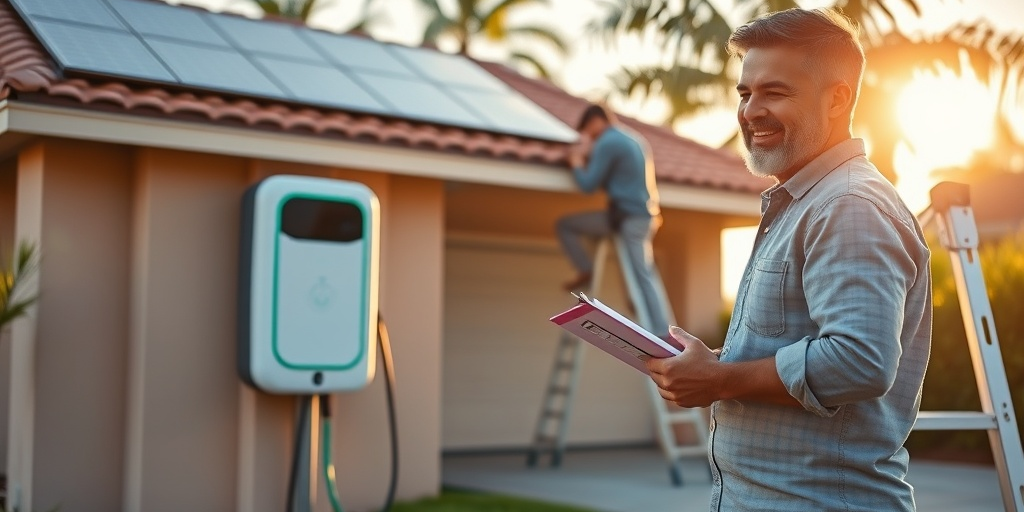
As we hurtle towards an electrified future, the landscape of personal transportation is shifting dramatically. By 2030, it’s expected that there will be over 18 million electric vehicles (EVs) on the road in the United States alone (EVAdoption.com). Additionally, with EV sales projected to reach 57% of all new vehicle sales by 2030 according to the International Energy Agency, homeowners need to start thinking about how to power these vehicles sustainably. This is why understanding how to install a home EV charger is not just a wise choice; it’s an essential move for Florida homeowners eager to embrace the future. In this article, titled 10 Essential Steps for Installing an EV Charger at Home, we will delve into everything you need to know about integrating an EV charger into your home. From understanding the importance of EV charging as part of the solar energy movement in Florida to the intricacies involved in the installation process, we’ve got you covered. With rising electricity costs, increasing grid instability, and compelling new solar incentives in place for 2025, the time to act is now. This guide will take you through: 1. Understanding Your EV Charging Needs, 2. Local Regulations and Incentives, 3. Selecting the Right Charging Equipment, 4. Professional vs. DIY Installation, and 5. Final Checklist for Successful Installation. Let’s embark on this empowering journey to electrify your home and enhance its value today.
1. Understanding Your EV Charging Needs
First, it is crucial to assess your individual needs when it comes to EV charging. Florida’s warm climate and the state’s growing number of electric vehicles mean that understanding your requirements can save you both time and money.
- Case Study: Meet Jane, a Florida homeowner who realized her family’s need for an EV charger after purchasing a Tesla Model 3. Initially, she relied on public charging stations but quickly found the inconvenience too disruptive. After assessing her daily driving habits, she determined that a Level 2 charger installed at home would meet their needs best.
- You Count Miles, Not Minutes: Evaluate how much you drive each day. Most Florida residents travel around 30 miles each day. This means a Level 1 charger could suffice for most short-range EVs. However, for those longer commutes or larger batteries, a Level 2 charger becomes a valuable asset.
- Fueling Costs: According to the U.S. Department of Energy, charging your EV at home can save you about $800 a year compared to fueling a gas-powered car (Energy.gov). Understanding your cost savings potential is crucial.
- Time Consideration: Installing a charger means you’ll get the utmost convenience, charging your EV overnight. In Florida, the average driving distance is easily manageable overnight with a Level 2 charger that can replenish most EVs in 4-8 hours.
- Checklist for Step 1: Identify your driving habits, assess cost implications, and choose the right type of charger based on your needs. This assessment will set the foundation for the steps ahead.
By conducting a thorough evaluation of your driving habits, budget, and power needs, you will set the groundwork for an efficient charging solution that aligns with Florida’s emerging solar energy market.
2. Local Regulations and Incentives
Florida is known for its beautiful weather and abundant sunshine, but did you know it is also emerging as one of the leading states for electric vehicle adoption? Understanding local regulations and incentives will empower your decision-making process and help you save money in the long run.
- Incentives: The Sunshine State recently introduced an incentive program that offers rebates for the installation of EV chargers at home. Depending on the type of charger and your municipality, you could receive up to $500 back on the installation costs.
- Regulations: Be aware of Florida’s specific laws related to EV charger installations. For instance, many homeowners’ associations (HOAs) cannot prohibit EV charger installations according to Florida Statutes Section 163.04.
- Permits: Before installation, it’s essential to check whether your municipality requires a permit for such electrical upgrades. Generally speaking, most do, and this process ensures your installation meets code requirements.
Understanding incentives and local regulations is a critical component of the planning process. For up-to-date information and specifics regarding local rebates, feel free to visit floridaelectricandsolar.com.
3. Selecting the Right Charging Equipment
Once you have assessed your needs and familiarized yourself with local guidelines, the next step is choosing the right EV charging equipment. The right charger can enhance your home’s value and ensure seamless integration into your lifestyle.
- Level 1 Charger: This is typically a standard 120-volt outlet. While it’s the least expensive option and doesn’t require special installation, it charges slowly and may not meet your family’s needs if you drive frequently.
- Level 2 Charger: Recommended for most homeowners, a Level 2 charger operates on a 240-volt circuit, significantly reducing charging time. It can fully charge most vehicles overnight and is often a wise investment for family vehicles.
- Smart Chargers: These advanced chargers come with Wi-Fi connectivity, allowing you to schedule charging times, track usage, and even take advantage of peak solar production hours. Despite being pricier, they can lead to further savings on your electric bill over time.
Notably, the average cost for a Level 2 charger ranges between $500 to $700 (SolarReviews.com). This upfront investment should be weighed against long-term savings, increased home value, and reduced environmental impact.
In conclusion, selecting the right charging equipment is essential for maximizing both efficiency and integration with solar energy systems. Given the environmental advantages and economic benefits, investing wisely here will pay dividends in the long run.
4. Professional vs. DIY Installation
Half the battle in ensuring a successful EV charger installation lies in how well it is put together. In this segment, we’ll discuss the pros and cons of both professional and DIY installations to determine the best course for your needs.
- Professional Installation: Hiring a licensed electrician can ensure that your device is installed according to safety codes. Moreover, the installation is often accompanied by a warranty, which offers peace of mind for the homeowner.
- DIY Installation: If you have a background in electrical work, considering a DIY installation can save you a significant amount of money. Nevertheless, it is crucial to have a firm grasp of local building codes to avoid unnecessary fines.
- Cost Analysis: Professional installation costs typically range from $300 to $1,300 depending on the complexity and wiring needed for your setup. When considering the potential risks of a DIY route, professional installation is often more favorable.
The right decision boils down to your skill level, budget, and peace of mind. Whichever path you choose, ensure that you adhere to all local regulations and codes to achieve a safe and effective installation.
5. Final Checklist for Successful Installation
You’ve done the research, made necessary assessments, and picked out the ideal equipment. Here is a final checklist that consolidates everything to ensure that your installation goes off without a hitch:
- Step 1: Review your driving needs and select the appropriate charging equipment.
- Step 2: Check local regulations, including permits and community guidelines.
- Step 3: Decide whether to hire a professional electrician or opt for a DIY installation.
- Step 4: Order your chosen charging equipment and any supplemental materials needed for installation.
- Step 5: Ensure that your electrical system can handle the extra load by consulting with an electrician if necessary.
Success in your installation relies on meticulous preparation. Following these essential steps will not only mitigate risks but can catalyze your journey toward a sustainable future.
As we recap our journey, from understanding your needs to the final installation steps, it’s evident that embracing the electric vehicle revolution is no longer just a trend—it’s a necessity. Being proactive means you won’t just adapt to change, but you’ll thrive amidst it. With 2025 approaching, solar incentives and regulations offer a unique opportunity to enhance your lifestyle while contributing positively to the environment. Remember, implementing an EV charger adds considerable value to your home, reduces energy costs, and positions you as a forward-thinking homeowner in the sunshine state.
Ready to start your solar journey in 2025? Connect with a certified expert at floridaelectricandsolar.com today!
Related Articles
More insights about EV Charger

What Florida Homeowners Ask About Solar EV Charger Installation

Florida Homeowners Exploring EV Charger Installation Benefits

Beginner’s Guide to Understanding EV Charger Installation for Homeowners
Ready to Go Solar?
Have questions about solar energy? Our experts are here to help you make the switch to clean, renewable energy.