
7 Essential Steps for Choosing the Right EV Charger
Share:
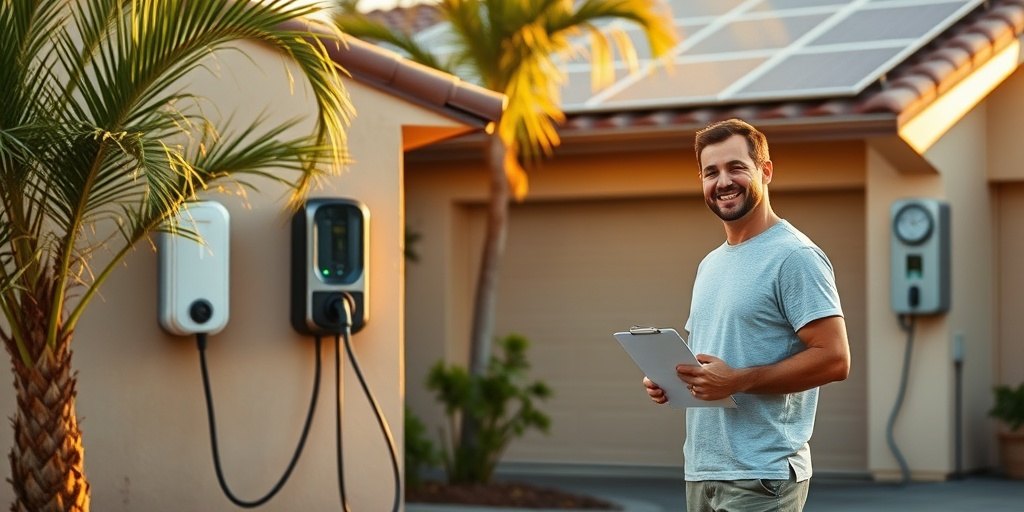
As electric vehicles (EVs) surge in popularity, a staggering statistic shows that more than 10% of new cars sold in Florida were EVs in 2023 alone, making the choice of a suitable EV charger vital for residents (Energy.gov). Have you ever wondered how selecting the right EV charger can impact your vehicle’s performance? The decision can significantly influence charging efficiency, costs, and future technology compatibility. That’s why we present to you: 7 Essential Steps for Choosing the Right EV Charger. In 2025, an estimated 1 in 6 vehicles on the road is projected to be electric (SEIA.org), accelerating the demand for efficient home charging solutions amidst rising energy costs. Nestled amidst these changing dynamics are I-Drive Adventures, a local family who faced confusion over their EV charging options. Today, we will guide you through this crucial decision-making process to ensure you’ll never feel lost in choosing your EV charger again.
This article will cover five key sections: first, we will explore real-life case studies that highlight common challenges and solutions; then, we’ll provide a clear checklist to guide your selection; followed by a debunking of prevalent myths around EV chargers; next, we’ll dive into localized considerations for Florida homeowners; finally, we will delve into technical specifications of chargers and their impact on your energy bill. Buckle up as we drive toward an enlightened decision for your EV charging needs!
Understanding the EV Charging Landscape: A Deep Dive
To start with, let’s dive into a real-life case study. Meet the Thompsons, a family of four living in sunny Orlando, Florida. The Thompsons recently purchased a Tesla Model 3, excited about reducing their carbon footprint. However, the excitement quickly turned to confusion when faced with the myriad of charging options available to them. After extensive research, they narrowed down their choices but still felt indecisive about which charger would serve their needs best.
- Step 1: Assess Your Driving Habits – The Thompsons began by reviewing their driving patterns. They realized that their typical daily commute totaled about 30 miles. A Level 2 charger would be sufficient for overnight charging, replenishing their battery fully by morning.
- Step 2: Determine Your Power Source – They also needed to consult with their electricity provider about the service rate. Florida’s average electricity cost is about 12.67 cents per kilowatt-hour (EIA.gov), which comes into play when factoring in charging costs.
- Step 3: Factor in Future-Proofing – Another factor was technology longevity. The EV landscape is rapidly evolving; the Thompsons considered a charger that would be compatible with potential future vehicles, not just their current Tesla.
This journey revealed a few myths that frequently shadow prospective EV buyers:
- Myth #1: All chargers are the same – In reality, there are various types of chargers, including Level 1, Level 2, and DC Fast Chargers, each differing in power output. Understanding which serves your vehicle type is crucial.
- Myth #2: You need to install a charger professionally – While professional installation is recommended, many Level 1 chargers can be plugged into standard outlets, allowing for DIY solutions.
- Myth #3: Home charging is too complicated – With the right information, home charging can be straightforward. Knowing the maximum power your charger can draw helps reconcile your needs.
Moving forward, Florida residents also need to be aware of local policies and incentives for EV charger installations. Florida’s Clean Energy Act offers rebates and tax incentives for homeowners who invest in charging stations, thereby easing the upfront cost burden for many families (DSIREUSA.org).
In summary, the experience of the Thompsons illustrates the importance of evaluating driving habits, understanding power sources, and future-proofing charging solutions. With knowledge in hand, families can confidently move forward, ensuring they choose a charger that fits their current and future needs seamlessly.
Checklist for Selecting Your EV Charger
It’s time to simplify your decision-making process with a comprehensive checklist that any Florida homeowner can utilize. These steps should be taken systematically to ensure you choose the right charger efficiently:
- Step 1: Identify Your Vehicle Model – Understanding the specific requirements of your vehicle is the first step in choosing the right charger. Each EV has unique battery specifications and charging capabilities that dictate the type of charger you need.
- Step 2: Choose Charger Type – Select between Level 1 (120V) for home use, Level 2 (240V) for quicker charging, and DC Fast Chargers for commercial opportunities. For the Thompsons, a Level 2 charger turned out to be their best option.
- Step 3: Evaluate Electrical Capacity – Check your home’s electrical system and capacity to determine compatibility with the charger you’re considering. Consult a licensed electrician if needed, particularly for installing higher-powered chargers.
- Step 4: Consider Installation Location – Identify where you’ll mount your charger. Ensure accessibility and proximity to your electrical supply while also considering weather conditions unique to Florida (i.e., humidity and UV exposure).
- Step 5: Research Pricing and Incentives – Explore available models and their prices; don’t forget to leverage Florida’s incentives for EV charger installations to help offset costs. Many Florida utilities offer rebates for domestic charger installations.
By following this structured checklist, Florida homeowners can seamlessly navigate the process of selecting an EV charger tailored to their unique requirements. As technology evolves, staying informed will amplify your ability to make sound decisions.
Myth-Busting Common Misconceptions about EV Chargers
With the growing interest surrounding electric vehicles, several myths have taken root, causing hesitation among potential buyers. Let’s debunk these common misconceptions surrounding EV chargers:
- Myth #1: Charging stations are too few and far between – In reality, Florida’s network of public charging stations is on the rise. With funding from the state and contributions from private organizations, residents can find charging services increasingly available in urban and rural areas. In fact, Florida ranks 3rd in the U.S. for the most electric vehicle charging stations (EVAdoption.com).
- Myth #2: EVs are too expensive to maintain – While EVs come with an upfront cost, they significantly slash fuel and maintenance expenses in the long run. Electric vehicles are much simpler mechanically, which means fewer needed repairs. Studies show that average maintenance costs for EVs are 50% lower than for gasoline vehicles (ConsumerReports.org).
- Myth #3: I can’t charge at home unless I install a costly system – Many electric vehicle owners mistakenly believe they must invest in expensive home systems. Level 1 charging via a standard electrical outlet can be sufficient for many users, particularly those with short daily commutes. The Thompsons realized this and prioritized a Level 2 option once they understood their charging habits better.
As we counter these myths, it’s important to remember the local focus and incentives available. Florida is committed to reducing greenhouse gas emissions and offers a variety of programs aimed at making electric vehicle adoption easier for consumers. This support creates an environment that encourages confidence in choosing electric vehicles and their corresponding chargers.
The Technical Landscape: EV Chargers and Energy Efficiency
Equipped with a sound understanding of common myths and technical details, you can dive deeper into how EV chargers function and their implications on your energy utility bill. The following aspects provide critical insight into this technical landscape:
- Efficiency Ratings – When assessing chargers, look at their efficiency ratings. An efficient charger reduces energy waste, thereby lowering your electric bill. By comparing options, the Thompsons discovered varying energy consumption levels that affected charging costs.
- Smart Chargers – Newly emerging technologies allow for smart chargers that can be programmed to charge during off-peak hours, maximizing savings (SEIA.org). Clients who experimented with smart chargers found that they could save up to 30% on their utility bills.
- State Regulations – Florida has established guidelines for the installation of EV charging stations. For instance, every newly constructed home must include a provision for EV charging or access to at least one level 2 charging point (FPL.com). This progressive move ensures wider adoption.
The complexities of EV chargers extend beyond mere installation; they play a vital role in shaping your experience and influence on energy consumption. As you familiarize yourself with these aspects, ensure you consult reliable sources and installation professionals to make informed choices about their technical configurations.
Next Steps for Florida Solar Buyers in 2025
To conclude our guide, let’s outline the steps every Florida homeowner should take to successfully integrate EV chargers into their homes:
- Audit Your Electric Bill – Understand how much you currently use, and estimate how your usage will change with an EV charger. Factor in savings you may expect with solar energy in the mix.
- Invest in Future-Proofing – Choose a charger that supports various connection types and is compatible with both current and future vehicle models.
- Connect with Local Utilities – Engage your local utility provider to understand available incentives, help translate benefits, and find recommendations catered to your region.
- Schedule Professional Installation – Even if you choose a simpler Level 2 charger, proper installation ensures safety and efficiency.
- Monitor and Adjust Usage – Once installed, keep track of your EV charging costs versus anticipated savings. Adjust your habits as needed for optimal efficiency and savings.
By executing these steps, Florida homeowners can navigate the transition to electric vehicles with confidence and clarity. With the right information, products, and support, you can enjoy the benefits of being at the forefront of sustainable technology while contributing to a cleaner future.
In summary, the knowledge shared in this comprehensive guide aims to equip Florida homeowners and commercial property owners with the necessary tools needed to choose the right EV charger. Urgency is present as we pivot toward 2025, with the proliferation of electric vehicles showing no signs of slowing. Now is the time to act, make choices that resonate with your sustainable ambitions, and save on your utility costs. Ready to start your solar journey in 2025? Connect with a certified expert at floridaelectricandsolar.com today.
Related Articles
More insights about EV Charger

What Florida Homeowners Ask About Solar EV Charger Installation

Florida Homeowners Exploring EV Charger Installation Benefits

Beginner’s Guide to Understanding EV Charger Installation for Homeowners
Ready to Go Solar?
Have questions about solar energy? Our experts are here to help you make the switch to clean, renewable energy.