
What Florida Homeowners Should Know About EV Charger Installation
Share:
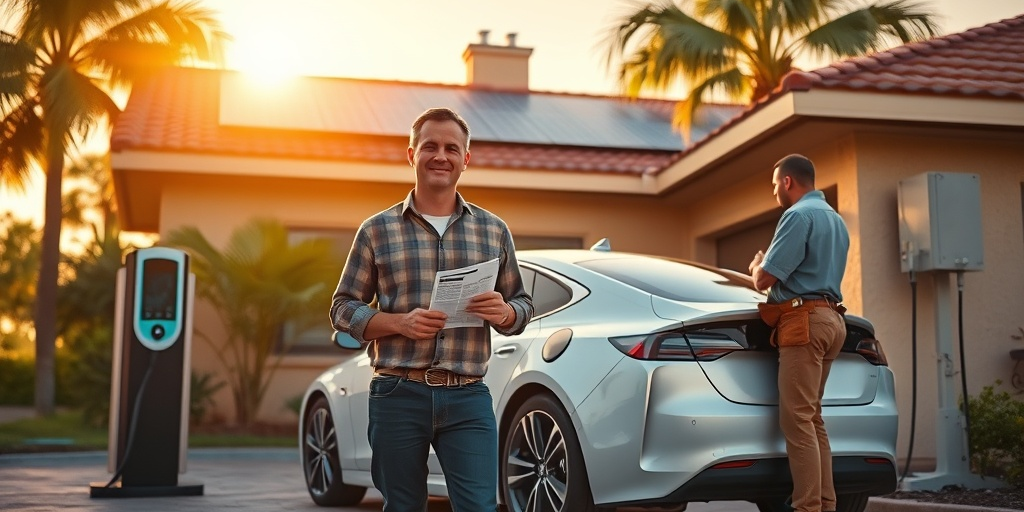
In 2025, the landscape of energy consumption is shifting dramatically, especially in sunny Florida. Did you know that over 60% of new car sales in the state are projected to be electric vehicles (EVs) by 2025? That’s a significant leap from today’s numbers, driven by both consumer preferences and governmental incentives (SEIA.org). As EVs become mainstream, the demand for convenient charging options at home is more pressing than ever. This leads us directly to our topic: What Florida Homeowners Should Know About EV Charger Installation. With rapidly rising energy costs, increased focus on sustainability, and exciting advancements in solar technology, understanding how to integrate EV chargers with your home’s solar setup is crucial.
The future of transportation and energy consumption is intertwined, and taking action now allows Florida homeowners not just to adapt but to thrive in this evolving marketplace. This comprehensive guide will navigate you through imperative aspects of EV charger installation, tailored for the unique needs of Florida residents. We’ll explore essential case studies, practical checklists, common myths that persist about solar and EV technology, Florida-specific insights, and a technical deep-dive into how these installations mesh with solar power systems. Let’s jump into the world of electric vehicle charging and discover how these installations can enhance your energy efficiency and electric vehicle experience!
Why Florida Homeowners Should Embrace EV Charger Installation
Florida homeowners are well-positioned to benefit from the integration of EV charger installations in 2025. Let’s delve into a compelling case study demonstrating this transition.
Embracing the Transition: A Case Study of the Johnson Family
The Johnson family, a bustling household in Tampa, Florida, made the leap to go electric last year. After purchasing their first electric vehicle, they soon realized the conveniences and financial benefits that having a home charging station brought. Initially, they had a standard outlet charger, but after just a few months, they decided to install a Level 2 charger, boosting their charging speed and efficiency.
They began their journey by assessing their energy consumption and storage capabilities. With their new solar panel system—which generated ample power in Florida’s sunny climate—they seamlessly integrated an EV charger into their home. The upfront cost of installation was offset by savings on their electric bills and Louisiana’s tax incentives for EV purchases and installation (SolarReviews.com). Today, the Johnsons charge their electric vehicle using clean, renewable energy, while their solar system diminishes their reliance on the traditional grid.
Checklist: Steps to Prepare for Your EV Charger Installation
Ready to take the plunge into EV charger installation? Here are five actionable steps to simplify the process:
- Step 1: Assess Your Existing Electrical System – Compile details about your home’s electrical capacity. Make sure the electrical panel can handle the additional load.
- Step 2: Research EV Charger Options – Decide between Level 1 and Level 2 chargers based on your daily driving needs and how quickly you want your vehicle to charge.
- Step 3: Consult a Professional – Partner with a licensed electrician to evaluate installation requirements and ensure compliance with local codes.
- Step 4: Navigate Incentives and Rebates – Investigate available state and federal incentives to offset the cost of installation. Many programs are aimed at encouraging the adoption of electric vehicles and renewable energy (NREL.gov).
- Step 5: Schedule Your Installation – Once you’ve made your selection and obtained the necessary permits, schedule your charging station installation at your convenience.
Transitioning to electric vehicle charging opens doors for energy savings and an eco-friendlier lifestyle, especially when fueled by your own solar power system. As we’ve learned from the Johnson family’s experience, aligning your EV charger with your home’s energy management establishes a sustainable cycle. Yet, there are many myths surrounding EV charger installation that can lead to confusion. Let’s dispel some of these misconceptions.
Myth-Busters: Debunking Common Misconceptions About EV Chargers
Understanding the reality behind EV chargers is crucial for making informed decisions. Let’s address some of the most prevalent myths:
- Myth #1: EV Chargers are Only for Electric Vehicle Owners – While inherently true, many EV chargers also offer benefits for hybrid vehicles and are increasingly becoming a home standard, regardless of how electric you drive.
- Myth #2: You Can Only Install EV Chargers if You Live Near the Grid – This is a misunderstanding. Many homeowners in rural areas can effectively utilize solar energy to charge their EVs without ever needing to rely solely on the grid (Energy.gov).
- Myth #3: EV Charging Will Decimate Your Electric Bills – Although EV charging does add to your electric consumption, homeowners can effectively negate these costs by utilizing solar panels to charge their vehicles during the day, significantly cutting their overall costs.
- Myth #4: Electric Vehicle Charging is Time-Consuming – With the installation of Level 2 chargers, the time it takes to charge an electric vehicle is comparable to a traditional gas station visit, especially when charging overnight (SolarReviews.com).
- Myth #5: I’ll Have to Replace My Electrical Panel – This is often unnecessary. Many homes can accommodate new chargers with existing panels; consult an expert to find out what works best for your situation.
Understanding these myths helps to clarify the real benefits of EV charger installation in conjunction with your solar system. Next, let’s dive deeper into why Florida is uniquely suited for this transformative transition.
Local Focus: Florida-Specific Insights on EV Charger Installation
Florida’s natural sunlight availability sets the stage for unmatched efficiencies in solar energy generation—effectively supporting electric vehicle charging. As of now, over 30% of the state’s electricity comes from renewable sources, with initiatives aimed at increasing this percentage significantly by 2025 (DSIREUSA.org). This is a catalyst for adoption among homeowners, as being sunny means taking advantage of that energy potential.
Moreover, state incentives play a key role in making EV charger installations affordable. Florida currently offers additional tax rebates and programs to promote electric vehicles and support the necessary home infrastructure. For those considering installation, it’s essential to stay informed about the programs that might benefit your home installation journey.
Recent surveys suggest that Florida homeowners see EV charger installations as a strategic investment, not just an addition to their property. With utility companies offering special rates for electric vehicle charging during off-peak hours, now is the time to leverage these opportunities (SEIA.org).
Technical Deep-Dive: How EV Chargers Integrate with Solar Power Systems
Understanding the technical details behind solar energy and EV installations can make all the difference in effectively managing costs and maximizing savings. Here’s how the interplay of systems works:
When you install an EV charger, it doesn’t work in isolation. It’s essential to consider how it will interact with your existing solar power system. Here are critical points to understand:
- Charging Capacity: If your solar panels generate more power than your home consumes, the excess energy can power your EV charger, effectively charging at little to no cost.
- Battery Storage: Integrating a solar battery with your setup can further enhance your efficiency by storing excess energy generated during the day for nighttime charging, optimizing your energy usage.
- Smart Charging Technology: Newer chargers come equipped with smart technologies that can adjust charging times based on utility rates, allowing you to charge when it’s least expensive and most efficient (Energy.gov).
As we have seen, your EV charger installation can be a seamless extension of your solar energy system, providing substantial cost savings and enhancing your sustainability efforts. Next, we’ll explore actionable next steps for Florida solar buyers.
Next Steps for Florida Solar Buyers in 2025
As we draw to a close in this comprehensive guide, let’s outline actionable steps you can take to ensure you don’t miss out on the incredible benefits of installing EV chargers in conjunction with solar:
- Step 1: Audit Your Electric Bill – Understand your current billing structure to better evaluate the financial impact of installing an EV charger.
- Step 2: Explore Financing and Incentives – Review available incentives and financing options provided by both federal and state programs.
- Step 3: Consult Energy Experts – Reach out to solar installation providers who can help match your solar energy usage and charging needs effectively.
- Step 4: Schedule Your Installation – Ensure that you choose a qualified installer who understands both EV charging and solar technology.
- Step 5: Embrace Smart Energy Management – Monitor and optimize energy use, water and fuel costs and enhance energy-saving strategies to maximize your investment.
The path toward sustainable energy through the adoption of EV chargers aligns closely with Florida’s objectives to promote renewable energy usage. By taking these steps, you become part of a growing community that prioritizes energy efficiency and sustainability.
In conclusion, it’s clear that embracing EV charger installations in Florida is more than just a trend—it’s a crucial stepping stone toward a sustainable future. Not only does it enhance your electric vehicle experience, but it also provides substantial economic and environmental benefits that last long-term. As we head further into 2025, the opportunity is ripe to invest in solar energy and electric vehicle charging to build a greener future for all Floridians.
Ready to start your solar journey in 2025? Connect with a certified expert at floridaelectricandsolar.com today.
Related Articles
More insights about EV Charger

What Florida Homeowners Ask About Solar EV Charger Installation

Florida Homeowners Exploring EV Charger Installation Benefits

Beginner’s Guide to Understanding EV Charger Installation for Homeowners
Ready to Go Solar?
Have questions about solar energy? Our experts are here to help you make the switch to clean, renewable energy.