
What Florida Residents Need to Know About EV Charger Installation
Share:
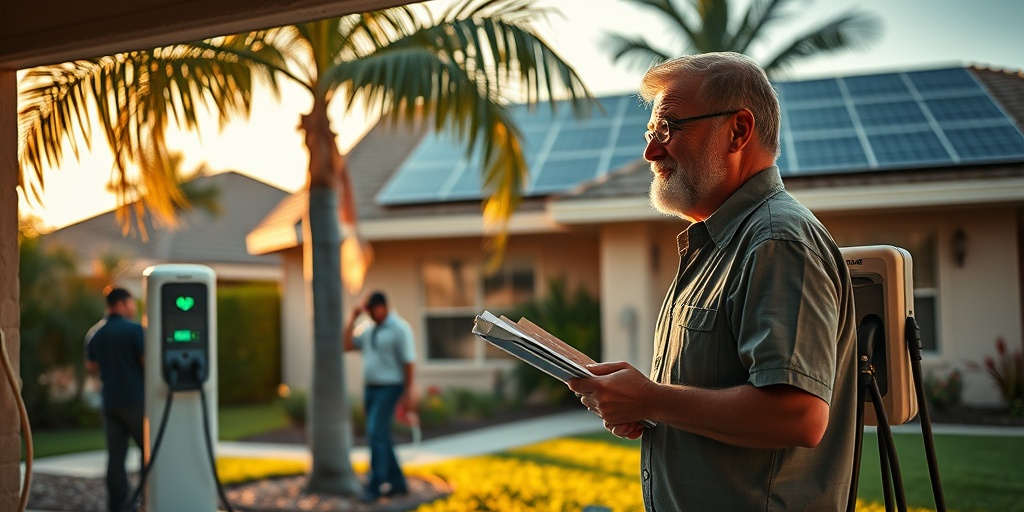
What Florida Residents Need to Know About EV Charger Installation. Did you know that electric vehicle (EV) registrations in Florida have surged by nearly 40% in just one year? This boom is not just a trend; it reflects a growing commitment to sustainability among Floridians. As energy costs continue to fluctuate and the urgency for eco-friendly solutions intensifies, understanding EV charger installation becomes paramount for homeowners across the Sunshine State. By 2025, as more local and state incentives become available, the alignment of solar energy and EV charging infrastructure will present an unprecedented opportunity for energy efficiency and cost savings. In today’s article, we will delve deep into five vital aspects every Florida resident should grasp about EV charger installation. From understanding how local policies can impact your decision to addressing common myths, we’ve got you covered!
Understanding EV Charger Installation: The Synergy between Solar Energy and Electric Vehicles
Electric vehicles are rapidly gaining traction in Florida, a trend underscored by the fact that over 63,000 registered EVs have been recorded in the state (DMDI.org). For many Florida homeowners, transitioning to an EV presents an untapped opportunity to further enhance energy efficiency—especially when paired with solar energy systems. Take, for instance, the story of Julia and Mark, a family from St. Augustine. After often shelling out large sums on their electric bills, they decided to install solar panels in 2022. Just a year later, they were inspired to purchase a Tesla Model 3. Understanding that recharging could be a challenge, they inquired about EV charger installation and discovered that charging their EV at home would create considerable savings over regular gas prices. The transition opened their eyes to the synergy between solar power and electric vehicles, helping them realize not only reduced utility bills but also a cleaner, greener lifestyle.
Before you embark on your EV charger installation journey, consider these essential steps:
- Evaluate Your Current Electric Setup: Assess your breaker panel and home wiring to see if it can handle the additional load of an EV charger.
- Choose the Right EV Charger: The two main types are Level 1 and Level 2 chargers; understanding their differences is crucial.
- Understand Local Regulations: Some areas have permits and zoning regulations concerning EV chargers; being informed will prepare you for the installation process.
- Seek Professional Installation: Proper placement and installation are key for safety and future energy efficiencies.
- Integrate with Your Solar System: Ensure that your charger is compatible with your existing solar panel system for maximum savings.
Now let’s tackle some common myths regarding EV charging in our beloved Florida to help you navigate this decision further.
Debunking the Myths: What You Think You Know About EV Chargers
Despite their growing popularity, various misconceptions exist regarding EV charger installation. Here, we dismantle some of the most common myths:
Myth #1: EV Chargers are Only for New Electric Cars
While it’s true that new EVs are designed with advanced charging capabilities, older electric vehicles can also benefit immensely from charging infrastructure. Most EVs manufactured after 2010 can easily be charged.
Myth #2: Installing an EV Charger is a Hassle
Many homeowners believe that the installation process is complicated and time-consuming. In reality, a qualified electrician can typically install most chargers within just a few hours.
Myth #3: Charging at Home Costs More Than Public Charging Stations
When you harness solar power, the cumulative savings from charging at home often far exceed public charging station fees, especially as electric rates continue to rise.
Myth #4: You Need to Upgrade Your Home Electrical System
While some homes may require minor upgrades, most standard residential electrical panels can accommodate an EV charger without a complete overhaul.
Myth #5: Solar Charging is Impractical
On the contrary, integrating your EV charger with a solar system turns your electric vehicle into a green energy solution. With state incentives, it’s more accessible than ever (SEIA.org).
Getting Started: Practical Steps for Florida Residents
As Florida accelerates its outreach toward renewable energy and electric vehicles, homeowners must be proactive in adopting technologies that lead to sustainability. Follow these five crucial steps for a successful EV charger installation:
- Step 1: Audit Your Electric Bill: Understanding your current energy consumption will help you identify how much EV charging will impact your bills.
- Step 2: Assess Your EV Charging Needs: Determine whether you want a Level 1 charger for overnight charging or a Level 2 charger for faster charging.
- Step 3: Understand Local Incentives: Many utility companies offer rebates and incentives for installing chargers and solar systems (DSIREUSA.org).
- Step 4: Seek Expertise: Consult with qualified professionals at floridaelectricandsolar.com to understand your options.
- Step 5: Monitor Performance: Once installed, keep an eye on your energy savings and charging patterns to continuously optimize your system.
A Bright Future: Story of a Floridian Solar Pioneer
Let’s hear the inspiring journey of Charles, a Orlando homeowner who boldly transitioned to solar energy and EV charging installation. Following a 30% increase in his electric bill over two years, Charles decided enough was enough. Researching the potential benefits of switching to solar, he stumbled upon solar incentives that made his transition feasible.
As a proud owner of a Ford Mustang Mach-E, Charles not only installed solar panels on his roof but also a Level 2 EV charger in his garage. His investment has paid off—literally. According to Charles, he now pays about 40% less on his otherwise extravagant electric bills.
- 1. Financial Benefits: Charles estimates he saves $300 annually on energy costs.
- 2. Eco-Friendly Lifestyle: With an average solar system generation of 10,000 kWh yearly, he significantly reduced his carbon footprint (NREL.gov).
- 3. Increased Property Value: Homes with solar systems can see their property values rise by up to 4.1%.
- 4. Energy Independence: With solar and an EV, he no longer relies on traditional fossil fuels.
Taking the Next Steps: Your Action Plan as a Florida Solar Buyer in 2025
As the tide shifts toward electric vehicles and renewable energy solutions, it’s vital for homeowners to be equipped with action-oriented strategies. Here’s how to get started:
- Step 1: Diagnose Your Home’s Energy Use – Begin by reviewing your energy bills to get a grasp on your current usage patterns.
- Step 2: Research EV Charger Options – Familiarize yourself with different charger types to determine the best fit for your home and lifestyle.
- Step 3: Contact Local Authorities – Inquire about permits, incentives, and regulations related to EV charger installation.
- Step 4: Get a Quote from Experts – Connect with certified technicians through floridaelectricandsolar.com who can offer personalized advice and installation services.
- Step 5: Evaluate Your Solar Options – Speak to solar specialists to assess how to integrate an EV charger into your existing solar system for maximum efficiency.
Conclusion: Why Now Is the Time for Solar and EV Chargers in Florida
The alignment of electric vehicles and solar energy presents an unparalleled moment for Florida homeowners. If you ever doubted that EV charger installation could enhance your home’s energy efficiency, let this article inspire you to take that leap toward sustainability. From the financial benefits to the environmental impact, there is no better time than now to embrace cleaner energy solutions.
By investing in your energy efficiency today, you are not just cutting costs but also contributing positively to your community and the planet. So, the question remains: Are you ready to ditch the old ways and step into a sustainable future? If you are, connect with a certified expert at floridaelectricandsolar.com today and embark on your solar journey in 2025!
Related Articles
More insights about EV Charger

What Florida Homeowners Ask About Solar EV Charger Installation

Florida Homeowners Exploring EV Charger Installation Benefits

Beginner’s Guide to Understanding EV Charger Installation for Homeowners
Ready to Go Solar?
Have questions about solar energy? Our experts are here to help you make the switch to clean, renewable energy.