
How One Family Achieved Energy Independence with EV Charger Installation
Share:
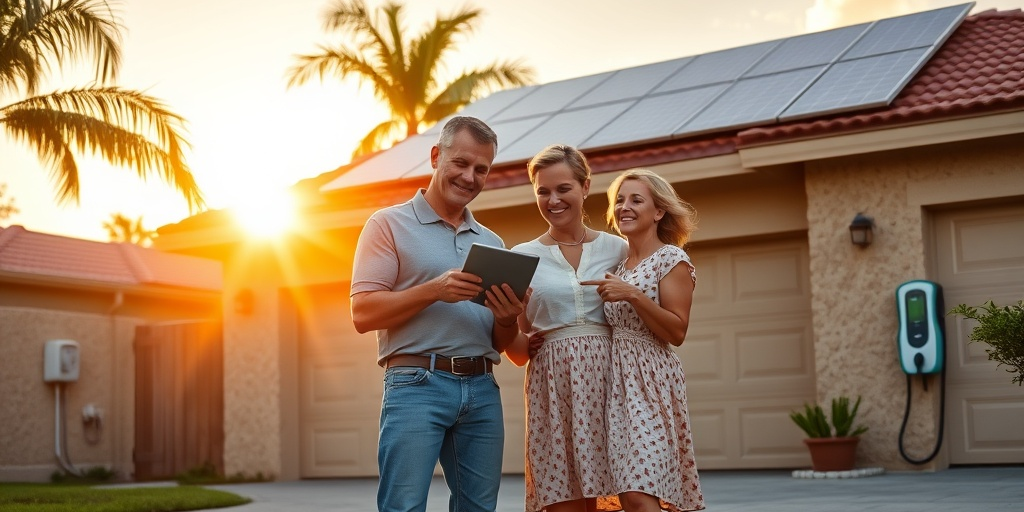
Did you know that the average Florida homeowner’s electric bill can exceed $200 each month? As energy costs continue to rise, many families are seeking independence from traditional utility providers. Imagine reducing your monthly expenses while also contributing to a healthier planet. This is exactly the journey taken by one family that achieved energy independence through strategic EV charger installation. Our article, How One Family Achieved Energy Independence with EV Charger Installation, dives deep into their inspiring story, shedding light on their savings and enhanced home efficiency. In 2025, as new solar incentives emerge and grid instability remains a concern, understanding these changes is more crucial than ever. We’ll explore five critical areas: their compelling case study, a detailed checklist for aspiring solar owners, myths needing debunking, a local focus on Florida, and a comprehensive technical deep-dive. Let’s embark on this enlightening journey toward sustainable living.
Empowering Family Energy Independence through EV Charger Installation
The Smith family from Orlando, Florida, once faced burdensome energy bills that strained their budget and stifled their financial freedom. Like many families, they were frustrated by their dependency on traditional utility providers. In 2023, after significant research and contemplation, they made a bold move—investing in solar power combined with an EV charger installation. Their leap into renewable energy didn’t just help reduce monthly bills; it drastically transformed their lifestyle.
With an impressive 26% federal tax credit for solar installations available in 2025, Florida homeowners like the Smiths felt supported in their transition toward energy independence (SEIA.org). Moreover, the boom in electric vehicle (EV) usage created an additional urge for families to equip themselves with home charging stations. The family chose Florida Electric & Solar as their trusted partner to bring their vision to life. They aimed for a holistic approach—one that married solar technology with electric vehicle readiness.
As the solar panels were installed, the Smiths found themselves not only leveraging the sun’s energy to power their home but also creating a sustainable energy ecosystem complemented by an EV charger. Now, after a year of enjoying solar benefits, they have reduced their electric bills by over 50%, and their EV charged efficiently at home, rather than at costly public stations. As grid instability becomes more common, embracing solar energy and electric vehicle charging is a solution that’s both practical and timely.
Here are critical insights into how the Smiths accomplished their dream of energy independence:
- Identify Personal Energy Needs: Understanding energy consumption played a crucial role in defining how much solar power they needed.
- Matching Solar with EV Charging: They focused on an integrated system that charged their electric vehicle efficiently at home.
- Choosing a Reliable Partner: Working with a reputable local solar company ensured expert installation and ongoing support.
Transitioning to solar power and installing an EV charger is a journey worth taking. In the next section, we’ll tackle a detailed checklist that outlines the steps similar families can take to achieve sustainable energy independence in Florida.
Essential Checklist for Florida Homeowners to Achieve Energy Independence
Ready to go solar? Here’s your actionable checklist to follow in your own journey toward energy independence. Each step builds on the other, ensuring a thorough understanding of what’s involved in successfully integrating solar energy and EV charging.
- Step 1: Audit Your Electric Bill
Determine how much power you use monthly. Analyze patterns and pinpoint how much energy a solar installation will need to offset. - Step 2: Research Solar Options and Incentives
Look up solar panel types, battery storage, and EV charger options. Make sure to investigate the benefits from solar tax incentives available in 2025. - Step 3: Find a Reliable Installation Company
Evaluate local solar providers like floridaelectricandsolar.com. Read reviews and ask for recommendations to find a trustworthy installation partner. - Step 4: Customize Your Solar Installation
Work with your chosen company to tailor the solar system to fit your specific needs—taking into account home size, energy consumption, and EV charging compatibility. - Step 5: Monitor Your Energy Production and Usage
After installation, regularly track how much energy your solar system produces and how much you’re saving. Adjust usage patterns to maximize savings further.
Each step importantly sets the stage for a successful transition to energy independence, allowing you to cut down on electric bills and contribute to a greener environment. As we transition forward, let’s dispel some common misconceptions that may prevent families from exploring solar energy options.
Debunking Common Myths About Solar and EV Charging
Within solar installation and EV charging, misinformation can often lead to hesitation. Here, we shatter some of these prevalent myths to illuminate the reality of what adopting solar truly means.
- Myth #1: Solar Power is Only Affordable for the Wealthy
The truth? Many financial incentives are available, allowing homeowners across various income levels to benefit from significant savings (Energy.gov). - Myth #2: Solar Panels Will Damage My Roof
Contrary to this belief, proper installation—often offered by experienced companies—ensures panels can enhance roof life and provide added energy benefits. - Myth #3: Solar Only Works on Sunny Days
While solar gets a boost from direct sunlight, photovoltaic systems can still generate electricity even on overcast days. The efficiency works year-round, crucial for Florida’s climate (NREL.gov). - Myth #4: Electric Vehicles Are Too Expensive to Charge at Home
Charging your EV at home with solar energy can significantly reduce costs compared to using gas. Charging stations can be costly, with the average cost being often less than $15 for a full charge at home (Energy.gov). - Myth #5: Solar Power Isn’t Reliable
Many homeowners are surprised to learn about battery storage options that ensure access to renewable energy even during outages, providing stability in energy access.
With misconceptions cleared, Florida homeowners can move confidently toward their energy independence goals. Let’s focus on local specifics that enhance the benefits of a solar journey.
Florida-Focused Advantages of Going Solar with EV Charging
Florida boasts ideal geographic and economic conditions for solar power, making it a prime candidate for environmentally conscious families. Here are key factors for Florida residents to consider:
- Abundant Sunshine: The Sunshine State receives an average of 237 sunny days per year, making solar energy infinitely more viable when compared to other regions (SolarReviews.com).
- State Incentives: Florida offers several state incentives, including net metering programs that credit solar homes for the energy they contribute back to the grid, which can significantly enhance ROI.
- EV Adoption Rates: With a surge of EV adoption in Florida, families installing EV chargers can find themselves part of a growing community prioritizing sustainable transport solutions.
- Local Solar Initiatives: Programs that support solar education and financing programs show the state’s commitment to a green future, with organizations providing resources to guide potential buyers (DSIREUSA.org).
These local advantages uniquely position Florida homeowners to leverage solar energy effectively. The ability to combine this with an eccentric rise in EV use solidifies the approach toward comprehensive energy independence. Let’s now delve into the technical underpinnings of solar systems and how they align with EV chargers.
Understanding the Technical Aspects of Solar Installations & EV Chargers
To grasp how solar energy and EV chargers can optimize your home’s energy usage, understanding the technology behind them is essential. Here’s a breakdown:
- Solar Panels: Photovoltaic (PV) panels convert sunlight into electricity. Different types include monocrystalline, polycrystalline, and thin-film, each varying in efficiency, appearance, and cost.
- Inverters: This critical component transforms the stored Direct Current (DC) electricity from the panels into Alternating Current (AC), making it usable for home appliances.
- Battery Storage: Using batteries, like the Tesla Powerwall, can store excess solar energy generated during the day, giving homeowners energy access after sunset.
- EV Chargers: Wall-mounted home chargers allow quick and easy overnight charging. The output ranges from 3.7 to 22 kW, affecting charging speed and efficiency (Energy.gov).
- Smart Monitoring Systems: Homeowners can utilize apps and software to track energy production and consumption. These systems help optimize both solar power usage and EV charging times based on demand and cost.
With the right technological integrations, the combination of solar panels and EV chargers can lead to reduced dependency on external energy sources, amplifying savings during this time of rising utility costs. As we look to your next steps, it’s essential to have a practical action plan for transitioning into the solar lifestyle in 2025.
Next Steps for Florida Solar Buyers in 2025
It’s time to put plans into action! Here’s a detailed checklist to help you transition smoothly toward energy independence:
- Step 1: Educate Yourself on the Solar Market
Research local Florida incentives and schemes that can benefit you, including state-sponsored solar tax credits and net metering. - Step 2: Assess Your Home’s Solar Potential
Conduct an assessment of your home’s roof and energy consumption to understand viability. Are there any shading issues that could affect production? - Step 3: Schedule Consultations
Reach out to reputable companies. Get quotes and compare estimates. Transparency in their services and a strong warranty backing are vital red flags to look out for. - Step 4: Design Your System
Work with your chosen solar provider to customize a system that blends solar energy production capabilities with EV charging support to maximize your efficiency. - Step 5: Monitor, Maintain, and Optimize
After installation, keep a close eye on your system’s performance. Engaging in regular maintenance, including cleaning solar panels and checking inverter performance, will uphold efficiency.
Each of these steps bolsters your ability to reduce energy costs, increase home efficiency, and embrace sustainability into your lifestyle. With the knowledge gained from this comprehensive guide, families like the Smiths can realize their dreams of energy independence through putting this information into action.
In conclusion, the journey toward energy independence is one not merely of technical adjustments but also of family empowerment and financial freedom. For families in Florida, 2025 represents a turning point, with innovative technology, financial incentives, and a collective push towards greener lifestyles. Embracing solar energy with an EV charger installation represents not only progress but a commitment to a brighter future.
Ready to start your solar journey in 2025? Connect with a certified expert at floridaelectricandsolar.com today.
Related Articles
More insights about EV Charger

What Florida Homeowners Ask About Solar EV Charger Installation

Florida Homeowners Exploring EV Charger Installation Benefits

Beginner’s Guide to Understanding EV Charger Installation for Homeowners
Ready to Go Solar?
Have questions about solar energy? Our experts are here to help you make the switch to clean, renewable energy.