
Why Gulf Coast Residents Need to Consider EV Charger Installation
Share:
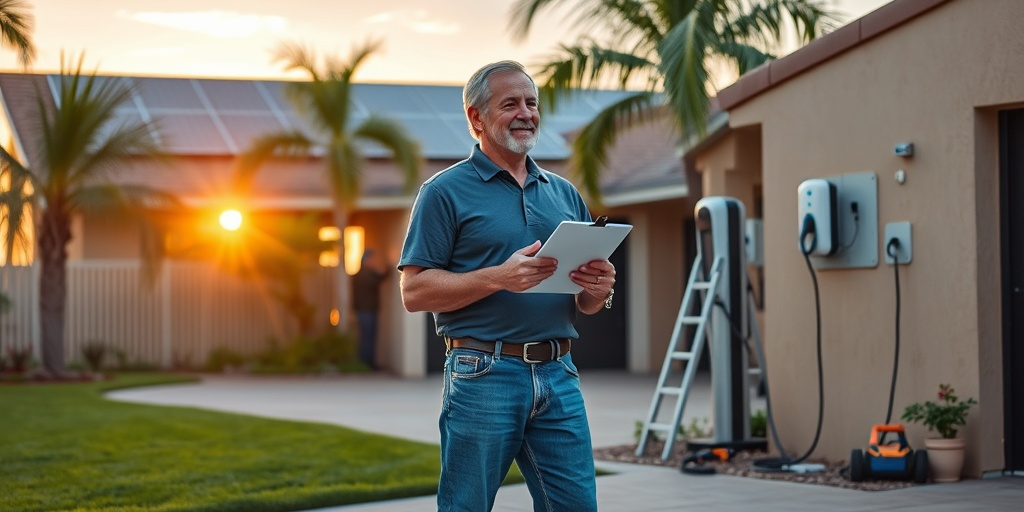
As the world accelerates toward electrification, Florida’s Gulf Coast stands at the forefront of a transformative shift. Did you know that the sales of electric vehicles (EVs) increased by over 70% in the last year alone? With all these new EVs on the road, it’s no surprise that EV charger installation is quickly becoming a necessity. In fact, a recent report revealed that nearly 50% of new car sales in 2025 will be electric (Automotive News). That’s why Gulf Coast residents need to consider EV charger installation. Not only does it enhance the convenience of owning an electric vehicle, but it’s also a smart investment that can lead to substantial savings on fuel costs and a positive impact on the environment.
As we roll into 2025, the urgency of this topic cannot be overstated. Rising energy costs and the impending deadlines for electric vehicles mean homeowners and businesses need to position themselves for the future now. Legislations and incentives are being rolled out to support the widespread adoption of electric vehicles (NREL.org). Thus, planning for EV charger installation is not just an option—it’s a crucial step for anyone seeking to embrace a sustainable lifestyle.
In this blog post entitled “Why Gulf Coast Residents Need to Consider EV Charger Installation,” we’ll dive into five key sections: we’ll explore a local case study highlighting the journeys of homeowners in the Gulf Coast, provide a checklist for installing EV chargers, bust common myths surrounding EV charging, discuss local factors that impact the adoption of EV technology in Florida, and finally, we’ll conduct a technical deep-dive into the types of chargers and their respective benefits. Let’s embark on this enlightening journey toward a greener future together.
Understanding the Local Impact of EV Charger Installation
Residents of the Gulf Coast are witnessing a paradigm shift in transportation and energy consumption. Picture this: It’s 2025, and a family in Sarasota has recently purchased an electric vehicle. They’re worried about how to charge it during their busy days. Sarah, a tech-savvy mother of two, decided to take matters into her own hands. She researched EV chargers and found out that by installing a Level 2 charger at home, not only would her family have a convenient way to charge their new EV, but they’d potentially save thousands in fuel costs.
However, before jumping in, Sarah created an EV Charger Installation Checklist to ensure the process was as smooth as possible. Here are the steps she followed:
- Step 1: Research the available EV charger options suitable for residential and commercial properties.
- Step 2: Evaluate your home’s electrical capacity to support a Level 2 charger.
- Step 3: Choose a qualified electrician familiar with local regulations.
- Step 4: Check if incentives or rebates are available to offset installation costs.
- Step 5: Schedule the installation and enjoy the peace of mind that comes with convenient charging.
In 2025, Florida’s electric vehicle market is expected to boom, with approximately one in five vehicles on the road being electric (SEIA.org). This trend not only supports Florida’s transition towards sustainable energy but also creates a growing need for accessible charging infrastructure. As state policies increasingly favor renewable energy sources, residents like Sarah can rest assured that their investments in EV charger installation will pay off exponentially.
Debunking Myths Around EV Charger Installation
Myth #1: Installing an EV charger is too expensive. While some premium models can be costly upfront, government incentives often cover a large portion of installation expenses, making it much more affordable than many believe.
Myth #2: EV chargers are only needed for commercial properties. Many homeowners experience the convenience and savings that come from installing a home charger, especially considering that nearly 80% of EV charging occurs at home (Energy.gov).
Myth #3: Electric vehicles are not suitable for long distances. With the advancements in battery technology and an ever-growing network of charging stations, it’s now easier than ever to travel long distances in an electric vehicle. Google Maps even allows users to filter routes that include charging stops, ensuring a seamless journey.
Myth #4: All chargers are the same. Different chargers, like Level 1 and Level 2, provide varying charging speeds; Level 2 chargers provide faster charging, allowing you to save time and reducing range anxiety.
In Florida, the adoption of EV technology is growing rapidly. The entire Southeast region saw a 50% increase in EV sales last year, and Florida led the charge (Florida Department of Transportation). For Gulf Coast residents, busting these myths can lead to informed decisions, helping them navigate the transition effortlessly.
Integrating Local Factors and EV Charger Trends in Florida
Bulk order purchases of EV chargers are becoming commonplace for commercial properties along Florida’s Gulf Coast. Facilities are recognizing the value of providing charging stations to accommodate their employees and attract new consumers. In locations like Tampa and Fort Myers, the local governments are implementing policies that favor the installation of EV chargers in public spaces.
- Incentives: Florida currently offers multiple financial incentives. For instance, the Florida Electric Vehicle Charging Infrastructure Grant Program provides funding to support the installation of charging stations.
- Public Charging Stations: Numerous partner programs are emerging that allow property owners to leverage state resources to install ultra-fast charging stations, increasing accessibility for residents and travelers alike.
- Community Programs: Local organizations are creating awareness campaigns that educate residents on the benefits of EVs and the importance of easily accessible charging infrastructure.
With the Florida Gulf Coast being a popular tourist destination, having more EV chargers installed aligns with the environmental goals set forth by state regulations aimed at decreasing greenhouse gas emissions. As residents become increasingly aware of these local trends, more will realize the financial and environmental benefits that come with EV charger installation.
5 Essential Tips for Effective EV Charger Installation
As a Gulf Coast resident passionate about sustainability, you may be wondering how to best go about installing an EV charger in your home or business. Here are five essential tips to guide you:
- Choose the Right Charger: There are various options available, from Level 1 to Level 3 chargers. Understand your needs and choose wisely. Level 2 chargers are highly recommended for home use due to their efficiency.
- Hire a Qualified Electrician: Ensure that installation is carried out by a qualified electrician familiar with local codes. This reduces risks and ensures compliance with safety standards.
- Consider Your Electric Panel’s Capacity: Before installation, assess your electric panel to ensure it can handle the additional load that a charger will bring.
- Check for Incentives: Research state and federal incentives available to offset installation expenses. This can significantly reduce financial burdens and encourage you to make sustainable choices.
- Plan for Future Needs: When selecting a location for the charger, consider future vehicles you may own. Installing in an accessible area now will save you from retrofitting down the road.
By implementing these best practices, you can maximize your charging efficiency while contributing to Florida’s sustainable energy goals (SolarReviews.com). Advancing towards electric vehicles and the corresponding infrastructure makes sense now, more than ever!
The Future of EV Charging in Florida: A Local Journey
Let’s take a moment to envision a future where electric vehicles are the norm in Florida, and charging stations are as common as gas stations. Meet John, a Sarasota resident who embraced the electric vehicle movement five years ago. John invested in a home solar system with battery backup to complement his electric vehicle. This decision provided him with a sustainable solution for both his transportation and energy needs.
John’s journey highlights several key benefits of coupling solar with EV charging:
- Energy Independence: With his solar panels, John was able to charge his EV for virtually free while decreasing his reliance on the grid.
- Cost Savings: By utilizing solar energy and incentives, John slashed his monthly electricity bill significantly, transforming his commuting costs.
- Environmental Stewardship: His eco-friendly lifestyle has reduced his carbon footprint and set an example for his community, inspiring others to make the switch.
As John continues his sustainable lifestyle, governments and utility companies are catching on, promoting incentives for households like John’s to enhance local charging infrastructure (NREL.gov). When community members come together to embrace this movement, it paves the way for a cleaner, greener future.
Next Steps for Florida Solar Buyers in 2025
As you consider taking the plunge into the world of EV chargers, here’s a step-by-step action plan to help you get started:
- Audit Your Electric Bill: Review your existing energy consumption, noting patterns and peak usage times to determine your EV charging needs.
- Research Charging Options: Take the time to understand the necessary equipment you’ll need, opting for a charger that caters to your daily driving habits.
- Schedule a Consultation: Book a consultation with a solar and EV charger expert to discuss local regulations, potential rebates, and installation process.
- Prepare Your Home: Ensure your home is capable of supporting an EV charger by verifying your electrical panel’s capacity, making necessary adjustments if needed.
- Monitor Your Savings: Once your charger is installed, keep track of your cumulative savings on fuel, emphasizing the environmental benefits of your commitment.
Stepping into the world of EVs isn’t just about convenience; it’s about taking a responsible measure towards sustainability and energy independence. At floridaelectricandsolar.com, you can connect with certified experts to provide guidance and support throughout your solar and EV journey.
As we close this exploration of essential EV charger installation for Gulf Coast residents, let’s remember the incredible changes occurring within our energy landscape. Embracing electric vehicles is no longer merely a trend; it’s a clear roadmap toward a more sustainable future. You have the opportunity to contribute to the enhancement of your community—from reducing emissions to cutting electric bills, it’s all within your reach.
Ready to start your solar journey in 2025? Connect with a certified expert at floridaelectricandsolar.com today.
Related Articles
More insights about EV Charger

What Florida Homeowners Ask About Solar EV Charger Installation

Florida Homeowners Exploring EV Charger Installation Benefits

Beginner’s Guide to Understanding EV Charger Installation for Homeowners
Ready to Go Solar?
Have questions about solar energy? Our experts are here to help you make the switch to clean, renewable energy.