
What Florida Homeowners Should Know About EV Charger Installation
Share:
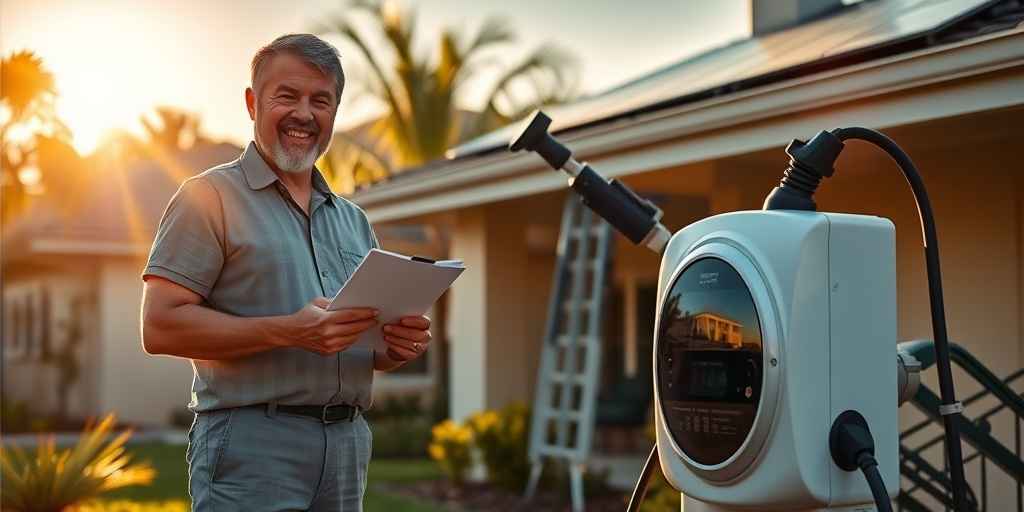
Did you know that electric vehicle (EV) sales in Florida have skyrocketed by over 50% in the last year alone? As more and more residents opt for electric vehicles, the need for efficient EV charger installation becomes paramount for Florida homeowners. In this context, our article titled What Florida Homeowners Should Know About EV Charger Installation delves into essential knowledge for homeowners looking to enhance their energy efficiency and reduce electric bills. In 2025, such installations are not only a convenience but also critical to adapting to the increasing rise in energy costs—from rising electric rates to grid instability. According to the Florida Electric Power Coordinating Group, electric rates could increase by nearly 20% by 2025 (energytrends.com). This makes it more urgent than ever for residents to seek sustainable solutions for their energy needs.
In this article, we will explore five key sections: first, a deep dive into the importance of EV charger installations backed by a compelling case study that highlights the impact on local utility systems; second, a detailed checklist outlining actionable steps homeowners can take; third, a myth-busting segment that addresses common misconceptions about EV chargers; fourth, insights uniquely focused on Florida’s regional policies and statistics in the field of solar power; and finally, a technical deep dive that covers the essential technologies and systems involved in EV charger installation.
Case Study: The Johnson Family’s Journey to Eco-Friendly Living
Meet the Johnson family from Jacksonville, Florida. They are your typical Floridians, navigating life and raising their children in sunny suburban neighborhoods. A year ago, they made the life-changing decision to purchase an electric vehicle, primarily driven by the desire to reduce their carbon footprint and save on fuel costs. Little did they know, their journey into the world of EVs would lead them to the complex and important topic of EV charger installation.
After purchasing their electric vehicle, they quickly realized that having access to a reliable home charging station was essential. They began researching local EV charger installation services, which led them to several crucial insights: 1) Public charging infrastructure in their area was insufficient, and relying solely on public chargers would be inconvenient, especially with children in tow; 2) Installing a charger at home would grant them the freedom to charge overnight, taking advantage of lower electricity rates during off-peak hours. A survey by the Electric Vehicle Association showed that more than 60% of successful EV owners installed a home charger to maximize convenience and savings (evassociation.org).
With a state rebate program for EV chargers in Florida, the Johnsons found that installation costs were manageable. They engaged a reputable local solar company—Florida Electric & Solar—assessing their home’s energy efficiency and obtaining an optimal setup tailored to their needs. Their investment not only included the charger but also a solar panel system to further enhance energy savings. By consuming energy generated from the sun, their charging experience became not just economical but also sustainable.
After installation, they monitored their energy use closely. In just six months, they saved approximately $150 on electricity bills while enjoying the convenience of charging their car from home. This not only alleviated the financial burden of fuel costs but also allowed them to be proactive energy users, making the most of renewable energy potential. Furthermore, they contributed to a reduced strain on the grid during peak hours, positively impacting their community’s overall electricity consumption.
If you are contemplating the transition to an electric vehicle or enhancing your energy efficiency, that story might resonate with you. As a Florida homeowner, understanding how EV charger installation can impact your energy consumption is crucial in the fast-evolving electric landscape.
Before proceeding with your installation, consider this checklist:
- Evaluate Your Energy Needs: Assess how often you charge your vehicle and the amount of energy it requires.
- Choose the Right Charger: Not all EV chargers offer the same features or speed. Research to determine what fits your lifestyle.
- Consider Solar Integration: Explore solar panel installations to complement your EV charger and maximize your savings.
- Check Local Incentives: Research applicable rebates or tax incentives available for both EVs and chargers in Florida.
- Hire a Certified Installer: Ensure your installation is safe and complies with local regulations by working with a licensed professional.
By following this checklist, homeowners can feel confident about their investment and position themselves toward a sustainable future.
Need more information to embark on your solar journey? Reach out for expert guidance at floridaelectricandsolar.com.
Myth-Busting Common Misconceptions about EV Chargers
When it comes to EV charger installation, several myths often cloud homeowners’ understanding. Let’s address some of the most prevalent ones.
- Myth #1: EV chargers are only for wealthy homeowners. In reality, many rebates and incentives exist to significantly reduce installation costs, making EV charger access more attainable for the average homeowner.
- Myth #2: Installing an EV charger is a complicated process. With advancements in technology and a growing number of certified installation services in Florida, the process is easier than ever. Most installations are completed in a single day.
- Myth #3: My home doesn’t have the required electrical capacity. Many homes can accommodate EV chargers with minor upgrades. A certified electrician can assess what changes, if any, are necessary for your specific needs.
- Myth #4: Public charging is always a better option. While public charging stations can be convenient, they usually come with fees and may involve waiting times. Having a home charger means you can charge at your convenience, especially during off-peak hours.
- Myth #5: All EV chargers are the same. Different chargers have varying power levels, speeds, and features. Researching and selecting the right model for your electric vehicle type is crucial to maximize efficiency and convenience.
By recognizing these myths, Florida homeowners can make informed decisions about EV chargers and their potential to enhance home energy efficiency.
Florida-Specific Data on EV Adoption and Charger Installation
As electric vehicle adoption proliferates in Florida, understanding the local landscape is essential for homeowners. Statistics reveal a remarkable trend: as of 2023, approximately 5% of all vehicles in Florida are electric, which is projected to increase to 20% by 2025 (floridaevreport.com). This transformation creates both opportunities and challenges for homeowners considering EV charger installations.
Local utility companies, like Florida Power & Light, are stepping up their efforts to support EV adoption, offering incentives for home charger installations while also investing in expanding their public charging network. In 2025, with the anticipated uptick in EVs on the road, these local energy providers are likely to face increased demand for electricity. As a result, integrating home charging solutions is not just a personal benefit but also a community necessity—helping to balance and manage energy loads across neighborhoods.
Here are a few Florida-specific considerations for homeowners:
- Incentives: Currently, the Florida Department of Agriculture and Consumer Services offers grants for EV charger installation, making the upfront costs significantly lower.
- Net Metering: Florida allows net metering for solar energy production, empowering homeowners to sell excess energy back to the grid, further offsetting installation costs.
- Public Charging Infrastructure: Florida continues to lead the nation in expanding its public charging infrastructure, with hundreds of fast chargers strategically placed across the state, making long-distance travel in EVs more feasible.
By understanding these developments, you can make informed decisions that not only support your lifestyle but also contribute positively to the community.
Understanding EV Charger Technologies and Systems
Your journey into EV charger installation would be incomplete without acquiring a solid understanding of the technology and systems involved. In this section, we will provide a detailed exploration of the essential components of EV charger systems and how they relate to home energy efficiency.
First, it’s essential to differentiate between the types of chargers available:
- Level 1 Chargers: These chargers plug into standard household outlets and are suitable for overnight charging but can take a considerable amount of time to fully charge a vehicle.
- Level 2 Chargers: More common in home installations, these chargers require a dedicated circuit and significantly reduce charging time—ideal for daily driving needs.
- DC Fast Chargers: Primarily for commercial use, these powerful chargers deliver a rapid charging experience. However, they are generally overkill for home applications.
Moreover, technologies like smart chargers allow homeowners to monitor their charging progress using mobile apps, optimize charging times based on utility rate changes, and track their energy usage.
Integration with solar energy systems enhances the value even more. Systems can be designed to direct excess solar power to charge your EV, maximizing your investment and creating a sustainable lifestyle.
The impact of adopting EV charging solutions extends beyond convenience—it represents a significant leap toward energy independence. According to a 2023 report by the U.S. Department of Energy, homeowners utilizing both solar energy and EV charging systems can cut their energy costs by almost 30% (energy.gov). This positions them advantageously, especially in a market where energy prices are likely to soar in coming years.
Next Steps for Florida Solar Buyers in 2025
With multiple aspects considered, it’s time to delineate a clear action plan for Florida homeowners poised to embrace EV charger installations effectively:
- Assess Your Current Energy Setup: Review your electric bills to gauge your usage and analyze peak times.
- Explore Local Incentives: Research federal and state rebates available for solar and EV charger installations.
- Consult with a Certified Installer: Engage with professionals like those at floridaelectricandsolar.com to get expert advice on system design, installation, and local regulations.
- Choose Your Charger Wisely: Based on your EV model and household needs, decide on the right charger type and power level.
- Monitor and Optimize Usage: Post-installation, keep track of your energy consumption and charging habits to further refine efficiency and savings.
Taking these decisive steps will arm you with the tools you need to navigate towards sustainable living in 2025 and beyond.
In summary, Florida homeowners are at the forefront of an electrifying revolution with the advent of EV chargers and enhanced energy efficiency. Understanding the implications of your choices today positions you for sustainable living tomorrow. As energy costs rise and community needs change, your involvement in transitioning to electric solutions can make a significant impact.
Ready to start your solar journey in 2025? Connect with a certified expert at floridaelectricandsolar.com today.
Related Articles
More insights about EV Charger

What Florida Homeowners Ask About Solar EV Charger Installation

Florida Homeowners Exploring EV Charger Installation Benefits

Beginner’s Guide to Understanding EV Charger Installation for Homeowners
Ready to Go Solar?
Have questions about solar energy? Our experts are here to help you make the switch to clean, renewable energy.